
Loading, please wait...
LOT 1468
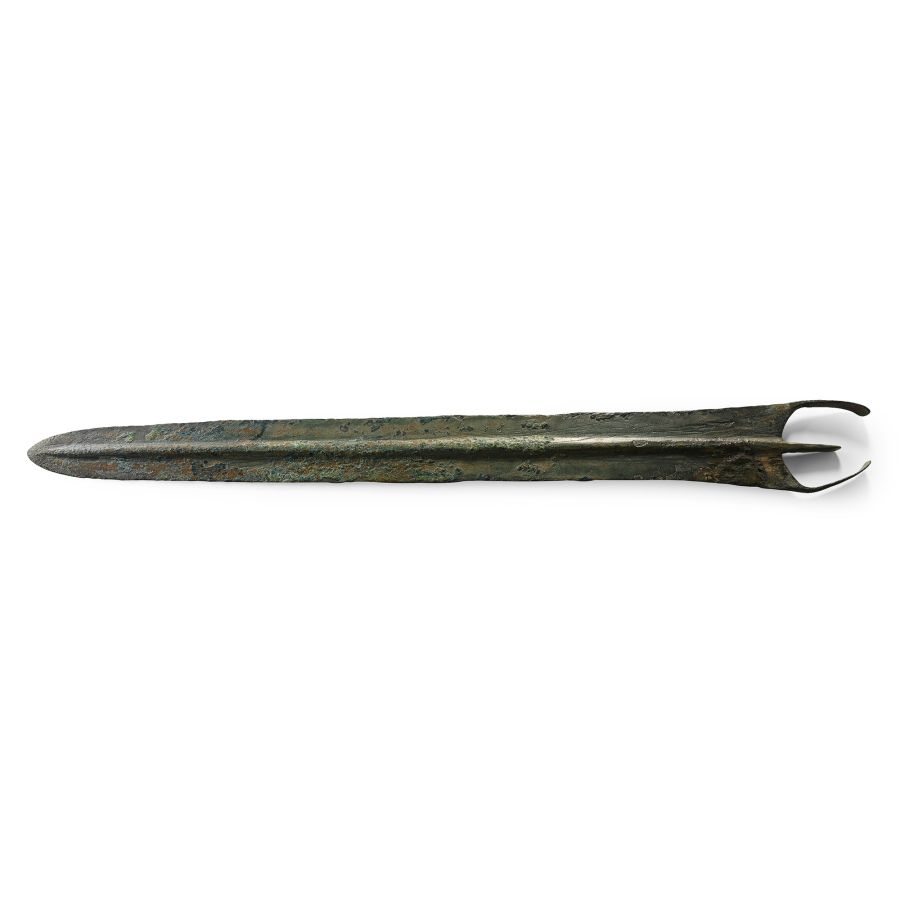
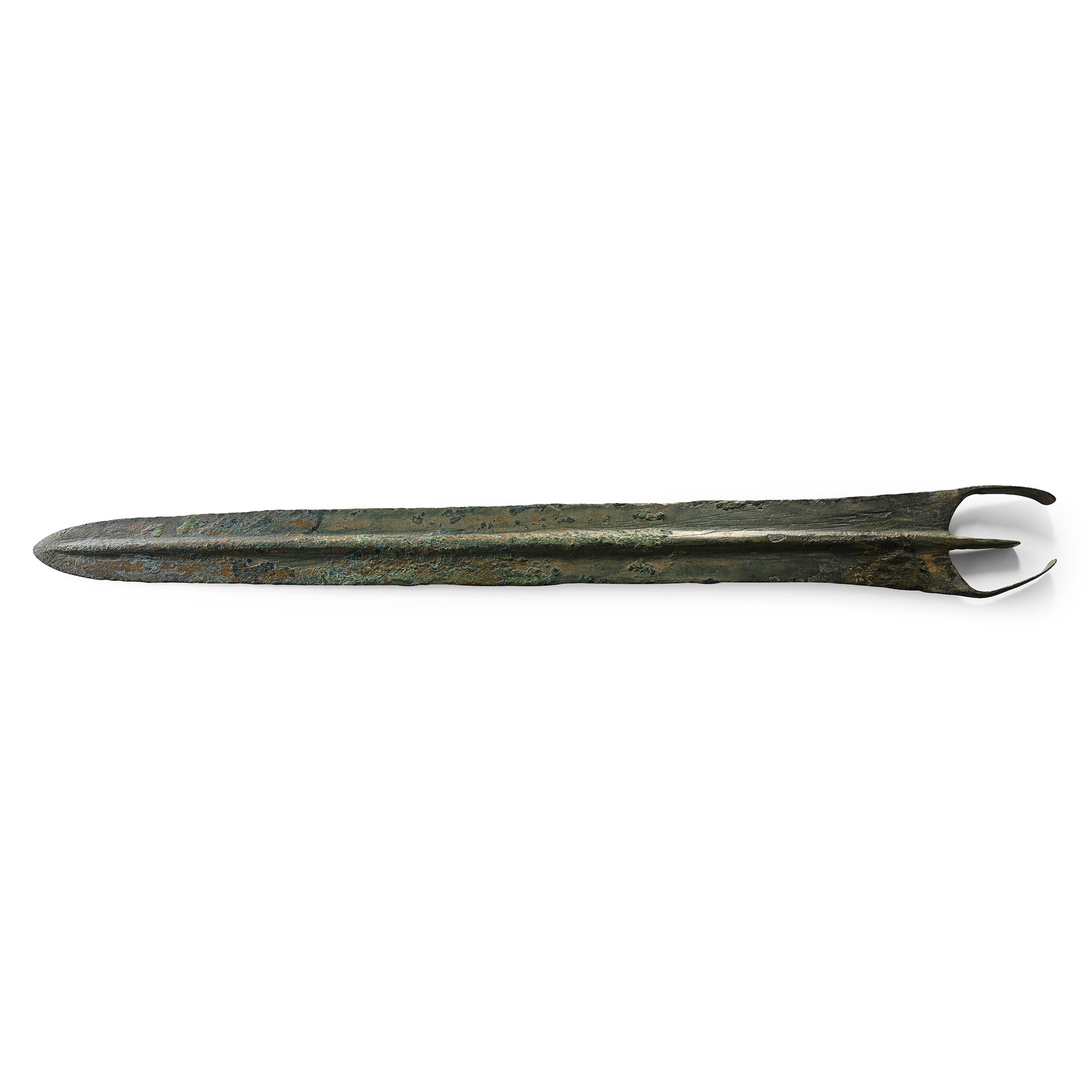
Luristan Bronze Short Sword Blade
2ND-1ST MILLENNIUM B.C.
18 3/4 in. (341 grams, 47.5 cm).
With double-edged blade with central midrib, lateral extensions at the shoulders, and short tang. [No Reserve]
ProvenanceProperty of a London gentleman; acquired London art market, 2000s.
CONDITIONTimeLine Auctions follows a vetting process to ensure the authenticity and legality of all items, reinforcing our commitment to integrity and responsible trading. Each antiquity, antique, and coin lot undergoes thorough examination by a vetting committee of at least ten external specialists, professional trade association members, scientists, and archaeologists: Our Vetting Process
AUCTIONS:
TimeLine is a leading auction house specialising in antiquities, ancient art, collectables, natural history, coins, medals, and books. Our auctions offer museums, collectors, historians, and enthusiasts the opportunity to acquire unique and historically significant pieces.
-
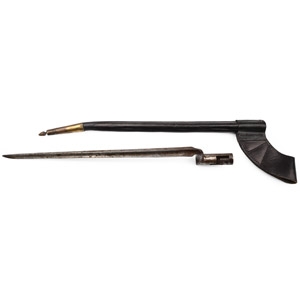
US Confederate Bayonet with Scabbard
19th century A.D.Sold for (Inc. bp): £59
Comprising a tubular socket for fixing to a muzzle of a weapon, long tapering triangular blade with a raised rib on the underside and a 'US / JB(?)' stamp at the base; with a later(?) civil war type scabbard. 500 grams total, 64.5 cm
From the private collection of author and historian Dr DeWitt Bailey, one of the global authorities on the confederate army in the US civil war; thence by descent to his grandson. -
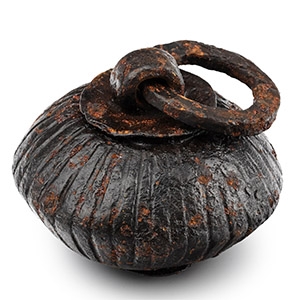
Medieval Iron Flail Head
14th-15th century A.D.Sold for (Inc. bp): £195
Biconvex in profile with loop and ring, segmented surface. 277 grams, 50 mm
From the family collection of a London gentleman; formed in the late 1940s-1950s; thence by descent. From the property of a late Lincolnshire, UK, gentleman. -
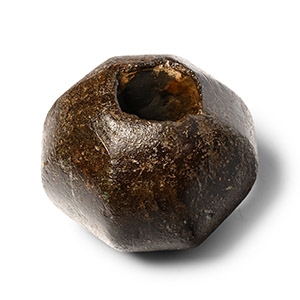
Large Medieval Bronze Sword Pommel
1300-1400 A.D.Sold for (Inc. bp): £104
Of 'wheel' type, Ward Perkins 1940, Type VIII; octagonal in plan with chamfered edges and roughly circular in section, a rectangular perforation running through the length of the object, wider at the blade end and narrowing at the butt end; at the base; the perforation off-centre and worn to one edge. 114 grams, 48 mm
Found whilst searching with a metal detector in Warslow and Elkstones, Staffordshire Moorlands, West Midlands, UK. Accompanied by a copy of the British Museum's Portable Antiquities Scheme (PAS) report no.WWID-94E7C5.
