
Loading, please wait...
LOT 0265
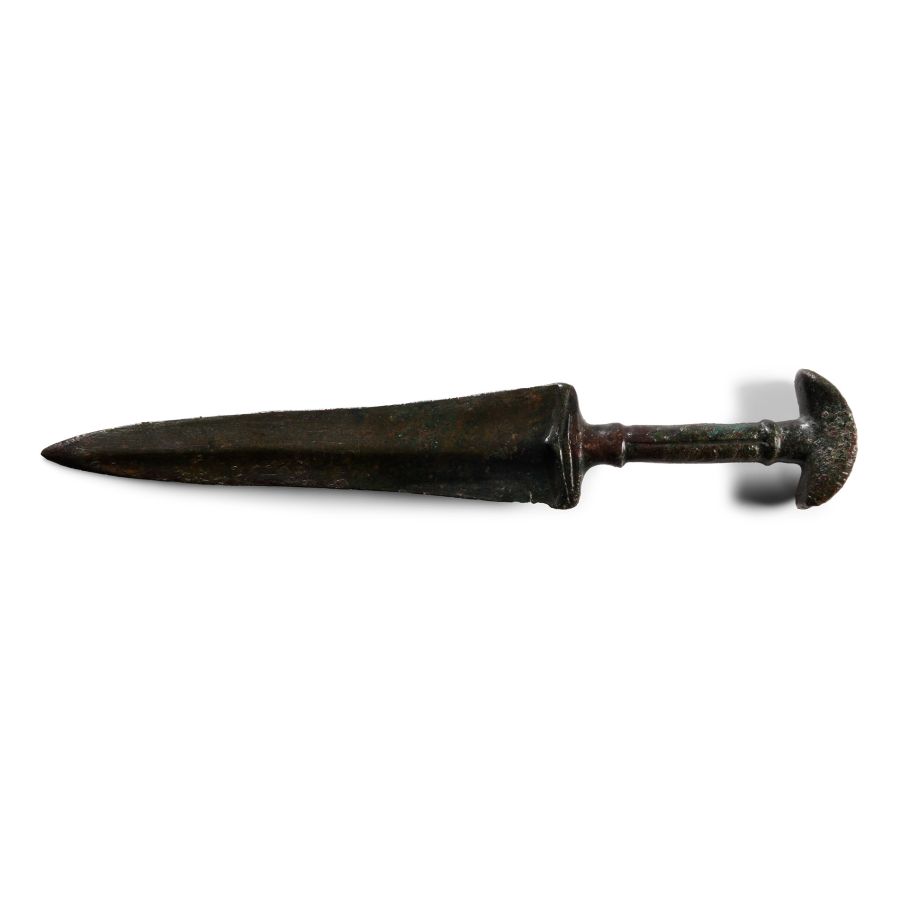
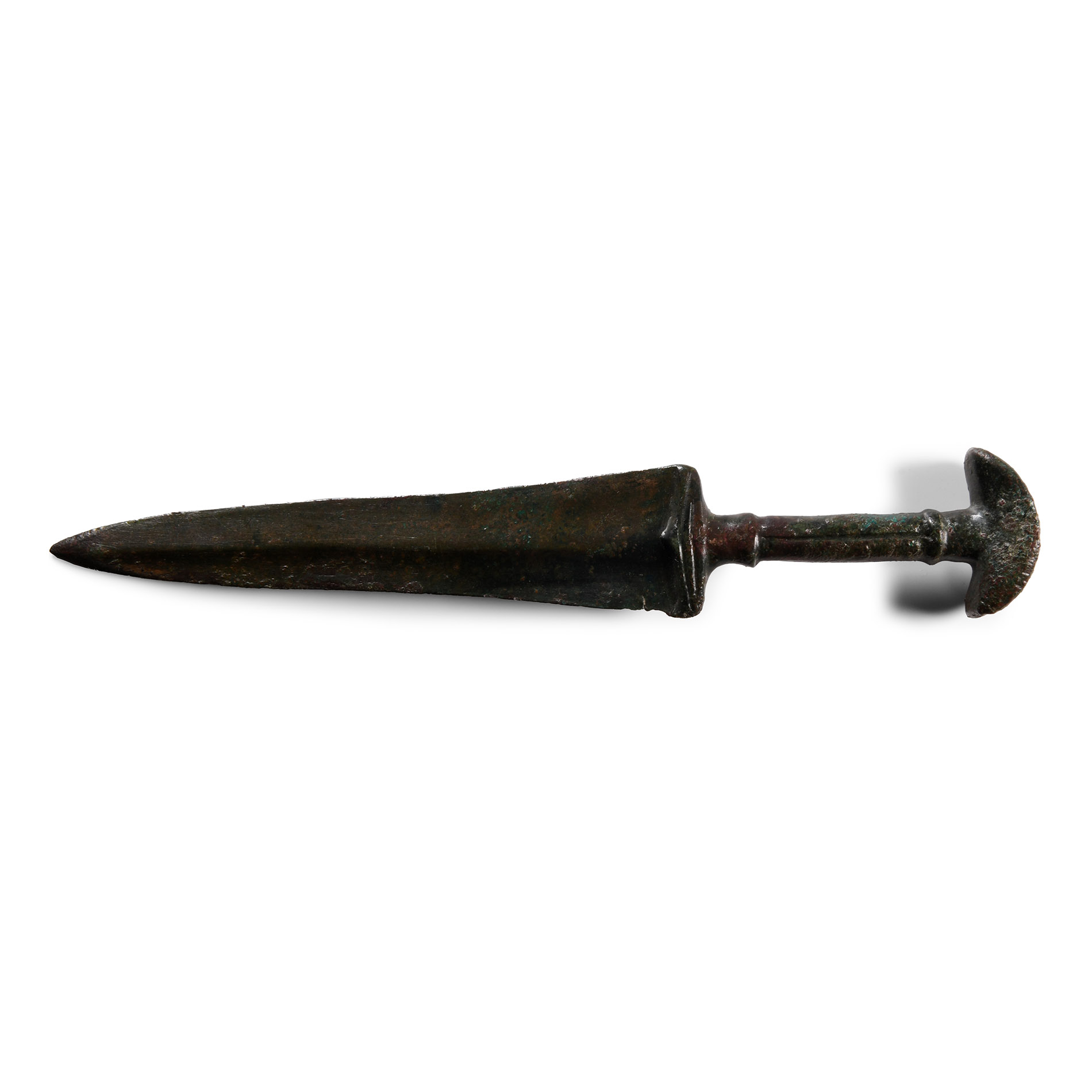
Luristan Bronze Short Dagger
1ST MILLENNIUM B.C.
7 3/4 in. (83 grams, 19.5 cm).
With broad lobed pommel, balustered grip and narrow guard; lentoid-section triangular blade; extremely rare and unusual.
ProvenanceFrom a Mayfair, London gallery, 1990s.
CONDITIONTimeLine Auctions follows a vetting process to ensure the authenticity and legality of all items, reinforcing our commitment to integrity and responsible trading. Each antiquity, antique, and coin lot undergoes thorough examination by a vetting committee of at least ten external specialists, professional trade association members, scientists, and archaeologists: Our Vetting Process
AUCTIONS:
TimeLine is a leading auction house specialising in antiquities, ancient art, collectables, natural history, coins, medals, and books. Our auctions offer museums, collectors, historians, and enthusiasts the opportunity to acquire unique and historically significant pieces.
-
Luristan Bronze Short Dagger
1st millennium B.C.Sold for (Inc. bp): £715
With broad lobed pommel, balustered grip and narrow guard; lentoid-section triangular blade; extremely rare and unusual. 83 grams, 19.5 cm
From a Mayfair, London gallery, 1990s. -
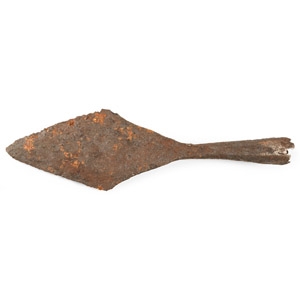
Medieval Lozenge-Shaped Iron Arrowhead
14th-15th century A.D.Sold for (Inc. bp): £26
Lanceolate in profile with split socket. 16.8 grams, 99 mm
Acquired prior to 2000. Ex Private collection, Cambridgeshire, UK. Property of a Kent lady collector. -
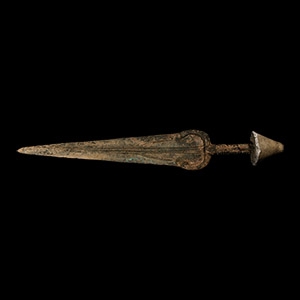
Luristan Bronze Short Sword
Late 2nd millennium B.C.Sold for (Inc. bp): £910
With solid cast hilt with penannular guard and a horizontally ribbed grip; a conical stone mushroom pommel and a multi-fullered blade tapering to a sharp tip; handle repaired. 876 grams, 56 cm
Acquired 1980-2015. Ex Abelita family collection.
According to Moorey, such category of swords were distributed in the Northern Iran area, as proved by the Amarlu finds. Based on the example from the Ashmolean Museum, he dated them to the end of the 2nd millennium B.C., more precisely to a period between 1400-1200 B.C.
