
Loading, please wait...
LOT 1125
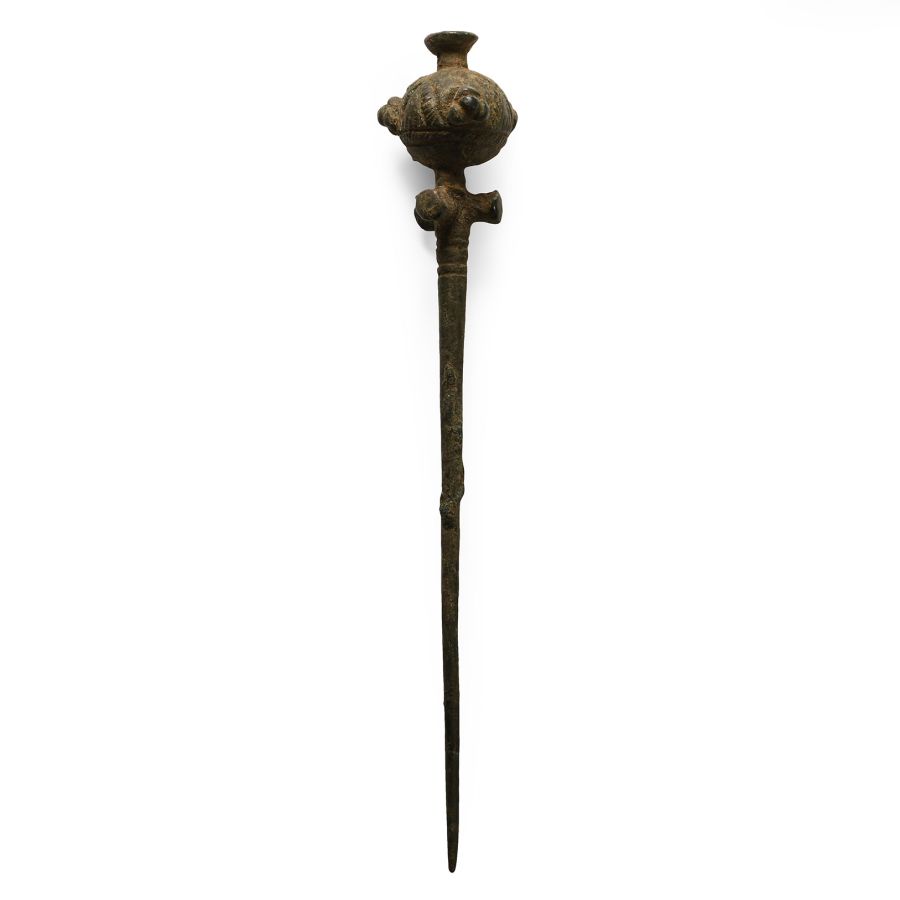
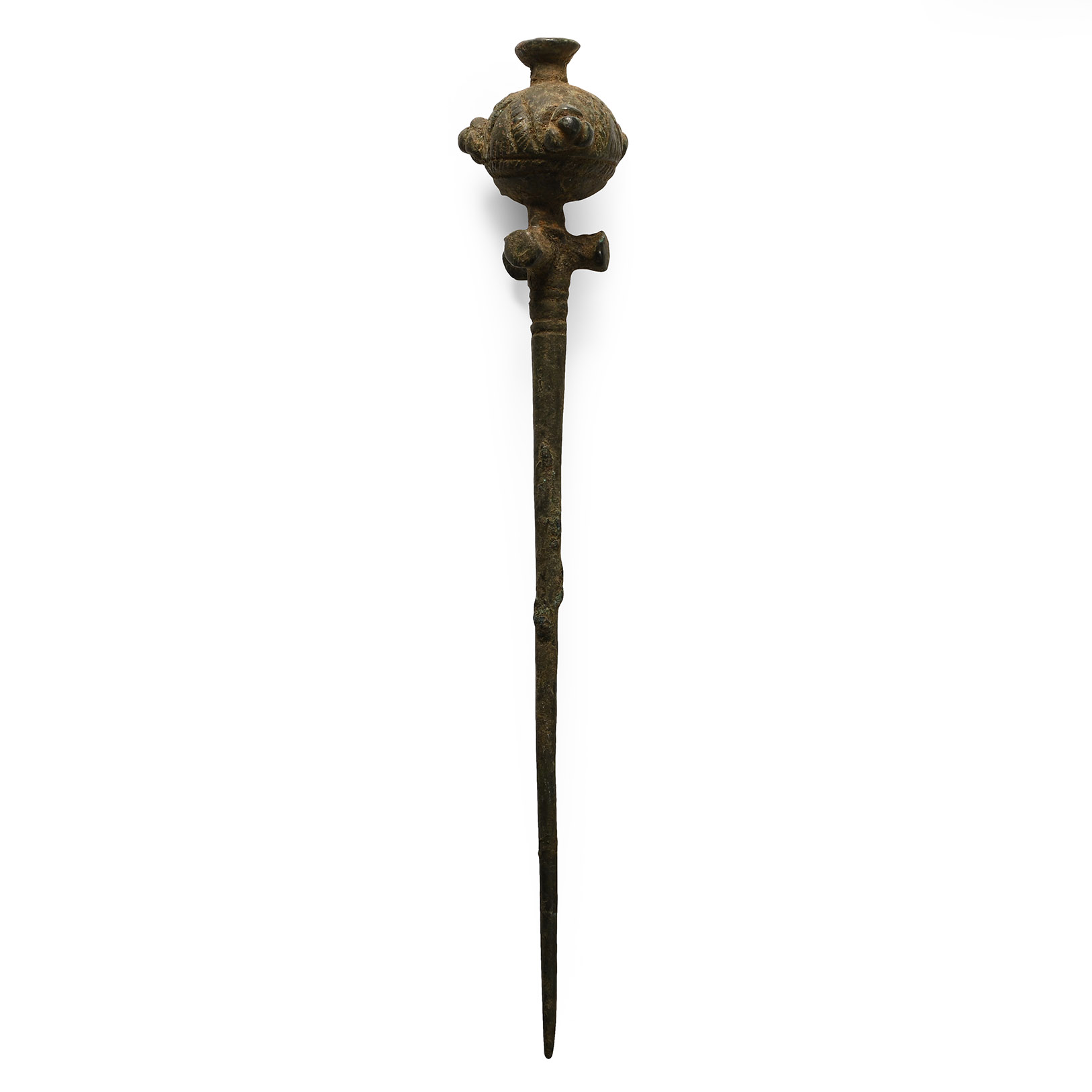
Luristan Bronze Poppy-Headed Pin
13TH-7TH CENTURY B.C.
6 3/4 in. (80 grams, 17 cm).
With a long tapering shank, poppy-head terminal with three projecting lobes, incised chevrons in between the lobes. [No Reserve]
ProvenanceAcquired on the UK art market before 2000; Property of an Essex, UK, gentleman.
CONDITIONTimeLine Auctions follows a vetting process to ensure the authenticity and legality of all items, reinforcing our commitment to integrity and responsible trading. Each antiquity, antique, and coin lot undergoes thorough examination by a vetting committee of at least ten external specialists, professional trade association members, scientists, and archaeologists: Our Vetting Process
AUCTIONS:
TimeLine is a leading auction house specialising in antiquities, ancient art, collectables, natural history, coins, medals, and books. Our auctions offer museums, collectors, historians, and enthusiasts the opportunity to acquire unique and historically significant pieces.
-
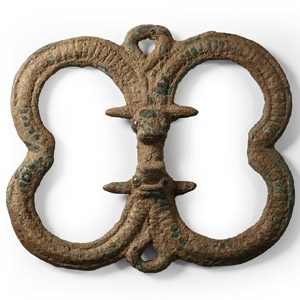
Luristan Bronze Mount with Facing Animal Heads
13th-7th century B.C.Estimate: £200 - 300 (+bp*)
Opening Bid: £100
Large quatrefoil openwork mount with billeting to the frame, loops at the apices and facing bull-head masks. 82 grams, 94 mm
Acquired 1980-2015. Ex Abelita family collection. -
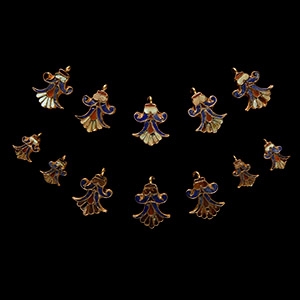
Achaemenid Gold Inlaid Lotus Flower Pendant Set
5th-4th century B.C.Estimate: £30,000 - 40,000 (+bp*)
Opening Bid: £15,000
Comprising twelve pendants, each formed as an open lotus blossom with the parts of the flower inlaid with different semiprecious stones: the pistil in red carnelian, stamens and the base of the flower in turquoise, and the outer petals in lapis lazuli; accompanied by a custom-made velvet-lined display case. 36.60 grams total, 18-26 mm (case: 1 kg total, 27.5 x 28 cm)
with a London, UK gallery, 1971-early 2000s. Accompanied by an academic report by Dr Raffaele D’Amato. This lot has been checked against the Interpol Database of stolen works of art and is accompanied by search certificate number no.12170-220647.
The wealth of the Persian Empire of the Achaemenids was proclaimed by the ancient writers: the Greeks described the fabulous riches known by hearsay to be in the royal treasures, and described the gold furniture, vessels and jewellery often seen during Hellenic contacts with this Eastern Empire. These elegant lotus-shaped pendants with their multicoloured stone inlays give us some idea of the personal ornamentation carried by the aristocratic Persian women. -
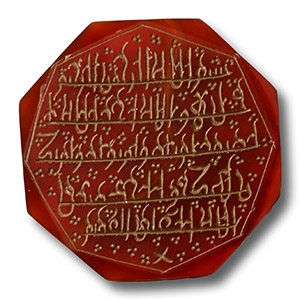
Qajar Plaque with Kufic Inscription
19th-20th century A.D.Sold for (Inc. bp): £98
Octagonal carnelian plaque with offset chamfered edges, incised calligraphic script text in five lines with clusters of pointillé ornament. 10 grams, 34 mm
with a London, UK gallery, 1971-early 2000s.
