
Loading, please wait...

LOT 1229
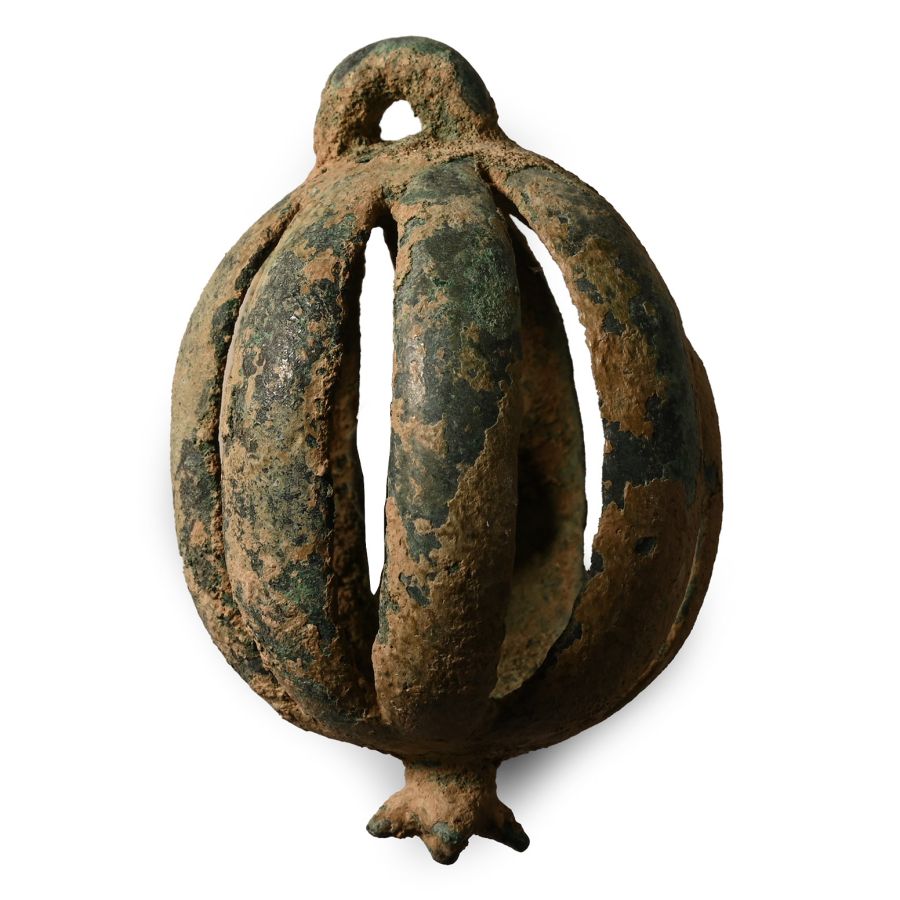
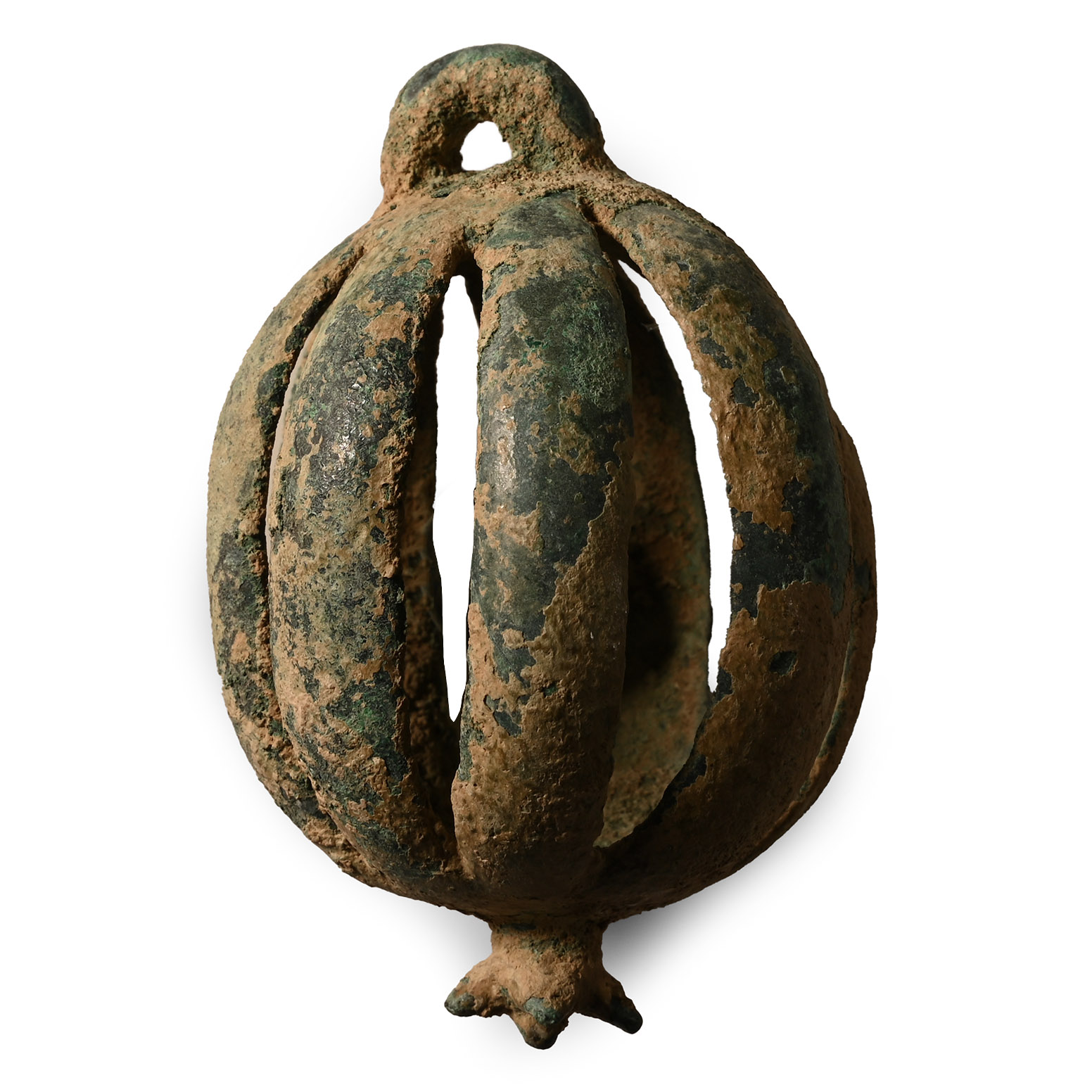
Luristan Bronze Pomegranate-Shaped Bell
13TH-7TH CENTURY B.C.
3 3/8 in. (186 grams total, 85 mm).
Openwork cage of D-shaped bars with loop to one end and radiating spiked knop to the other; rumbler ball inside. [No Reserve]
ProvenanceFrom a collection of a gentleman, acquired on the London art market in the 1990s.
CONDITIONTimeLine Auctions follows a vetting process to ensure the authenticity and legality of all items, reinforcing our commitment to integrity and responsible trading. Each antiquity, antique, and coin lot undergoes thorough examination by a vetting committee of at least ten external specialists, professional trade association members, scientists, and archaeologists: Our Vetting Process
AUCTIONS:
TimeLine is a leading auction house specialising in antiquities, ancient art, collectables, natural history, coins, medals, and books. Our auctions offer museums, collectors, historians, and enthusiasts the opportunity to acquire unique and historically significant pieces.
-
Syro-Levantine Bronze Standing Statuette
Circa 13th-11th century B.C.Sold for (Inc. bp): £520
Modelled in the round male figure wearing a knee-length kilt with hem and waistband; in advancing pose with left leg extended; the neck long, face with pinched detailing and deep sockets to the eyes (to accept inlays); conical cap with flattened apex; the shoulders modelled with shallow sockets to accept separate arms; mounting lug beneath left foot; mounted on a custom-made stand. 108 grams total, 12.7 cm including stand
From a collection acquired on the UK art market from various auction houses and collections mostly before 2000. From an important Cambridgeshire estate; thence by descent. -
Late Achaemenid Bronze Phiale Mesomphalos
6th-4th century B.C.Sold for (Inc. bp): £91
A broad carinated bowl with radiating repoussé panels, central roundel, carination below the rim; cracked. 242 grams, 18.5 cm
Acquired 1980-2015. Ex Abelita family collection. -
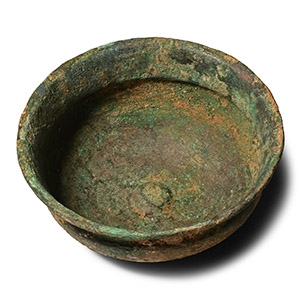
Achaemenid Bronze Flared Phiale Mesomphalos
Circa 6th-4th century B.C.Sold for (Inc. bp): £59
Squat in profile with flared rime to the mouth and carination to the sidewall, central repoussé dome to the underside. 169 grams, 13.5 cm
Acquired 1980-2015. Ex Abelita family collection.
