
Loading, please wait...
LOT 1163
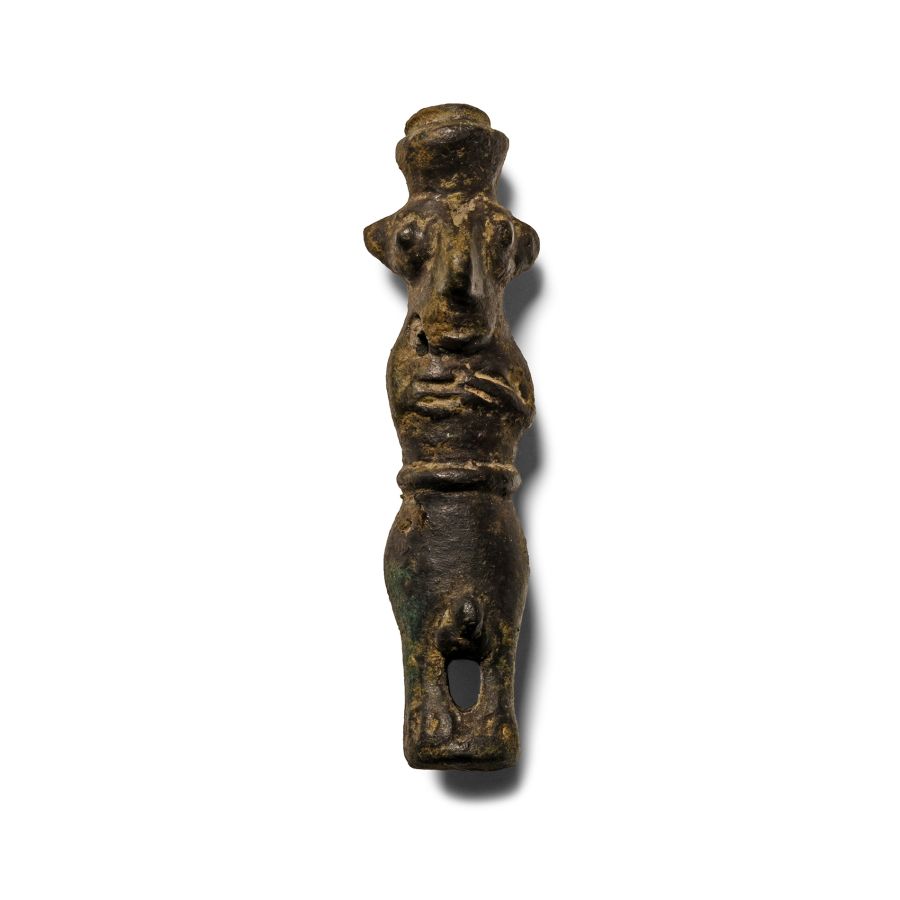
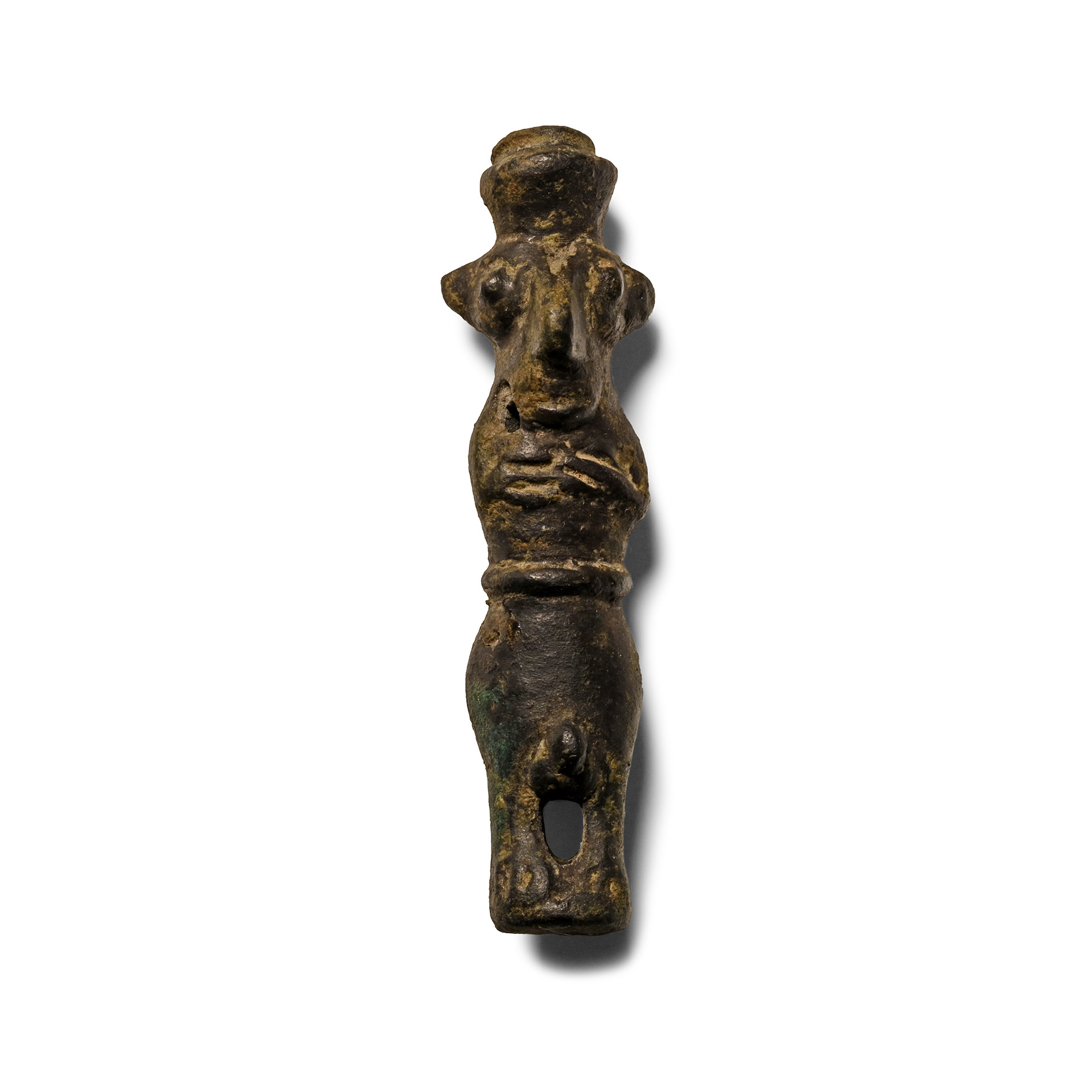
Luristan Bronze Piravand Figure of a Man
LATE 2ND MILLENNIUM B.C.
2 1/2 in. (32.1 grams, 63 mm).
Columnar figurine with tall cap, bulbous eyes and nose, hands placed across the chest, raised belt, and genitals, openwork legs and base.
ProvenanceFrom the H.N. collection.
Ex Den of Antiquity, Cambridgeshire, UK.
Property of a London gentleman.
TimeLine Auctions follows a vetting process to ensure the authenticity and legality of all items, reinforcing our commitment to integrity and responsible trading. Each antiquity, antique, and coin lot undergoes thorough examination by a vetting committee of at least ten external specialists, professional trade association members, scientists, and archaeologists: Our Vetting Process
AUCTIONS:
TimeLine is a leading auction house specialising in antiquities, ancient art, collectables, natural history, coins, medals, and books. Our auctions offer museums, collectors, historians, and enthusiasts the opportunity to acquire unique and historically significant pieces.
LOT 1163
Luristan Bronze Piravand Figure of a Man
Estimate £500 - 700€580 - 810 (for guidance only)$680 - 950 (for guidance only)
-
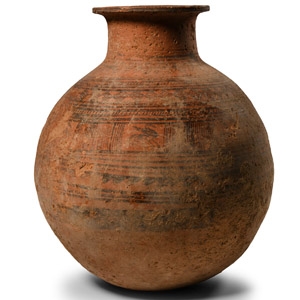
Large Western Asiatic Bichrome Terracotta Painted jar
2nd-1st millennium B.C.Sold for (Inc. bp): £195
Bulbous in profile with low neck, circumferential painted bands, segmented and hatched lozenge motifs. 2.7 kg, 28.5 cm
Ex London, UK, gallery, 1980s. From a UK private collection. -
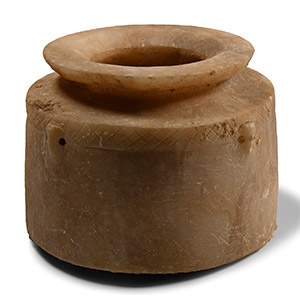
Proto-Sumerian Alabaster Vessel
Circa 3000 B.C.Estimate: £4,000 - 6,000 (‡+bp*)
Opening Bid: £1,600
Jar with slightly tapering cylindrical sidewall, flared rim to the mouth; incised hatched band to the shoulder and four pierced lugs. 1.02 kg, 11.7 cm wide
with Gwain McKinley, London, 1980s. Acquired from the above, 1993. Private European collection, thence by family descent. This lot has been checked against the Interpol Database of stolen works of art and is accompanied by a search certificate number no.12125-218132. -
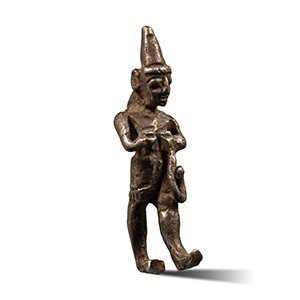
Syro-Hittite Silver Amulet
Circa 14th century B.C.Sold for (Inc. bp): £2,080
Amulet of a deity in human form wearing a pointed cap and pleated kilt, hands placed on the chest supporting coiled serpent (or staff), ledge to rear; possibly Tarḫunna, the Hittite weather-god. 3.9 grams, 29 mm
From the Bavarian private collection of F.U., Germany, before 2000. Acquired Gorny & Mosch, 17 June 2015, lot 246. Property of a French collector. Accompanied by a copy of the relevant Gorny & Mosch catalogue pages. This lot has been checked against the Interpol Database of stolen works of art and is accompanied by a search certificate number no.12123-214885.
The proper name of the weather god is not known, as it was expressed with an ideogram in the texts; his name was probably Tarhunna, from Hattic Taru. Among the Luwians he was called Datta and Tarhunt. The Hittite province of Tarhuntassa, south of the heartland of the Hittite Empire, took its name from the latter: 'land of the weather god'.
