
Loading, please wait...
LOT 0299
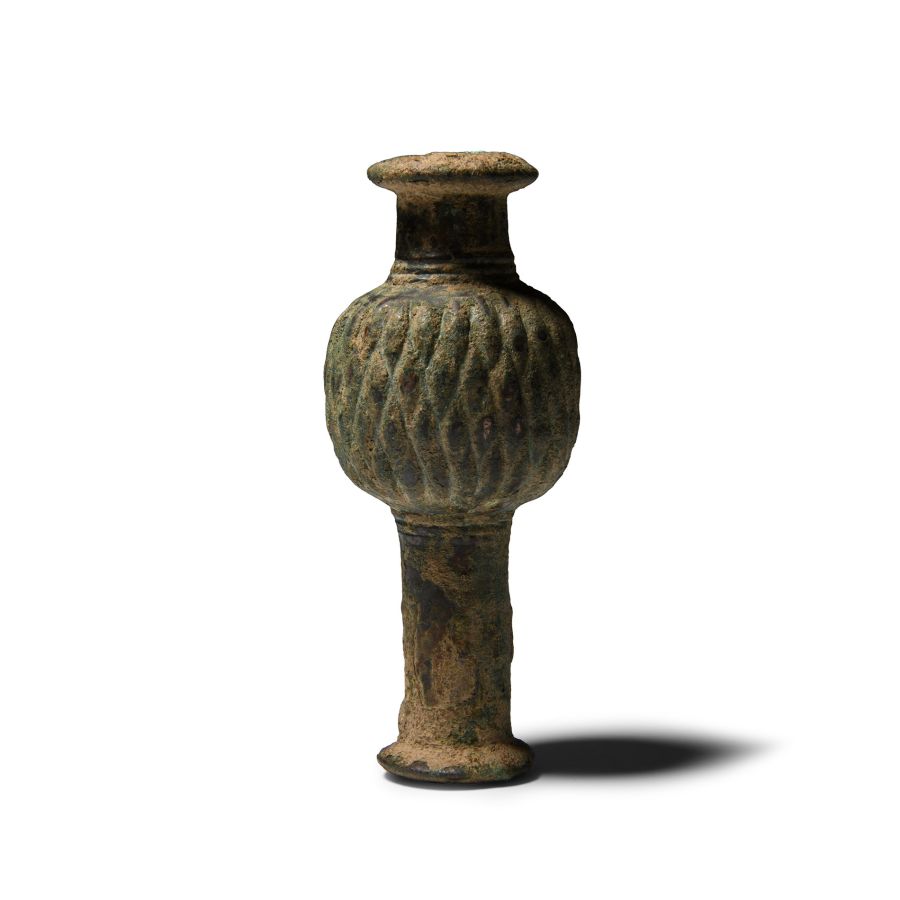
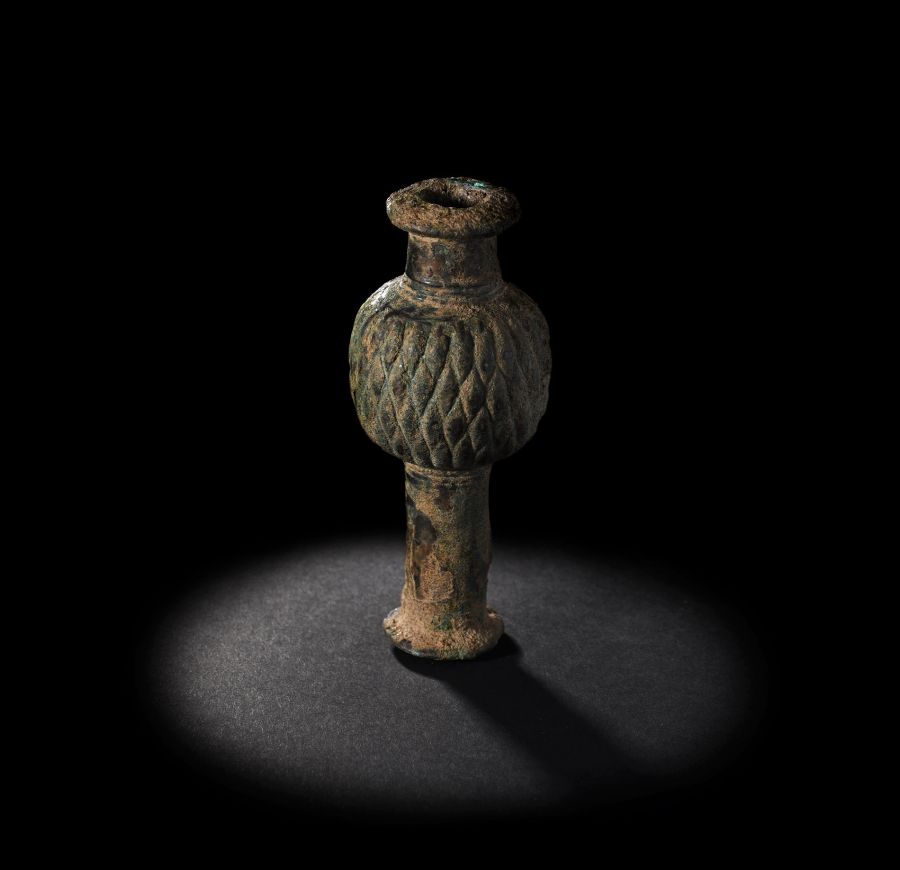
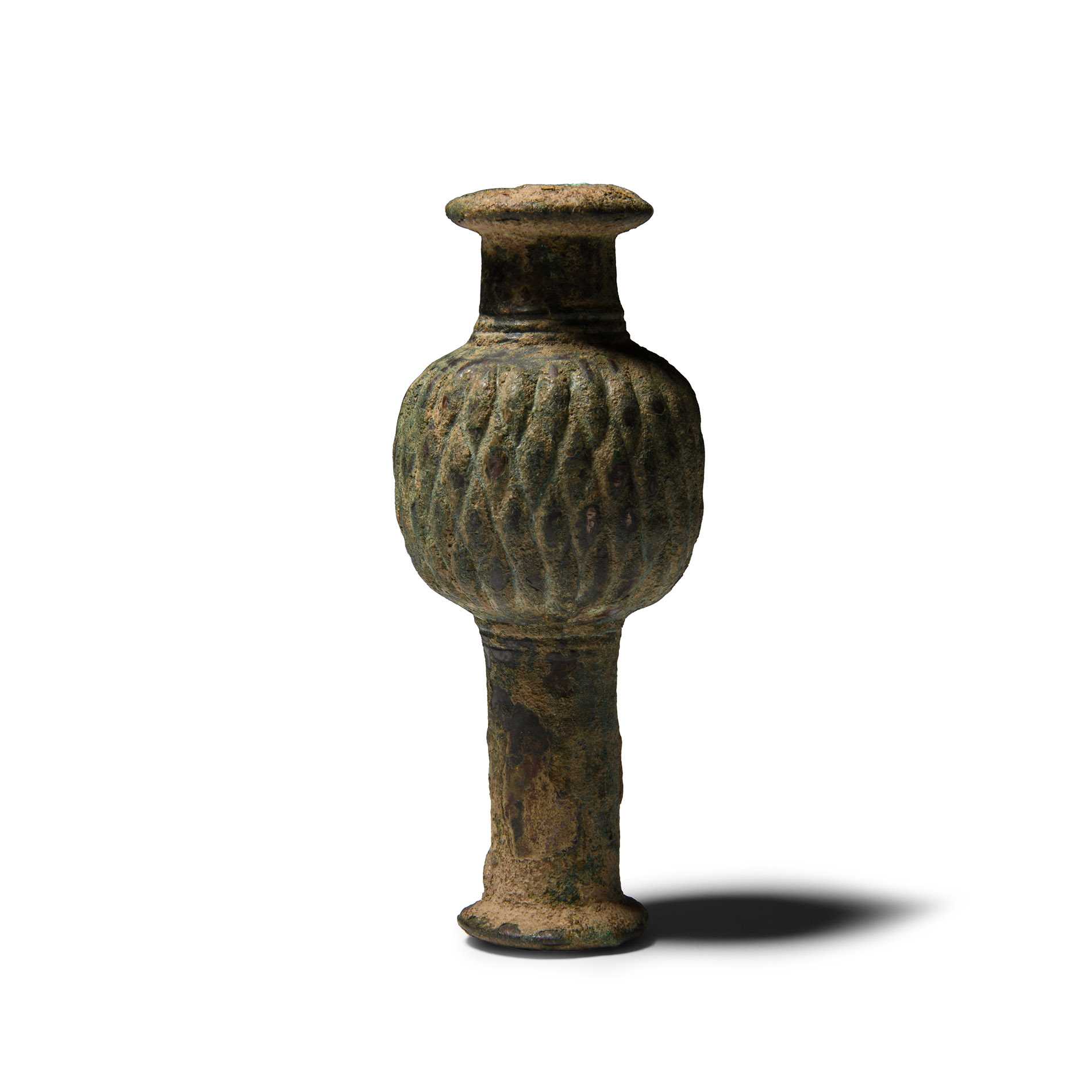
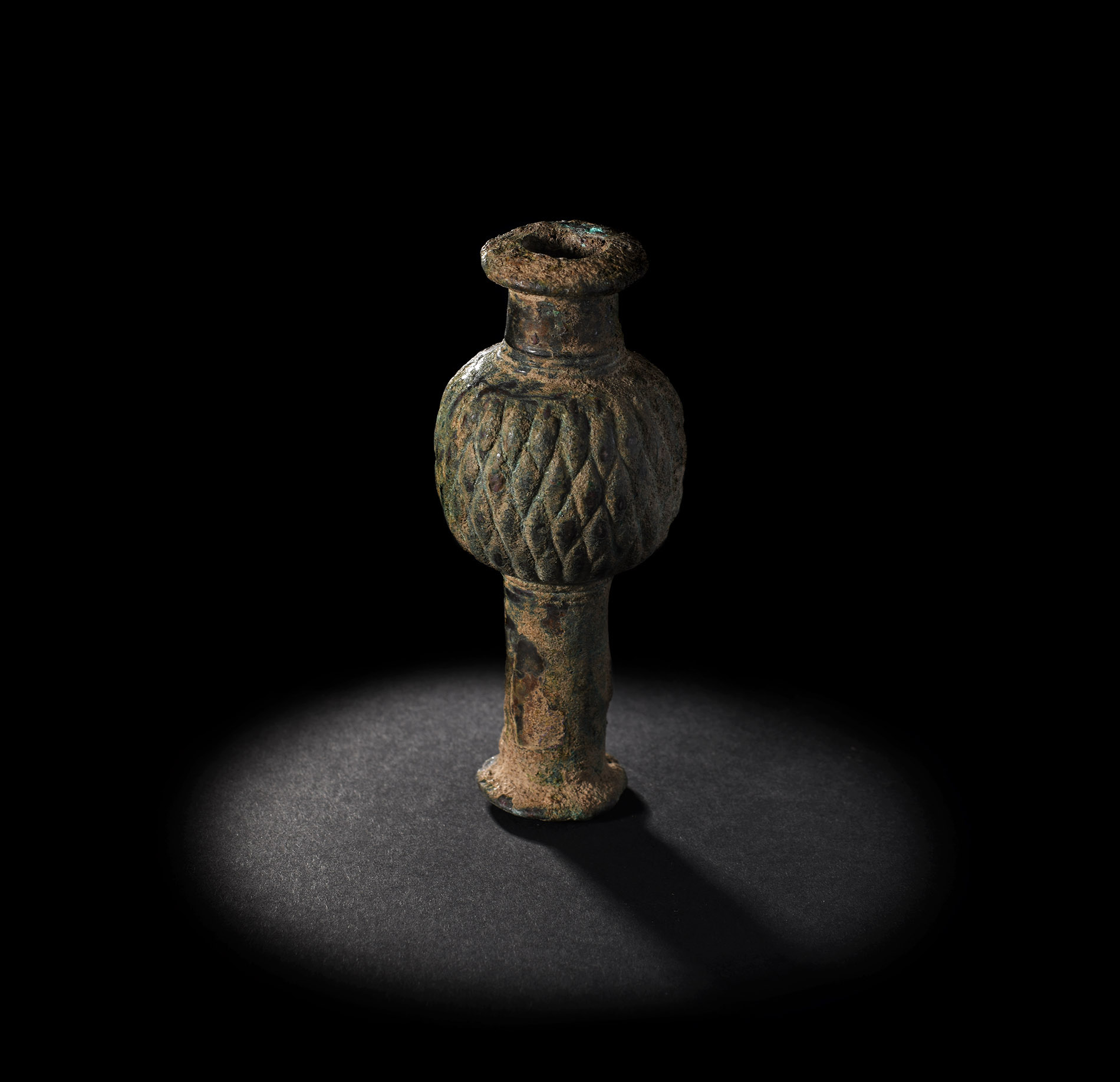
Luristan Bronze 'Pineapple' Macehead
13TH-7TH CENTURY B.C.
5 in. (272 grams, 12.5 cm high).
Of Sara Gorz type with cylindrical shaft extended over the top, rounded knobs around the swollen head, flanked by horizontal grooved bands.
ProvenanceAcquired mid 1980s to early 1990s.
Private family collection formed in London, UK.
Cf. Musé Cernuschi, Bronzes du Luristan: Enigmes De L'Iran Ancien IIIe-Ier millenaire ac. j.-c., Paris musées, 2008, p.103, for a comparable item.
CONDITIONTimeLine Auctions follows a vetting process to ensure the authenticity and legality of all items, reinforcing our commitment to integrity and responsible trading. Each antiquity, antique, and coin lot undergoes thorough examination by a vetting committee of at least ten external specialists, professional trade association members, scientists, and archaeologists: Our Vetting Process
AUCTIONS:
TimeLine is a leading auction house specialising in antiquities, ancient art, collectables, natural history, coins, medals, and books. Our auctions offer museums, collectors, historians, and enthusiasts the opportunity to acquire unique and historically significant pieces.
LOT 0299
Luristan Bronze 'Pineapple' Macehead
Estimate £400 - 600€460 - 700 (for guidance only)$540 - 810 (for guidance only)
-
.jpg)
Viking Age Iron Sword with Bronze Hilt
10th-13th century A.D.Sold for (Inc. bp): £4,160
With a double-edged tapering blade, long tapering fullers and a narrow tang; boat-shaped bronze cross-guard with Jellinge Style decoration; the upper guard with similar ornament topped by a seven-lobed pommel. 675 grams, 88 cm
The blade is generally complete and in good conditions, although traces of corrosion are visible on the surface and on the edges; both cutting edges show strong traces of employ on battlefield, with battle-nicks along their length; pitting from possible water depot; still-homogenous blade structure, with strong delamination and material losses visible on the original surface of the metal.
From the private collection of a London gentleman, from his grandfather's collection formed before the early 1970s. Accompanied by an academic report by Dr Raffaele D’Amato. This lot has been checked against the Interpol Database of stolen works of art and is accompanied by search certificate number no.12011-213595.
This Couronian sword finds a good parallel with Baltic swords, used by Prussian, Couronians, Estonian and Lithuanian pagan warriors; see a sword once in the Prussian Museum, inventory V. Nr. 8368, from Janischken (Fig. 1,a); other clear parallels can be seen in Kazakevičius, 1996, figs.62-63 (fig.2) and Tomsons, 2012, fig.2 (Fig.3),3,7. The Curonian swords of this type, sometimes with animal head decoration on the lower guard, were widespread and used in the Eastern Baltic lands from 10th to 13th century. -
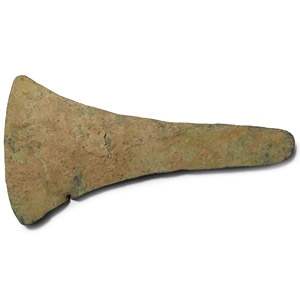
Western Asiatic Bronze Flat Axe
4th millennium B.C.Estimate: £100 - 140 (+bp*)
Opening Bid: £50
Formed with a rounded butt and slightly flared cutting edge; flat in cross-section. 138 grams, 18.5 cm
Acquired 1980-2015. Ex Abelita family collection.
This type of flat axes appeared in the last phase of the Late Chalcolithic Age. Flat axes without lugs were used as cutting tools or in war. In the later examples the sides of the blades was gradually widening towards the convex cutting edge. -
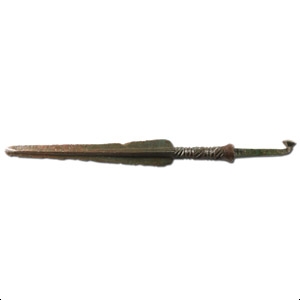
Western Asiatic Bronze Spearhead with Decorative Supports and Blood Channels
2nd millennium B.C.Estimate: £400 - 600 (+bp*)
Opening Bid: £200
With a long triangular blade, strongly marked midrib divided into five grooves, rectangular-section tang; engraved and reinforced shaft with diagonal and horizontal grooves. 474 grams, 43 cm
Acquired 1980-2015. Ex Abelita family collection.
This homogeneous subtype (LF 2a of Gernez) is characterised by a set of morphological particularities which constitute a functional and aesthetic outcome. The tapered blade, triangular (like in our case) or ogival, is reinforced by a strong median bulge. The intermediate part often bears an incised or moulded decoration and the base is with a marked widening or with a stopper disc. The tang, square in section, is curved and widens at the end almost at a right angle.
