
Loading, please wait...
LOT 1042
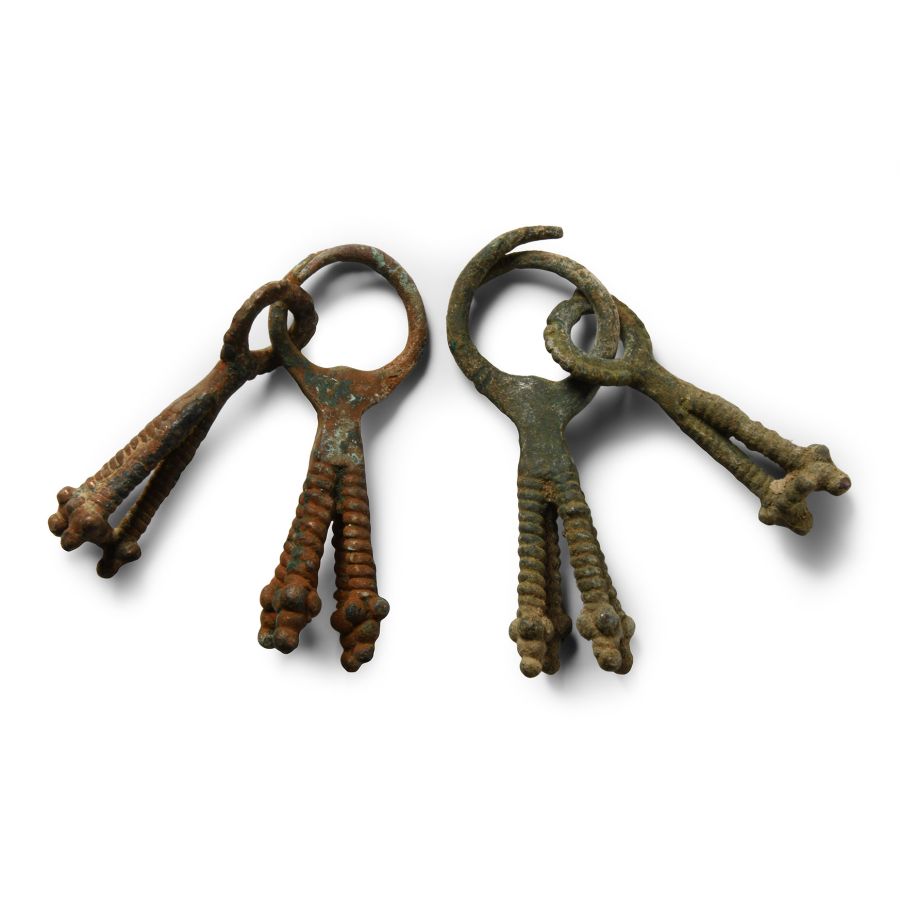
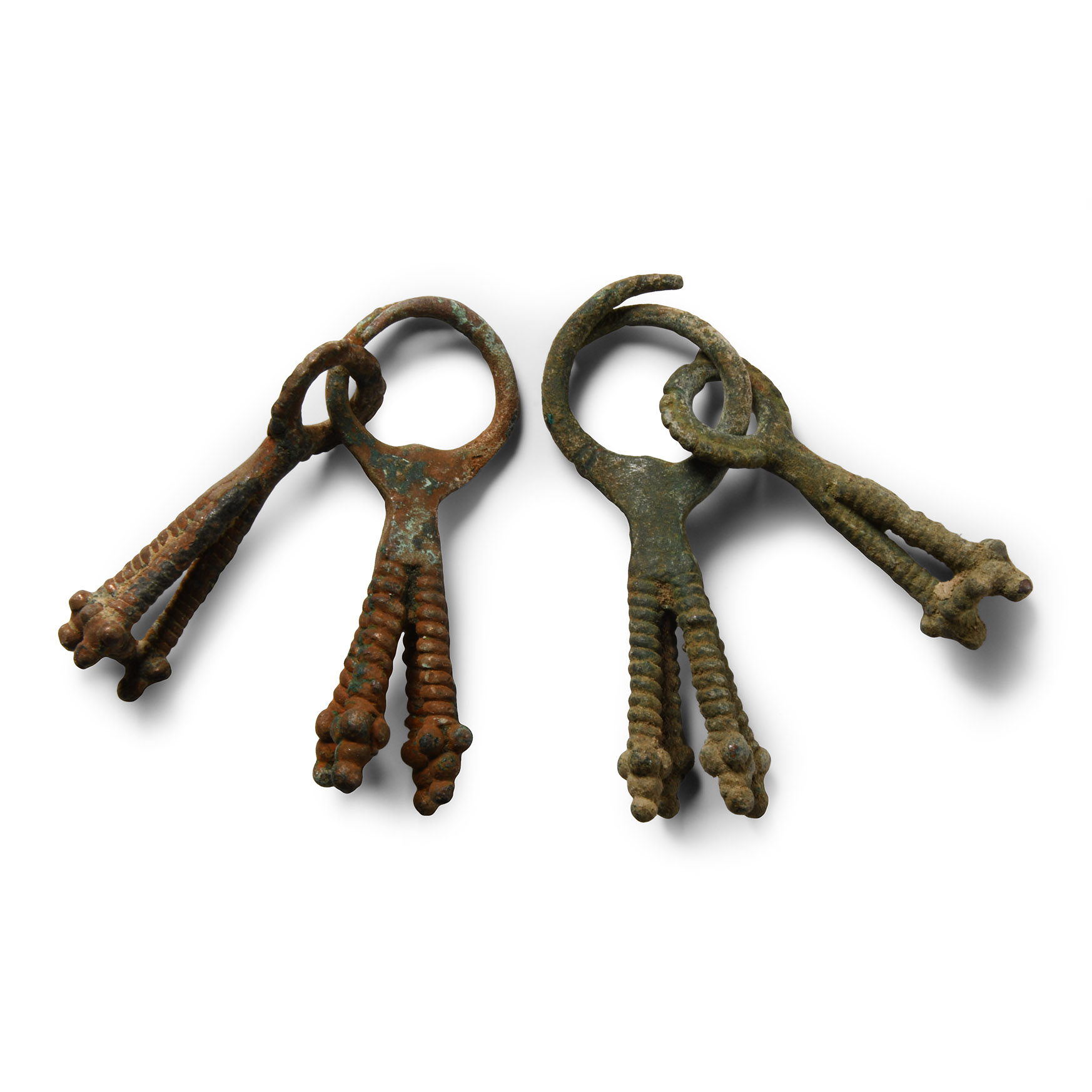
Luristan Bronze Pendant Pair
13TH-6TH CENTURY B.C.
2 1/4 - 2 3/8 in. (49 grams total, 57-61 mm).
Comprising a matched pair of pendants with overlapping loop finials, four ribbed stems radiating from the base, a separate pendant of similar form hanging from the loop. [2, No Reserve]
ProvenanceUK private collection before 2000.
On the UK art market.
Property of a London gentleman.
TimeLine Auctions follows a vetting process to ensure the authenticity and legality of all items, reinforcing our commitment to integrity and responsible trading. Each antiquity, antique, and coin lot undergoes thorough examination by a vetting committee of at least ten external specialists, professional trade association members, scientists, and archaeologists: Our Vetting Process
AUCTIONS:
TimeLine is a leading auction house specialising in antiquities, ancient art, collectables, natural history, coins, medals, and books. Our auctions offer museums, collectors, historians, and enthusiasts the opportunity to acquire unique and historically significant pieces.
-
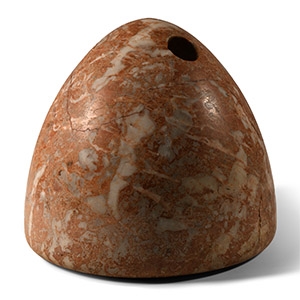
Bactrian Veined Marble Weight
2nd millennium B.C.Estimate: £800 - 1,000 (+bp*)
Opening Bid: £400
Conical in profile with flat base and U-shaped channel through the apex. 9.35 kg, 18 cm
Ex London, UK, gallery, 1971-early 2000s. -
.jpg)
Proto-Sumerian Pictographic Tablet for Distribution of Sheep by the Wife of E.Kisal
Uruk III, circa 3200-3000 B.C.Sold for (Inc. bp): £10,400
Terracotta pillow-shaped tablet with grid to each broad face, each cell with an impressed image and a corresponding number of impressions from the tip of a rod, a list for the distribution of animals to the contrary reading: Obverse: Column 1 1. 2(N01) , U8 2 ewes 2. 3(N01) , UDUNITA~a 3 male sheep 3. 1(N01) , UD5~a 1 …-sheep 4. 4(N01) , MASZ2 |U4x1(N57)|# 4 goats day 1 5. , GAL~a SAL E~a (name?) Column 2 1. 1(N01) , U8 1 ewe 2. 4(N01) , UDUNITA~a 4 male sheep 3.a. 5(N01) , MASZ2 5 goats 3.b1. 1(N01) , |U4x3(N57)|# GAL 1 large 3.b2. 4(N01) , |U4x1(N57)|# TUR 1 small 4. , |SZE~a.NAM2| … Reverse: Column 1 1. 1(N14) , SAL E~a [...] 1 … 2. 1(N14)# [...] 1 … Column 2 1. 3(N01) , U8 (total) 3 ewes 2. 7(N01) , UDUNITA~a (total) 7 male sheep 3. 9(N01) , MASZ2 (total) 9 goats 4. 1(N01) , UD5~a (total) 1 …-sheep Column 3 1. , |SIxKU~b1| 2(N14) , BA MASZ GAN2 SAL E~a KISAL~b1 (interpretation: distributed in the SI.KU settlement, the wife of E.KISAL being responsible). 72.3 grams, 80 mm
From specialised collection of cuneiform texts, formed in the 1950s-1990s. The property of a London gentleman and housed in London, thence by descent to family members. Examined by Professor Wilfrid George Lambert FBA (1926-2011), historian, archaeologist, and specialist in Assyriology and Near Eastern archaeology, in the late 1980s and 1990s. The collection is exceptional for the variety of types, including some very rare and well preserved examples. This lot has been checked against the Interpol Database of stolen works of art and is accompanied by a search certificate number no.12117-215351. -
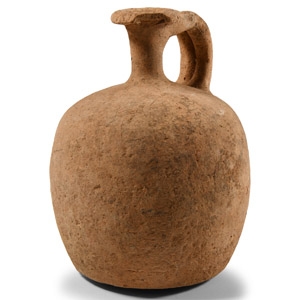
Holy Land Terracotta Juglet
Circa 2nd millennium B.C.Sold for (Inc. bp): £98
Of oblate profile with trumpet-shaped mouth, bifid strap handle to the rera. 332 grams, 13.5 cm
From an important collection of terracotta pre 1988, London and Geneva.
