
Loading, please wait...
LOT 1466
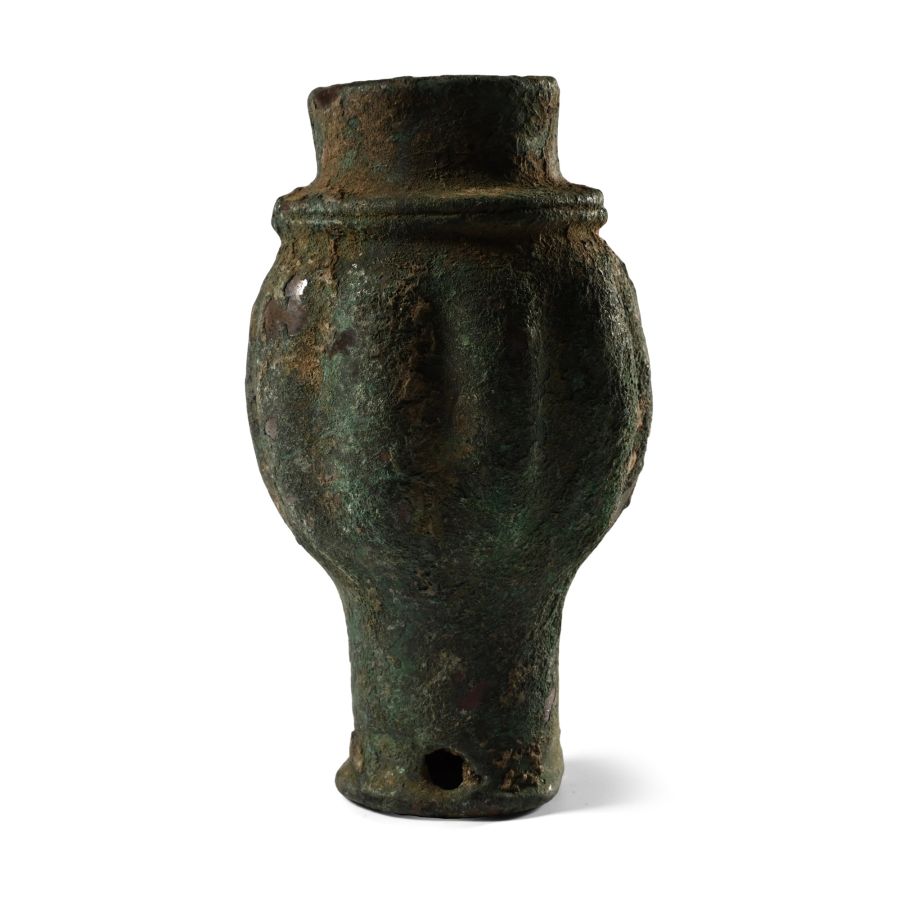
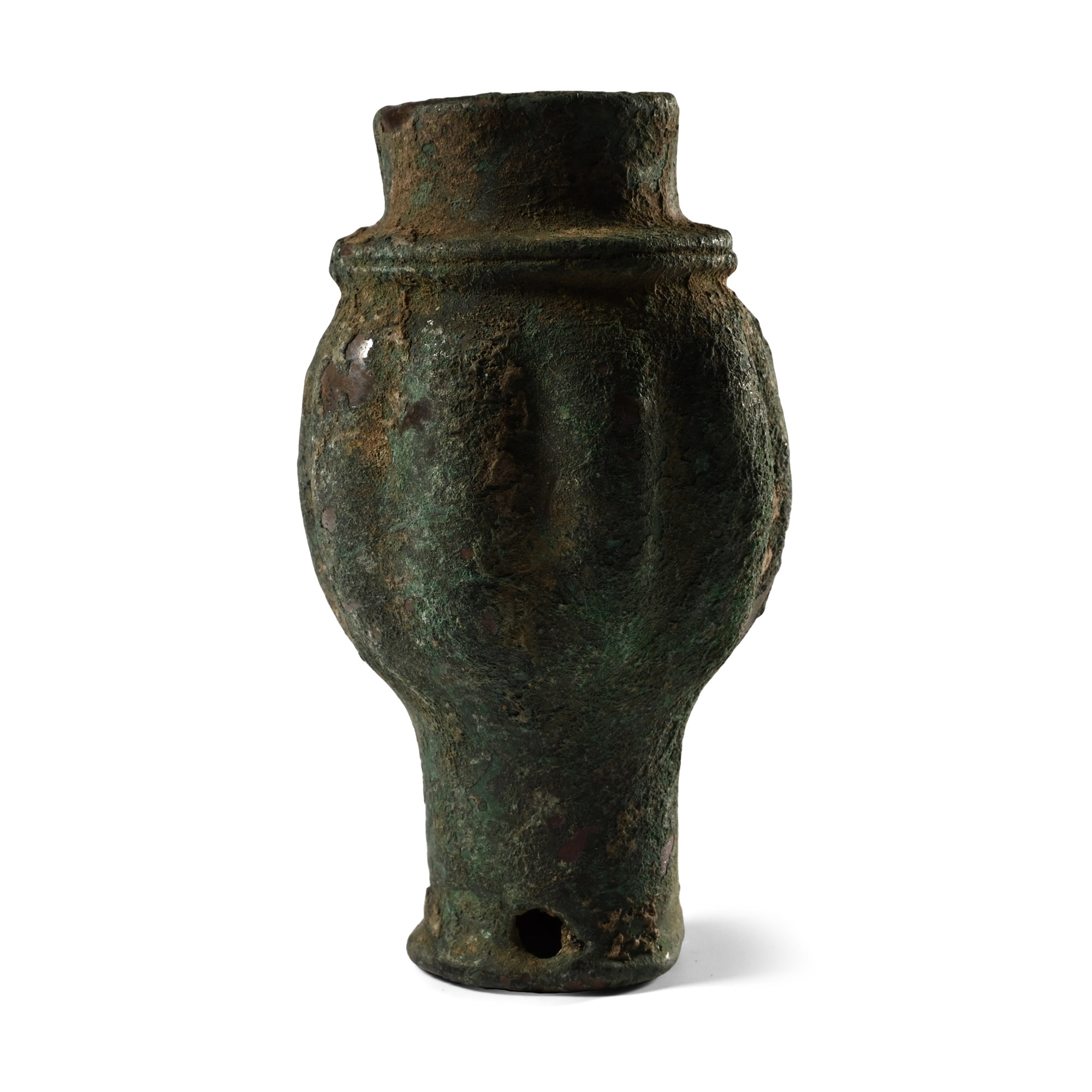
Luristan Bronze Macehead
13TH-7TH CENTURY B.C.
3 7/8 in. (416 grams, 98 mm).
Comprising a cylindrical shaft with flared mouth, rounded flanges around the swollen head, horizontal stepped bands; Sara Gorz type.
ProvenanceAcquired 1980-2015.
Ex Abelita family collection.
This lot is accompanied by an illustrated lot declaration signed by the Head of the Antiquities Department, Dr Raffaele D’Amato.
This lot is accompanied by an illustrated lot declaration signed by the Head of the Antiquities Department, Dr Raffaele D'Amato.
Cf. Musé Cernuschi, Bronzes du Luristan: Enigmes De L'Iran Ancien IIIe-Ier millénaire ac. j.-c., Paris musées, 2008, p.103, for type.
CONDITIONTimeLine Auctions follows a vetting process to ensure the authenticity and legality of all items, reinforcing our commitment to integrity and responsible trading. Each antiquity, antique, and coin lot undergoes thorough examination by a vetting committee of at least ten external specialists, professional trade association members, scientists, and archaeologists: Our Vetting Process
AUCTIONS:
TimeLine is a leading auction house specialising in antiquities, ancient art, collectables, natural history, coins, medals, and books. Our auctions offer museums, collectors, historians, and enthusiasts the opportunity to acquire unique and historically significant pieces.
LOT 1466
Luristan Bronze Macehead
Estimate £100 - 140€120 - 160 (for guidance only)$140 - 190 (for guidance only)
-
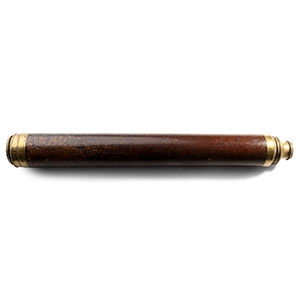
Large Mahogany Telescope with Brass Fittings
19th century A.D.Sold for (Inc. bp): £124
Large wooden barrel with brass eyepiece and inner tube, marked in copperplate script 'T.Harris & Son, London / Day or Night'. 1.05 kg, 55 cm
From the private collection of author and historian Dr DeWitt Bailey, one of the global authorities on the confederate army in the US civil war; thence by descent to his grandson. -
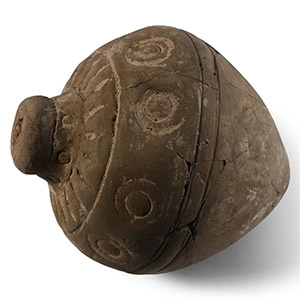
Byzantine 'Greek Fire' Ceramic Fire Bomb or Hand Grenade
9th-11th century A.D.Sold for (Inc. bp): £130
Piriform in profile with domed mouth and impressed motifs to the shoulder; intended to be filled with explosive liquid and a wick, and used as a hand grenade. 400 grams, 10.5 cm
From an important specialist collection, London, UK, 1990s onwards. Accompanied by an academic paper by military specialist Dr Raffaele D'Amato, dated 15 July 2019 and titled 'Eastern Roman Empire - Greek Fire Bomb or Hand Grenade (μεσαίον kακάβιον) 9th-11th century AD'.
Apart from the use of siphons or manual flame-throwers called cheirosiphona, special corps of Roman soldiers employed terracotta grenades, in the form of small jars, abundantly evidenced in archaeological excavations. They were called μεσαία kακαβιά or κυτροκακάβια where the former had a bulbous shape and the latter a more cylindrical form. -
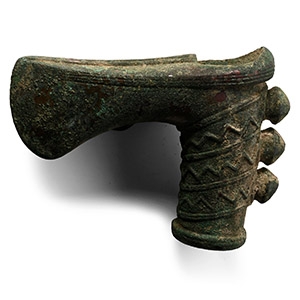
Elamite Decorated Bronze Axehead
2nd-1st millennium B.C.Estimate: £500 - 700 (+bp*)
Opening Bid: £250
With a slender, scooped blade, a round socket with a ribbed outer flange, and three lobed extensions to the rear of the socket with low-relief decorative bands. 360 grams, 10.4 cm
French collection, 1980s. Acquired on the London art market. Private collection, London, UK.
