
Loading, please wait...
LOT 1483
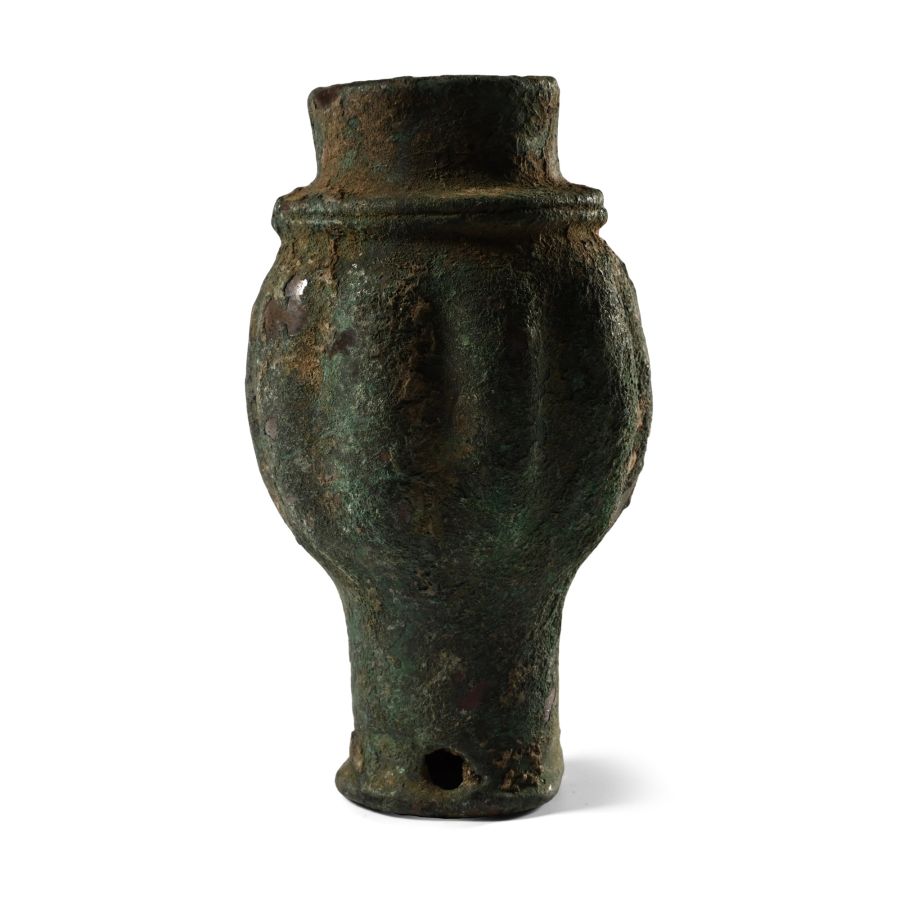
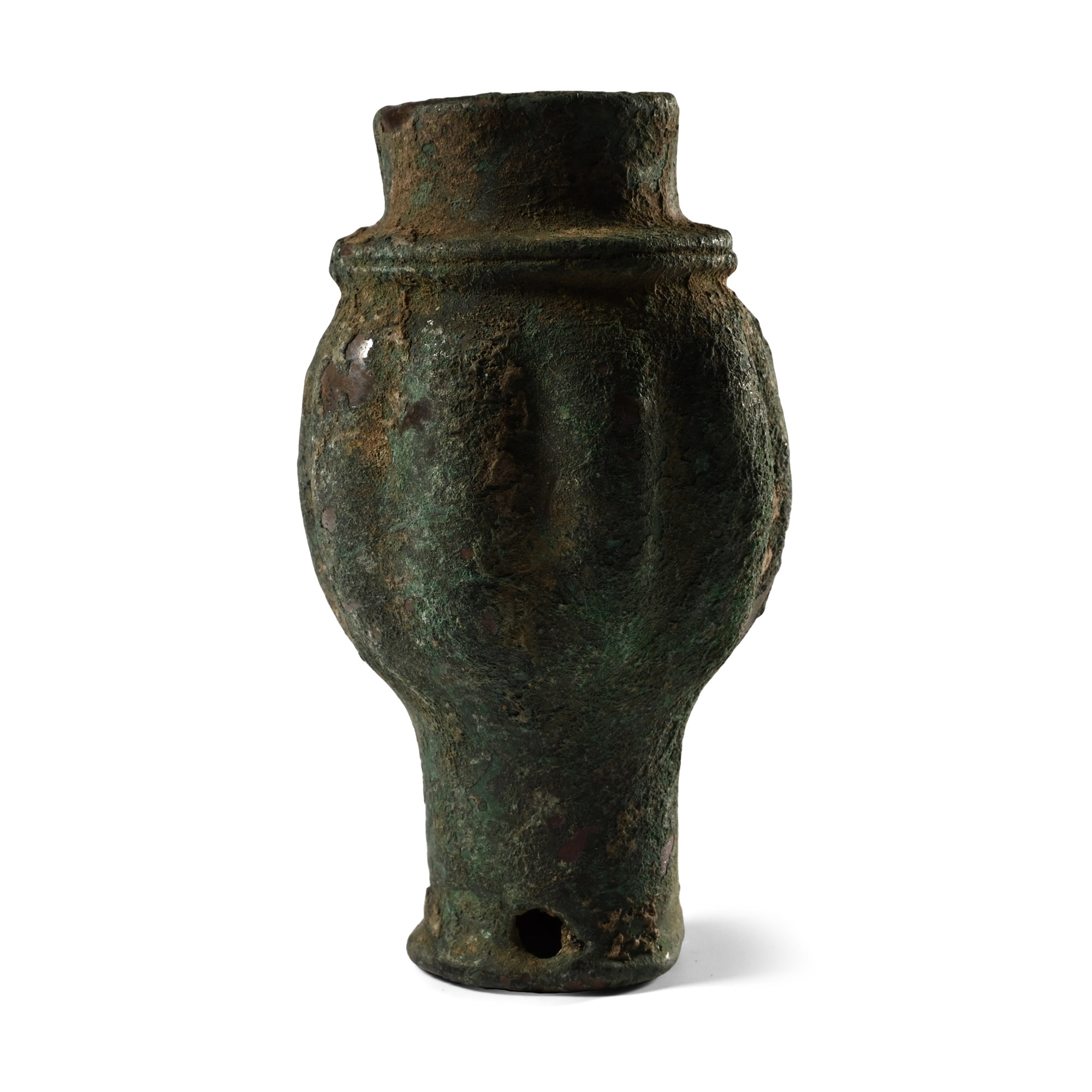
Luristan Bronze Macehead
13TH-7TH CENTURY B.C.
3 7/8 in. (416 grams, 98 mm).
Comprising a cylindrical shaft with flared mouth, rounded flanges around the swollen head, horizontal stepped bands; Sara Gorz type.
ProvenanceAcquired 1980-2015.
Ex Abelita family collection.
This lot is accompanied by an illustrated lot declaration signed by the Head of the Antiquities Department, Dr Raffaele D’Amato.
This lot is accompanied by an illustrated lot declaration signed by the Head of the Antiquities Department, Dr Raffaele D'Amato.
Cf. Musé Cernuschi, Bronzes du Luristan: Enigmes De L'Iran Ancien IIIe-Ier millénaire ac. j.-c., Paris musées, 2008, p.103, for type.
CONDITIONTimeLine Auctions follows a vetting process to ensure the authenticity and legality of all items, reinforcing our commitment to integrity and responsible trading. Each antiquity, antique, and coin lot undergoes thorough examination by a vetting committee of at least ten external specialists, professional trade association members, scientists, and archaeologists: Our Vetting Process
AUCTIONS:
TimeLine is a leading auction house specialising in antiquities, ancient art, collectables, natural history, coins, medals, and books. Our auctions offer museums, collectors, historians, and enthusiasts the opportunity to acquire unique and historically significant pieces.
LOT 1483
Luristan Bronze Macehead
Estimate £100 - 140€120 - 160 (for guidance only)$140 - 190 (for guidance only)
-
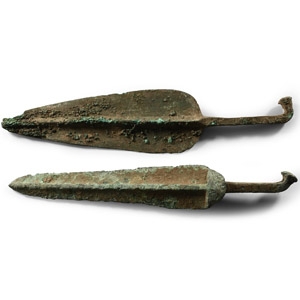
Western Asiatic Bronze Spearheads
14th-10th century B.C.Sold for (Inc. bp): £111
The leaf-shaped ovate blade with rounded, gently curved shoulders and raised midrib, flat rectangular-sectioned tang tapering to a bent end with a fastening button; in one specimen the tang is protruding from the 'blade sheath'. 507 grams total, 26-27.5 cm
Acquired 1980-2015. Ex Abelita family collection. This lot is accompanied by an illustrated lot declaration signed by the Head of the Antiquities Department, Dr Raffaele D’Amato. This lot is accompanied by an illustrated lot declaration signed by the Head of the Antiquities Department, Dr Raffaele D'Amato.
Similar spearheads were excavated in the Marlik Royal cemetery by Dr Negahban, see for example in tomb 47, Trench XXIIE. They were the evolution of a typology which began much earlier in Mesopotamia and the fertile crescent, the type 4 of the Stronach classification, with straight tang and square section, usually thickened at the base with a button tang. The foliate blade was wide and exaggerated in some specimens excavated at Marlik. -
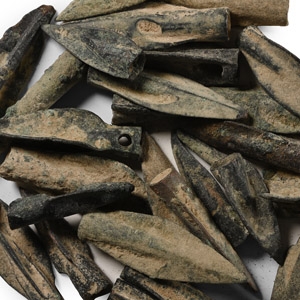
Greek and Other Bronze Arrowhead Collection
Circa 5th-3rd century B.C.Sold for (Inc. bp): £156
Comprising mainly leaf-shaped, triangular, and trilobate socketted arrowheads. 98.5 grams total, 24-40 mm
Ex London art market, 1980-1990s. This lot is accompanied by an illustrated lot declaration signed by the Head of the Antiquities Department, Dr Raffaele D'Amato.
In Greek warfare, archers were mainly employed by Scythians and Cretans. Both used composite bows made of wood, horn, bone and sinew. This explains the great range of Scythian arrowheads also found on the Greek sites. -
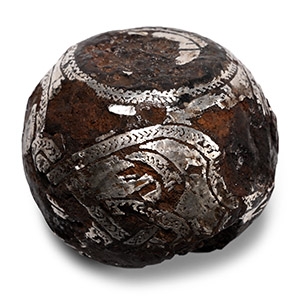
Viking Silver Inlaid Iron Weight
9th-11th century A.D.Sold for (Inc. bp): £338
Polyhedral weight bearing Insular Style inlaid decoration in the form of serpentine creatures in tondos, on a silver inlaid background. 176 grams, 38 mm
Private collection formed in Europe in the 1980s. Westminster collection, central London, UK. This lot is accompanied by an illustrated lot declaration signed by the Head of the Antiquities Department, Dr Raffaele D'Amato.
These weights were adopted by the Vikings from Middle Eastern examples and appear to have become a typical weight standard for traders. They are, in archaeology, an important form of evidence for the Viking commerce. Many of them, like those found in Ireland and of Arabic type, suggest a standardised system of weights in different areas.
