
Loading, please wait...
LOT 1368
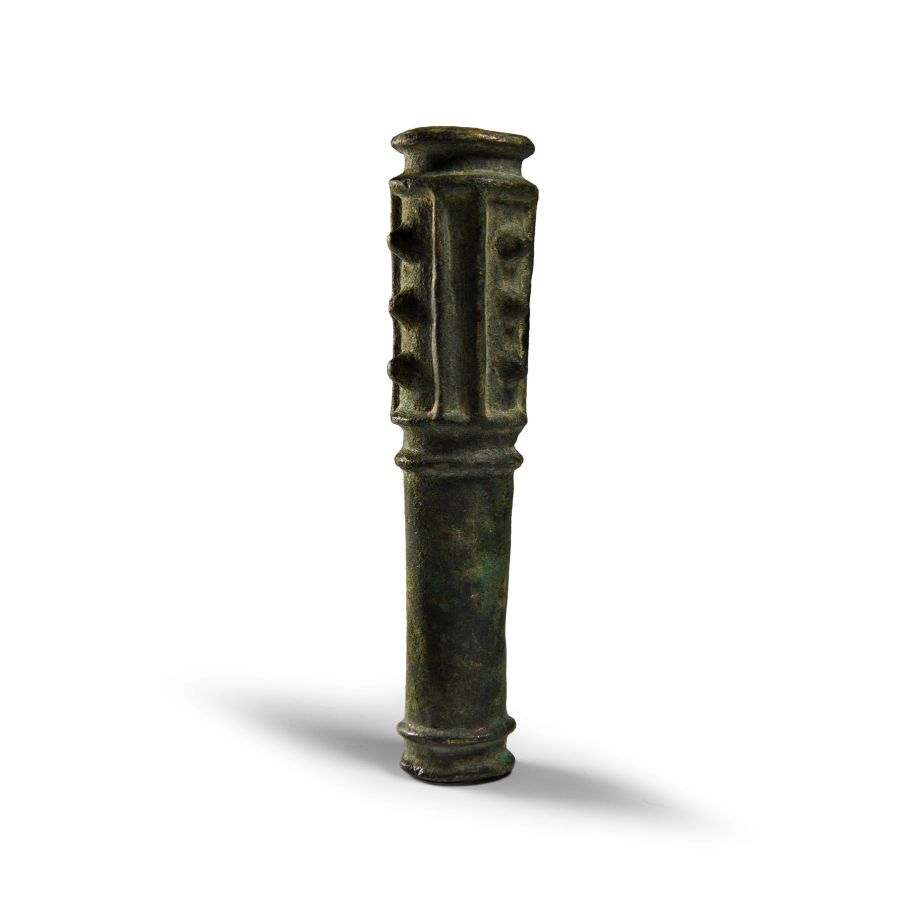
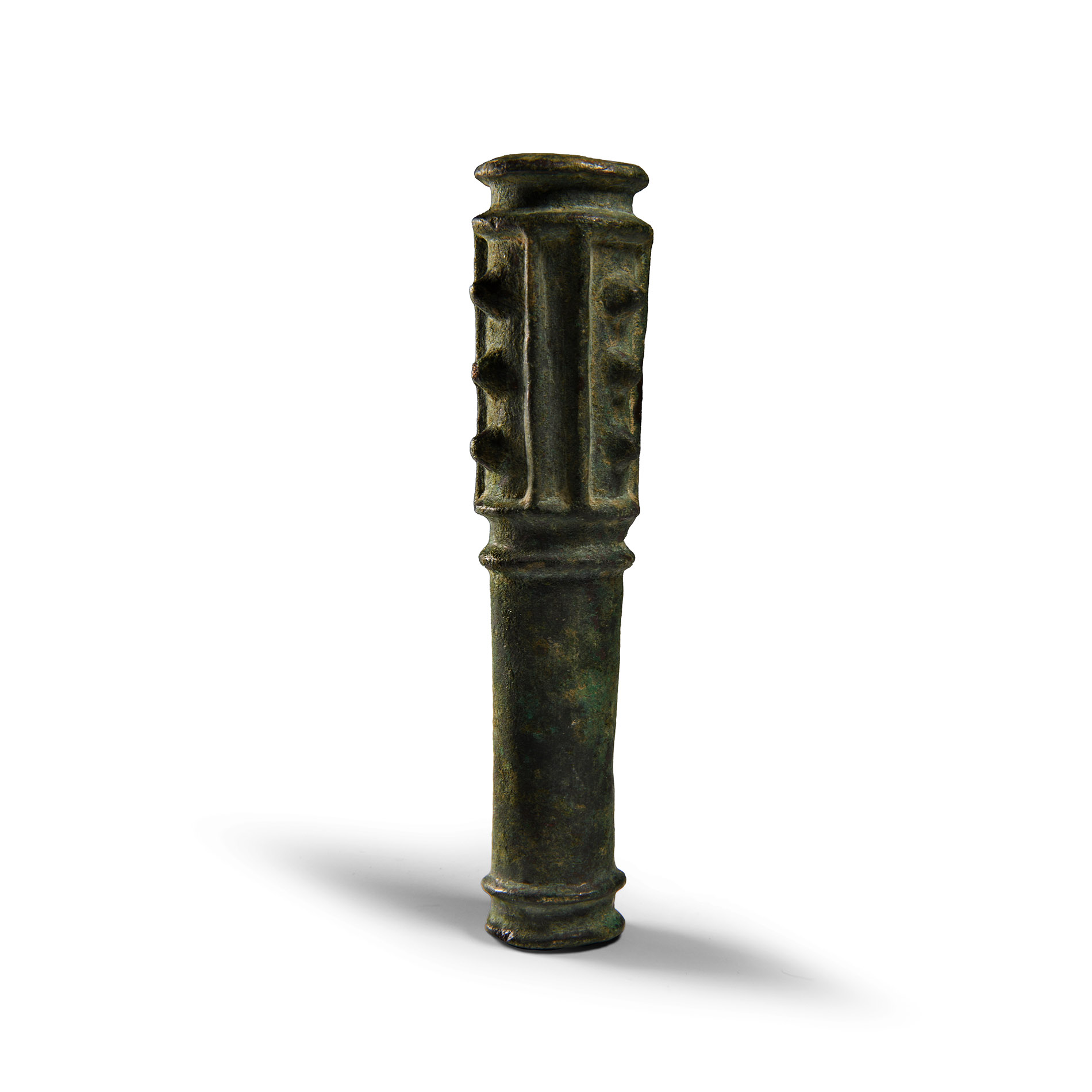
Luristan Bronze Macehead
LATE 2ND MILLENNIUM B.C.
5 3/8 in. (244 grams, 13.5 cm).
Of cylindrical shape, the upper section with alternating rectangular panels and vertical rows of three prominent spikes, short cylindrical shaft edged at top and bottom.
ProvenanceEx London, UK, collection, before 1988.
LiteratureSee Godard, A., Les Bronzes du Luristan, Paris, 1931, pl.XIX, no.58, for a similar; Khorasani, M. M., 'Bronze and iron weapons from Luristan' in Antiguo Oriente: Cuadernos del Centro de Estudios de Historia del Antiguo Oriente, 7, 2009, fig.8.
FootnotesThe mace was probably the oldest weapon used by humans. This weapon has been used in different ways and it was probably considered the main tool in the civilisation of the Kassites because of the high number of maces found in this area. Bronze maces in Luristan probably had wooden handles, although most of them unfortunately have been eroded and severely deteriorated. According to Khorasani, such maces were realised with lost-wax process.
CONDITIONTimeLine Auctions follows a vetting process to ensure the authenticity and legality of all items, reinforcing our commitment to integrity and responsible trading. Each antiquity, antique, and coin lot undergoes thorough examination by a vetting committee of at least ten external specialists, professional trade association members, scientists, and archaeologists: Our Vetting Process
AUCTIONS:
TimeLine is a leading auction house specialising in antiquities, ancient art, collectables, natural history, coins, medals, and books. Our auctions offer museums, collectors, historians, and enthusiasts the opportunity to acquire unique and historically significant pieces.
-
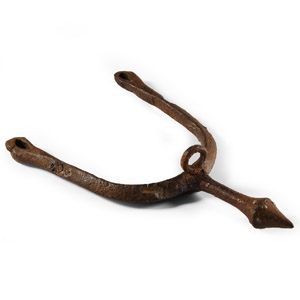
Carolingian Iron Spur with Silver Studs
Circa 8th century A.D.Sold for (Inc. bp): £221
With D-section arms, attachment loop, prick spur with two bands of applied studs. 150 grams, 18 cm
Ex B Posey collection, 1990s. Ex Den of Antiquity, Cambridgeshire, UK. Accompanied by a dealer's catalogue information card. -
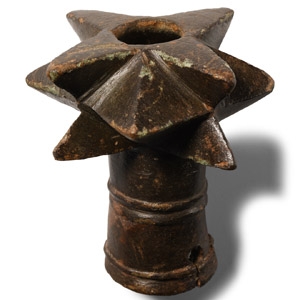
'The Farnham Castle' English Medieval Socketted Macehead
13th-14th century A.D.Sold for (Inc. bp): £2,600
With a long tubular socket and raised circumferential ribs, three tiers of radiating spikes; found with remains of wooden haft in situ. 312 grams, 80 mm
Found near Farnham Castle, Farnham, Surrey, UK. From the private collection of a Surrey, UK, gentleman.
Maces were in use since the Bronze Age. In the Medieval Western Europe, maces are attested in England as throwing weapons at the Battle of Hastings in 1066. At the end of 12th century A.D., the mace head was made of metal and was, under the influence of Byzantium, one of the weapons of the armoured knight. Originally of round section and armed with strong pyramidal spikes, the mace head evolved into a cylindrical shape, sometimes reinforced with spikes, most often with flanges. -
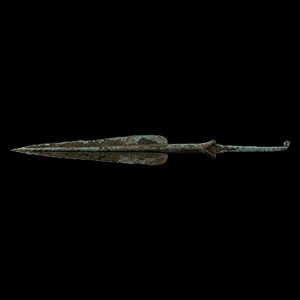
Marlik Type Bronze Tanged Spearhead
12th-11th century B.C.Estimate: £100 - 140 (+bp*)
Opening Bid: £50
With heavily ridged and tapering blade, short collared shaft and a square-section tapering tang bent at the tip. 159 grams, 31.5 cm
Acquired 1980-2015. Ex Abelita family collection.
The weapon belongs to type I of the Khorasani classification. Similar weapons have been excavated in Marlilk by Professor Negahban and dated by Stutzinger to the late 13th-early 12th century B.C.
