
Loading, please wait...
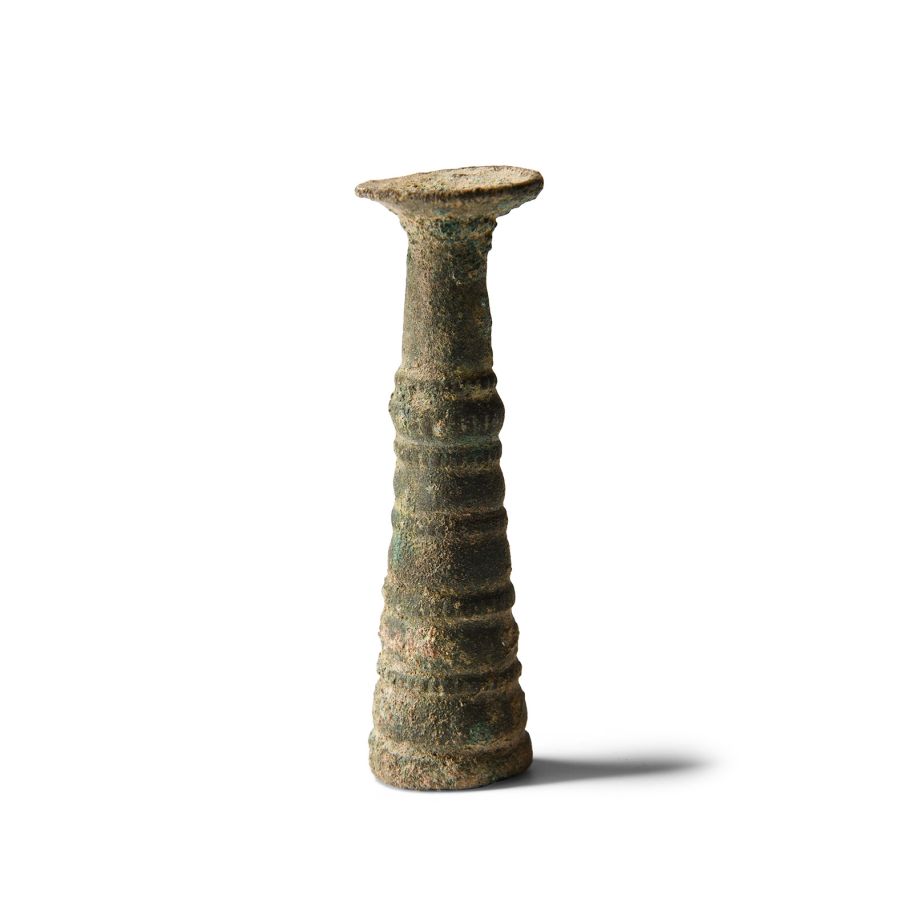
LOT 1278
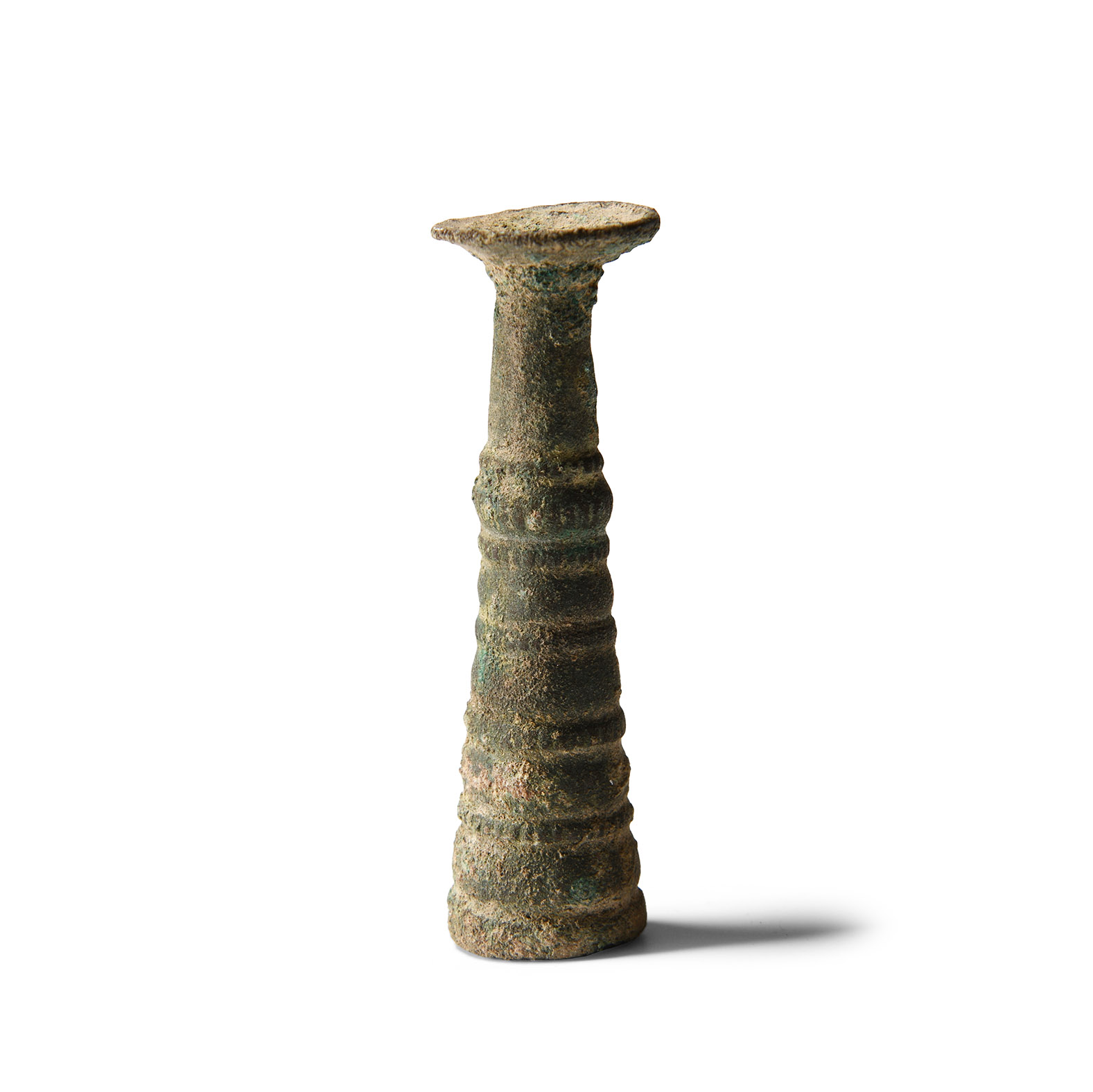
Luristan Bronze Kohl Pot
1ST MILLENNIUM B.C.
3 in. (60 grams, 78 mm).
Of tapering cylindrical form with everted rim, decoratively notched ribs of alternating breadth to to body.
ProvenanceAcquired in Europe before 1993.
CONDITIONTimeLine Auctions follows a vetting process to ensure the authenticity and legality of all items, reinforcing our commitment to integrity and responsible trading. Each antiquity, antique, and coin lot undergoes thorough examination by a vetting committee of at least ten external specialists, professional trade association members, scientists, and archaeologists: Our Vetting Process
AUCTIONS:
TimeLine is a leading auction house specialising in antiquities, ancient art, collectables, natural history, coins, medals, and books. Our auctions offer museums, collectors, historians, and enthusiasts the opportunity to acquire unique and historically significant pieces.
LOT 1278
Luristan Bronze Kohl Pot
Estimate £180 - 240€210 - 280 (for guidance only)$240 - 320 (for guidance only)
-
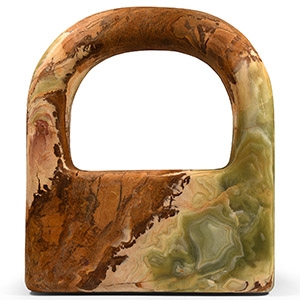
Large Bactrian Green Onyx 'Hand-Bag' Weight
Circa late 3rd-early 2nd millennium B.C.Estimate: £7,000 - 9,000 (+bp*)
Opening Bid: £3,500
Substantial mottled green and tan weight with arched handle; repaired. 11.6 kg, 35.5 cm
with Gallery Rosen Ancient Art, Tel Aviv, 1968. Property of a London gentleman. This lot has been checked against the Interpol Database of stolen works of art and is accompanied by a search certificate number no.12261-218639.
Among the most iconic intercultural style objects are the so-called 'lock' or 'hand bag' weights. These were probably not weights at all, but were likely badges of high office, carried to indicate authority. Similar objects have been found throughout Mesopotamia, the islands of the Persian Gulf, on the Iranian steppe, as well as the Indus Valley. -

Elamite Silver Beaker with Three Ibexes
Circa 1500-800 B.C.Estimate: £40,000 - 60,000 (+bp*)
Opening Bid: £19,000
Raised from a single sheet with conical body and everted rim, three striding ibexes in repoussè, each with its head held up high and depicted with defined musculature and genitalia; band of ovule decoration above and below, three hanging flowers separating the ibexes; the base with a an eight-petalled flower; late Elamite or Marlik. 153 grams, 12 cm
with Mahboubian Gallery, New York, acquired prior to 1966. Property of a London gentleman. Accompanied by an academic report by Dr Raffaele D’Amato. This lot has been checked against the Interpol Database of stolen works of art and is accompanied by a search certificate no.12161-218632.
This splendid vessel, decorated with a design possibly of Elamite origin, probably originates from North-Western Iran, or from South Caspian Area. Hammered sheet vessels were produced in Western Iranian metal workshops since the 3rd millennium B.C. (Moorey, Bunker, Porada, Markoe, 1981, p.82). By far the closest parallels are from Marlik, Kaluraz and Hasanlu, where finds of silver and gold vessels with animal friezes, and also of the same form and style of animal depiction and body decoration are recorded (Negahban, 1964, figs. 103, 108, 109, 111, 113, 136, 140, 144, pls. IV, VIIIA, XII, XVI). -
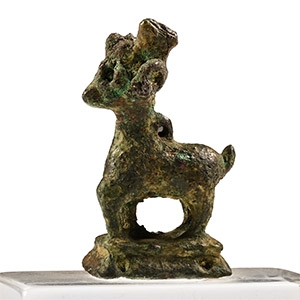
Luristan Miniature Bronze Ibex
8th-6th century B.C.Sold for (Inc. bp): £117
Standing with left front leg slightly bent, crested head, detailed muzzle, raised tail, loop to the back; mounted on a custom-made display stand. 43 grams, 58 mm
with a London, UK gallery, 1971-early 2000s.
Pendants in the form of animals, mostly goats or mouflons, but also horses or other equids, are quite common among the corpus of the Luristan pendants.
