
Loading, please wait...
LOT 1179
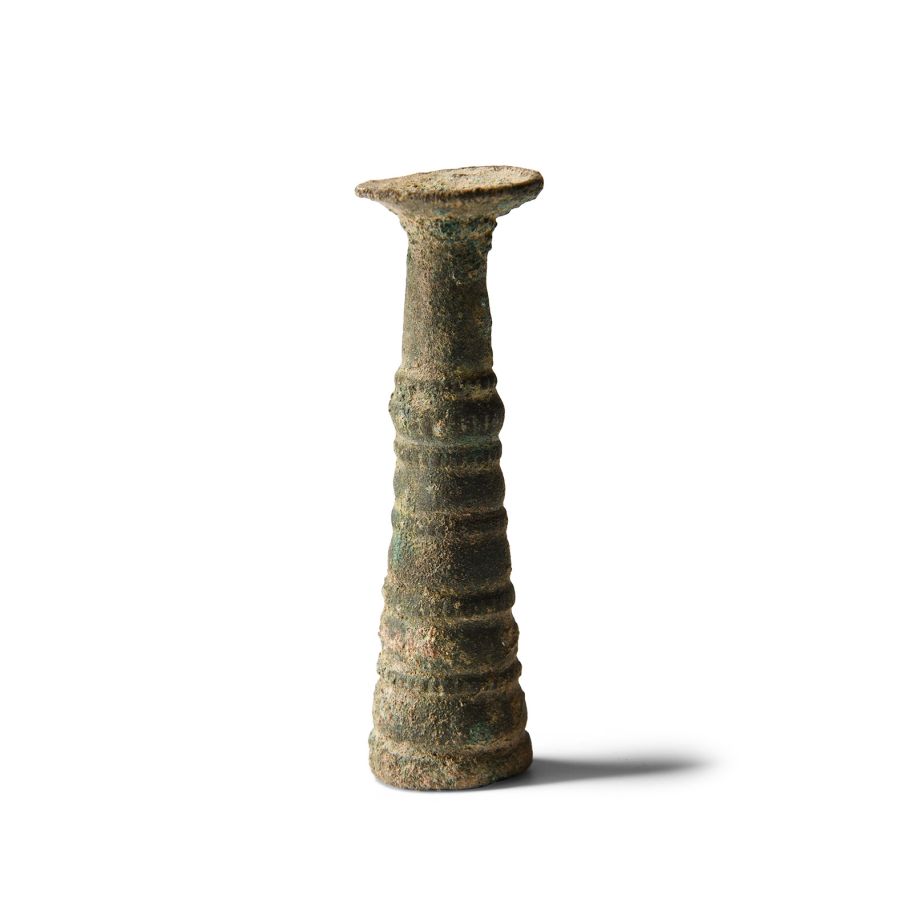
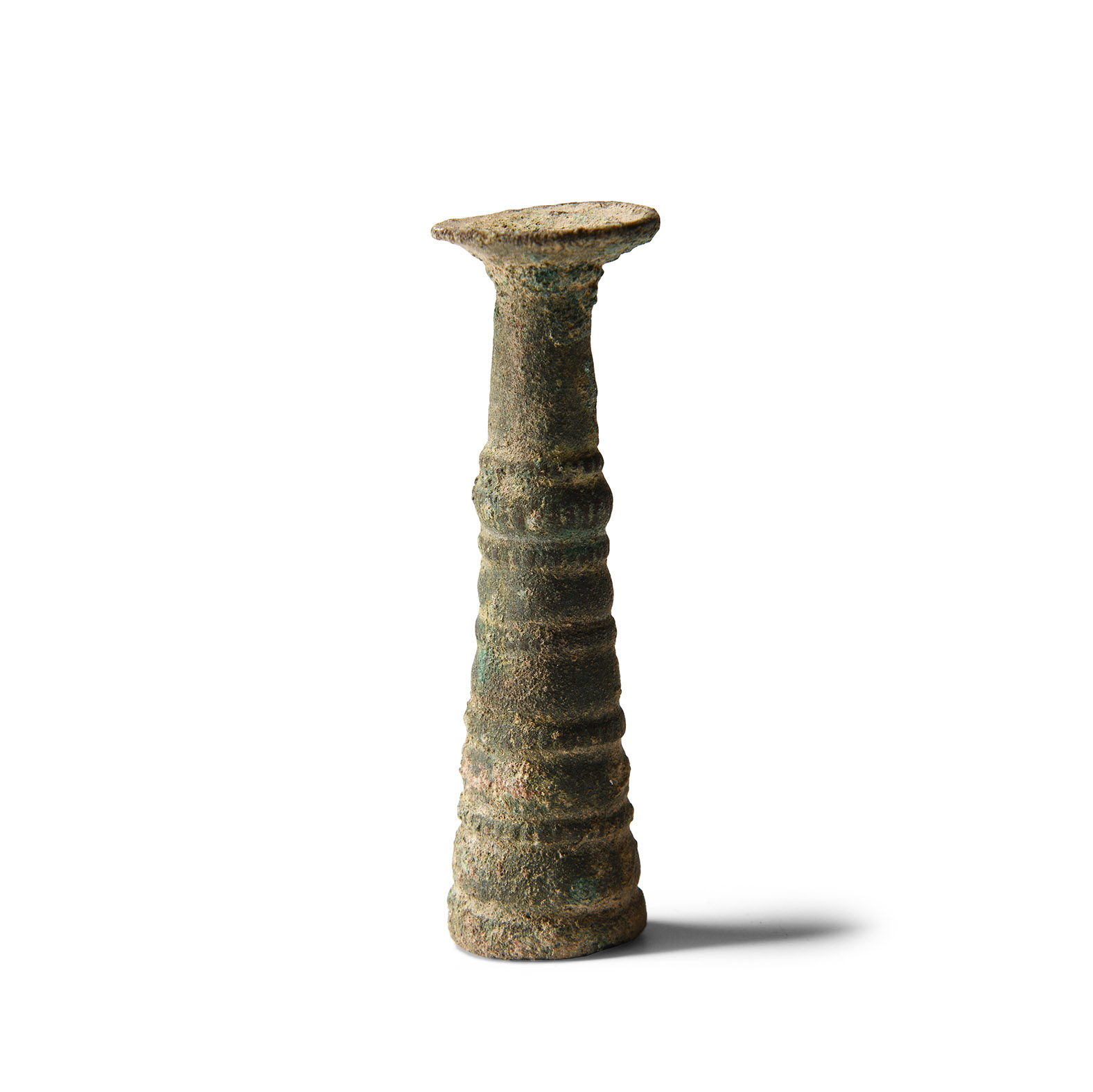
Luristan Bronze Kohl Pot
1ST MILLENNIUM B.C.
3 in. (60 grams, 78 mm).
Of tapering cylindrical form with everted rim, decoratively notched ribs of alternating breadth to to body.
ProvenanceAcquired in Europe before 1993.
CONDITIONTimeLine Auctions follows a vetting process to ensure the authenticity and legality of all items, reinforcing our commitment to integrity and responsible trading. Each antiquity, antique, and coin lot undergoes thorough examination by a vetting committee of at least ten external specialists, professional trade association members, scientists, and archaeologists: Our Vetting Process
AUCTIONS:
TimeLine is a leading auction house specialising in antiquities, ancient art, collectables, natural history, coins, medals, and books. Our auctions offer museums, collectors, historians, and enthusiasts the opportunity to acquire unique and historically significant pieces.
LOT 1179
Luristan Bronze Kohl Pot
Estimate £200 - 300€230 - 350 (for guidance only)$270 - 410 (for guidance only)
-
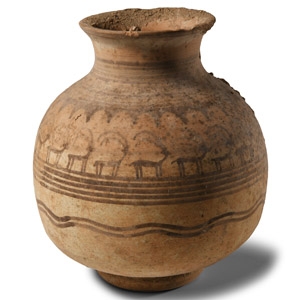
Western Asiatic Terracotta Storage Jar with Procession of Ibexes
Circa 1st millennium B.C.Sold for (Inc. bp): £195
Globular with flared rim, horizontal painted bands to the shoulder and equator, wavy line beneath and frieze of ibexes above. 768 grams, 15.7 cm high
From a collection acquired on the UK art market from various auction houses and collections mostly before 2000. From an important Cambridgeshire estate; thence by descent. -
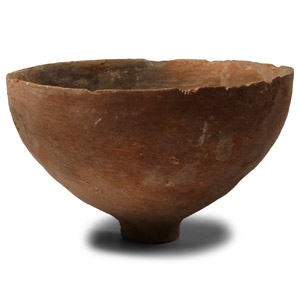
Trans-Jordan Polished Terracotta Bowl
Early Bronze Age, 3rd-2nd millennium B.C.Sold for (Inc. bp): £46
Hemispherical n profile with small foot, dimple to the underside; rim chipped. 145 grams, 65 mm high
From a family collection pre 1988. -
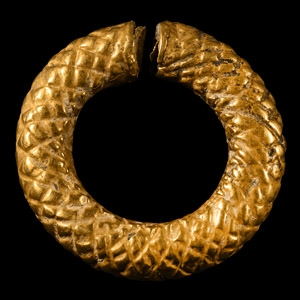
Achaemenid Gold Hair Ring
Circa 5th century B.C.Sold for (Inc. bp): £260
A hollow-formed penannular hair ornament with repoussé lattice to the hoop, one end pierced to accept a fixing pin. 4.11 grams, 35 mm
UK private art collection, 1981.
