
Loading, please wait...
LOT 1317
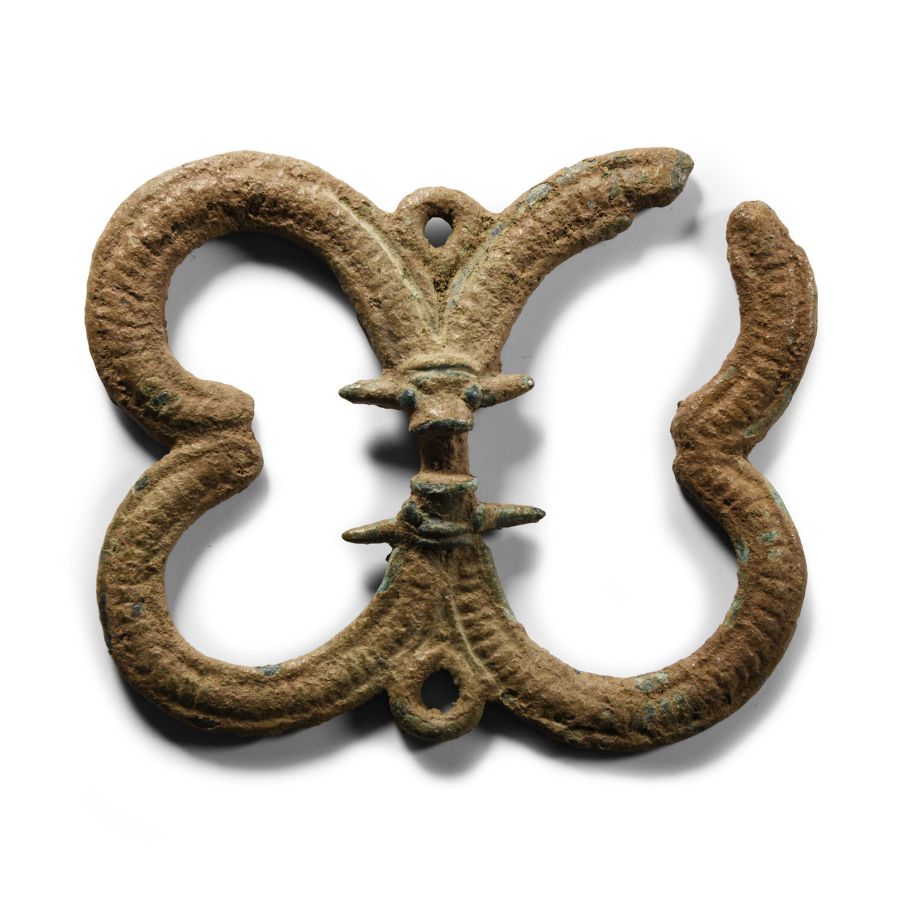
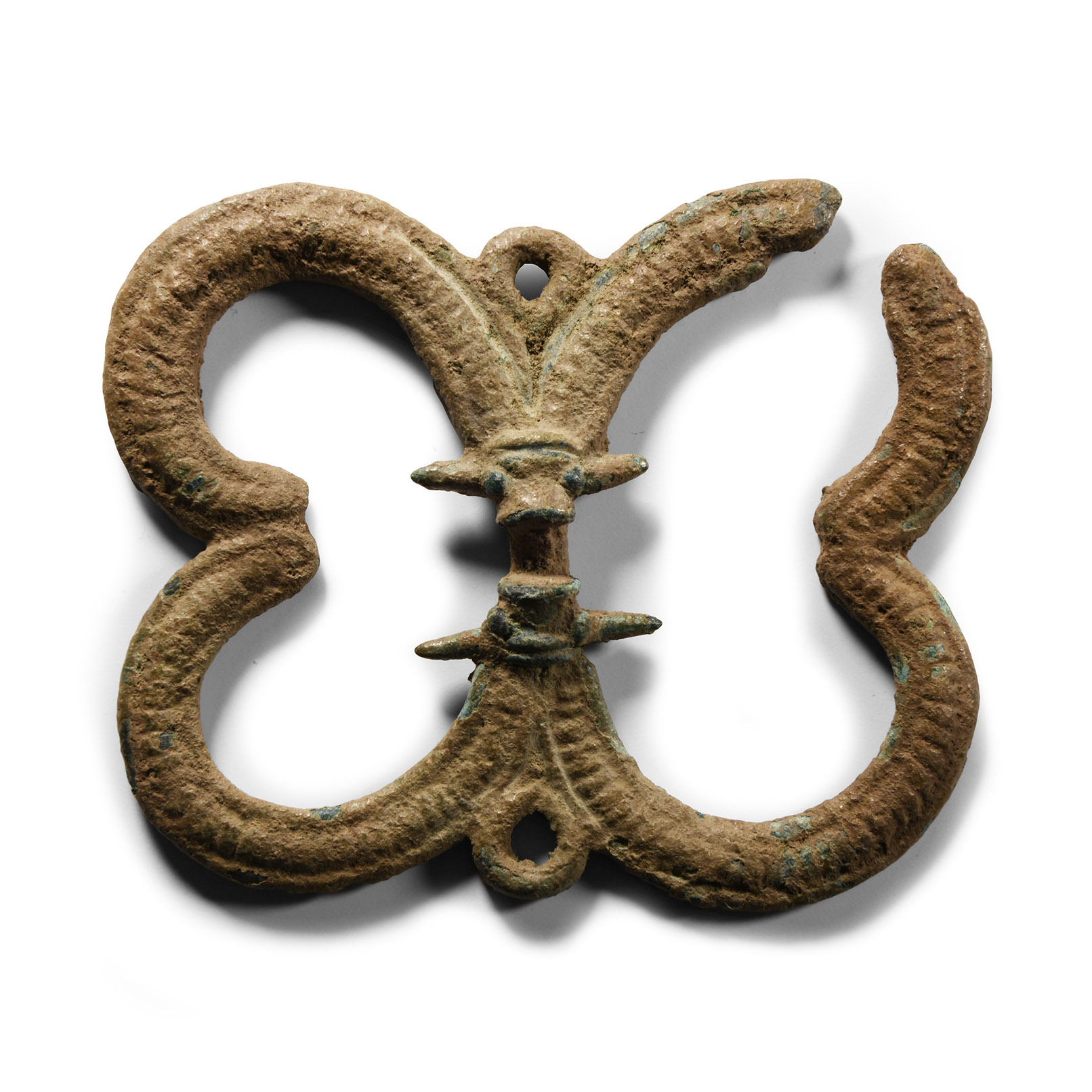
Luristan Bronze Horse Trapping with Animal Decoration
13TH-7TH CENTURY B.C.
4 in. (93 grams, 10 cm).
Formed as two waisted loops with ribbed detailing, central slot framed by facing ibex heads, small loops in the spandrels. [No Reserve]
ProvenanceAcquired 1980-2015.
Ex Abelita family collection.
Accompanied by an earlier catalogue identification card.
TimeLine Auctions follows a vetting process to ensure the authenticity and legality of all items, reinforcing our commitment to integrity and responsible trading. Each antiquity, antique, and coin lot undergoes thorough examination by a vetting committee of at least ten external specialists, professional trade association members, scientists, and archaeologists: Our Vetting Process
AUCTIONS:
TimeLine is a leading auction house specialising in antiquities, ancient art, collectables, natural history, coins, medals, and books. Our auctions offer museums, collectors, historians, and enthusiasts the opportunity to acquire unique and historically significant pieces.
-
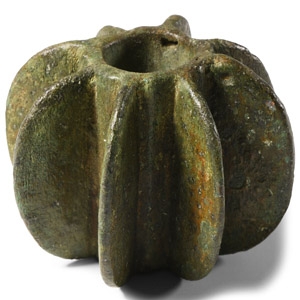
Western Asiatic Finned Macehead
Circa 1000 B.C.Sold for (Inc. bp): £143
With eight projecting vertical flanges and a circular shaft hole. 310 grams, 67 mm
From a collection acquired on the UK art market from various auction houses and collections mostly before 2000. From an important Cambridgeshire estate; thence by descent.
In the Caucasus, the combat mace was very popular throughout the late Bronze Age and the Early Iron Age. The maces could have spiked bronze knobs or often less corrugated, or round, knobs which could also be effectively used. -
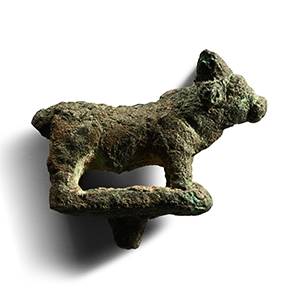
Anatolian Bronze Bull Statue
3rd-2nd millennium B.C.Estimate: £200 - 300 (‡+bp*)
Opening Bid: £100
Modelled standing on a rectangular base, stylised horn, face and coat detailing; tapering lug to underside. 76 grams, 54 mm
Acquired in Europe before 1998. -
.jpg)
Central Asian Chert Cylinder Seal with Hero and Monster
Circa 11th-8th century B.C.Sold for (Inc. bp): £390
With triumphant heroes, accompanied by a museum-quality impression and typed and signed scholarly note issued by W.G. Lambert, late Professor of Assyriology at the University of Birmingham, 1970-1993, which states: 'Cylinder Seal of White Stone 24 x 17 mm. The design shows the same scene twice: a standing hero with big long beard and wearing a long robe to the ankles is gripping one front paw of a rearing monster in front of him as he holds up the other hand. The monster has a bull's body with wings and a bird's head with projecting horns or ears. This is a rare type of seal coming from west central Asia. A date c. 1100-800 BC is the most likely. The seal is in good condition.' 11.3 grams, 24.2 mm (65 grams total, 68 mm including stand)
Ex Signo collection, the property of a West London businessman, formed in the late 1980s-early 1990s; item number T-927. Academically researched and catalogued by the late Professor Lambert in the early 1990s; accompanied by an original typed and signed scholarly note by Professor Wilfrid George Lambert.
