
Loading, please wait...
_900x900.jpg "Luristan Bronze Horse Bit Cheek-Pieces Modelled as Winged Gryphons")
_200x200.jpg "Luristan Bronze Horse Bit Cheek-Pieces Modelled as Winged Gryphons")
.jpg "Luristan Bronze Horse Bit Cheek-Pieces Modelled as Winged Gryphons")
LOT 0221
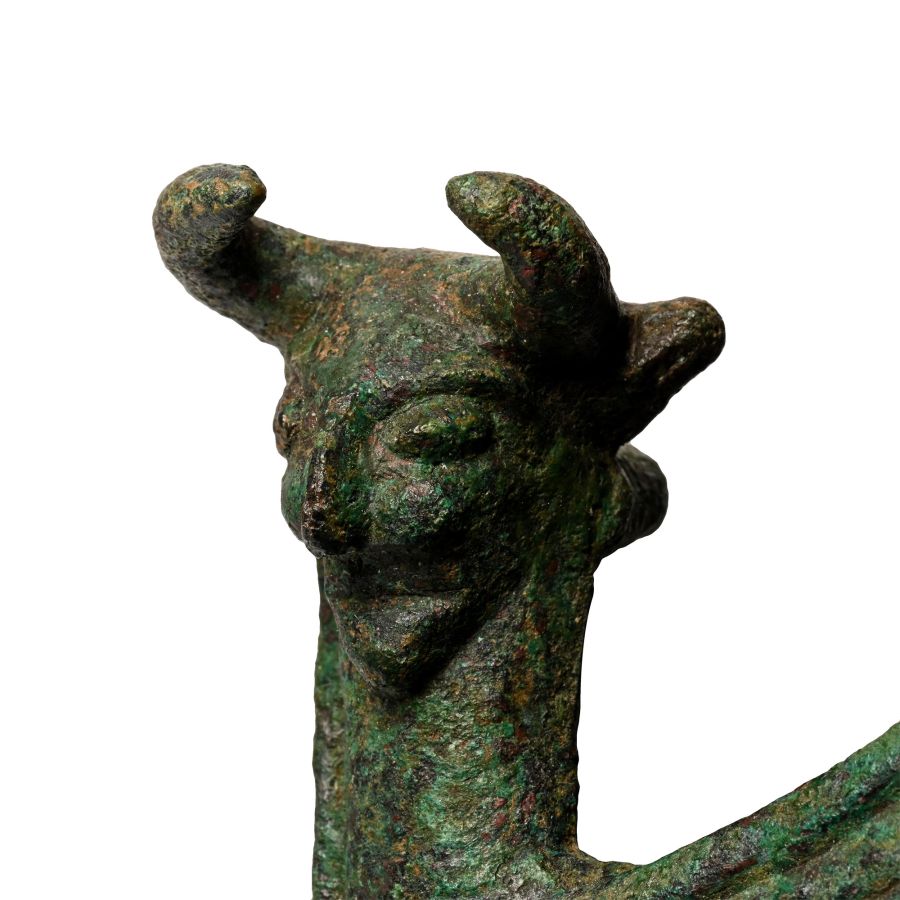
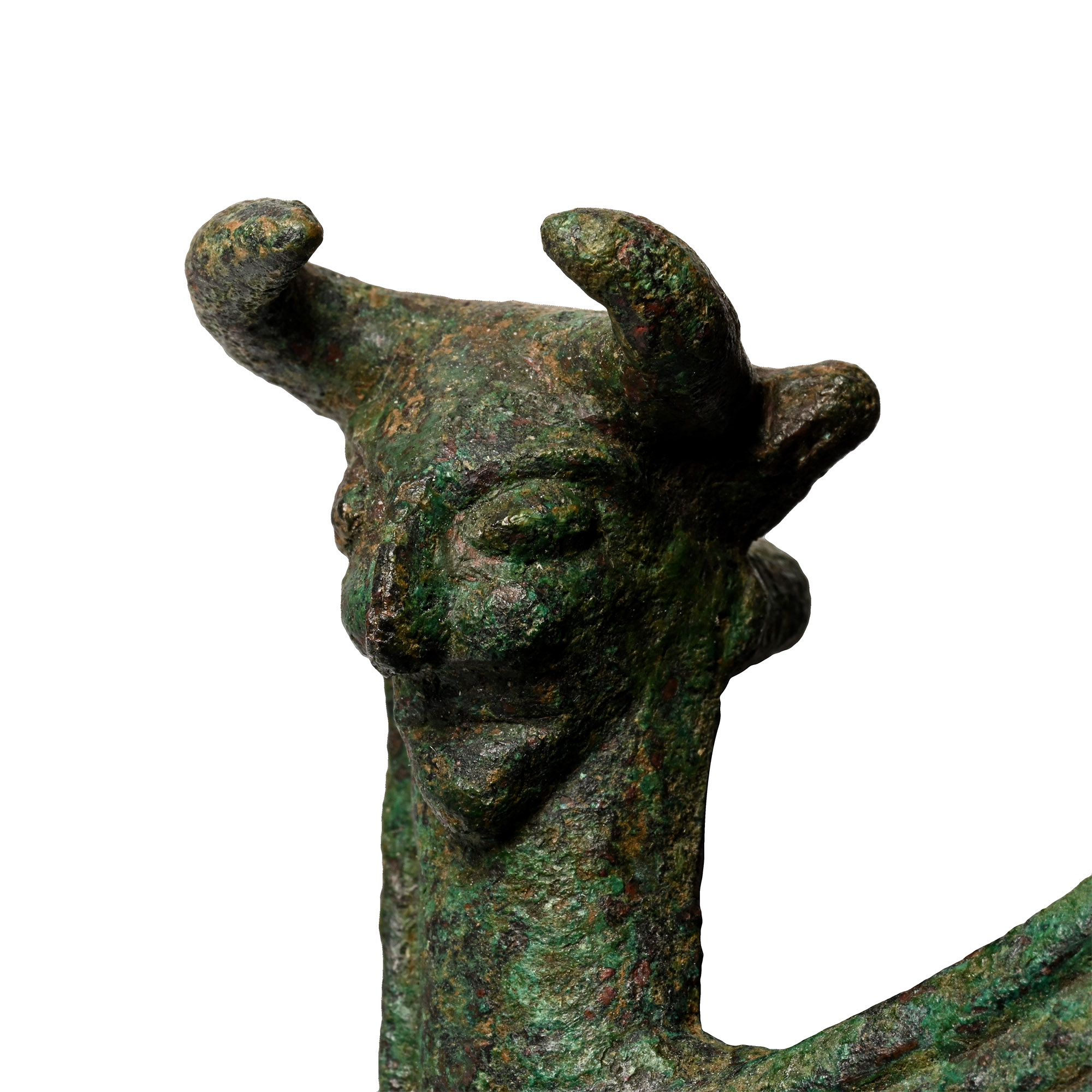
Luristan Bronze Horse Bit Cheek-Pieces Modelled as Winged Gryphons
8TH–7TH CENTURY B.C.
4 1/8 - 4 1/4 in. (10 1/4 in.) (423 grams total, 10.4-10.7 cm (1.07 kg total, 26 cm wide including stand)).
Comprising a matched pair of cheek-pieces, each a winged gryphon standing on a baseline with head turned to face the viewer, curled tail to rump, lateral horns to the brow; pierced at the shoulder to accept the bit; mounted on a custom-made stand. [2]
ProvenanceA.P. family collection, Europe, from 1969, partly transferred to the United Kingdom in 1981.
London art market, after 2000.
This lot has been checked against the Interpol Database of stolen works of art and is accompanied by search certificate number no.12975-245210.
Cf. similar in the Metropolitan Museum of Art, New York, under accession no.32.161.24.
FootnotesHorse equipment was an important symbol of status and power in the Iron Age Near East. Elaborate bits with decorated cheek-pieces were not only practical items for controlling horses but also served a display function, reflecting the wealth and rank of their owners. The sphinx, a creature combining human and animal features, was a common protective figure in the art of the period. Winged sphinxes, in particular, were associated with divine guardianship and the protection of rulers and warriors. The use of such imagery on horse gear underscored the prestige of cavalry and chariotry in the 8th–7th century BCE, when mounted warfare played a central role in the expansion of Near Eastern empires.
CONDITIONTimeLine Auctions follows a vetting process to ensure the authenticity and legality of all items, reinforcing our commitment to integrity and responsible trading. Each antiquity, antique, and coin lot undergoes thorough examination by a vetting committee of at least ten external specialists, professional trade association members, scientists, and archaeologists: Our Vetting Process
AUCTIONS:
TimeLine is a leading auction house specialising in antiquities, ancient art, collectables, natural history, coins, medals, and books. Our auctions offer museums, collectors, historians, and enthusiasts the opportunity to acquire unique and historically significant pieces.
LOT 0221
Luristan Bronze Horse Bit Cheek-Pieces Modelled as Winged Gryphons
Estimate £2,500 - 3,500€2,900 - 4,060 (for guidance only)$3,380 - 4,730 (for guidance only)
-
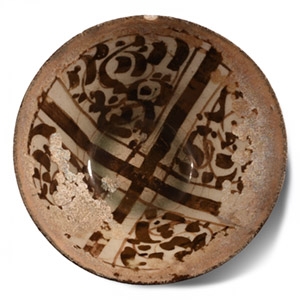
Syrian Lustre Pottery Bowl
13th century A.D.Estimate: £600 - 800 (+bp*)
Opening Bid: £232
Conical in profile with ring foot; glazed inner face with reserved cross and panels of calligraphic text; text to underside inside foot; old collectors' labels to sidewall. 142 grams, 13.8 cm
with Christie's, London, Islamic Manuscripts, Miniatures, and Works of Art, 10 October 1989, no.485. Private collection, London. -
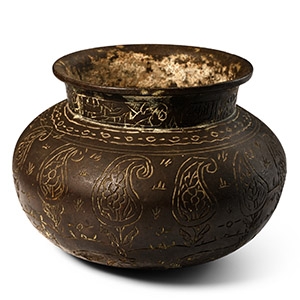
Western Asiatic Bronze Jar with Incised Decoration
Circa 19th century A.D.Sold for (Inc. bp): £72
Squat with broad rounded base, narrow neck and flared mouth; incised decoration including calligraphic text, annulets in a band, freehand image of a wolf attacking a deer. 605 grams, 12.7 cm
Believed to have been in the collection of George Adolphus Gray (c.1850), Captain of a merchant vessel and avid collector. Acquired by the present owner circa 15 years ago, reportedly recovered from a skip. -
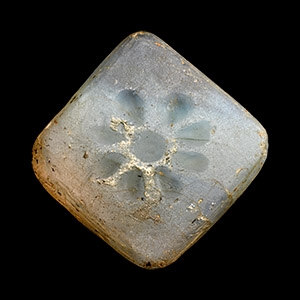
Western Asiatic Chalcedony Gaming Piece
3rd-5th century A.D.Estimate: £400 - 600 (+bp*)
Opening Bid: £222
Square in plan and plano-convex in section with tessellated triangles on the dome, horizontal grooves at the sides, incuse octofoil to the underside. 39.7 grams, 31 mm
Ex Mayfair, London, UK, collection, 1980s.
