
Loading, please wait...
LOT 1159
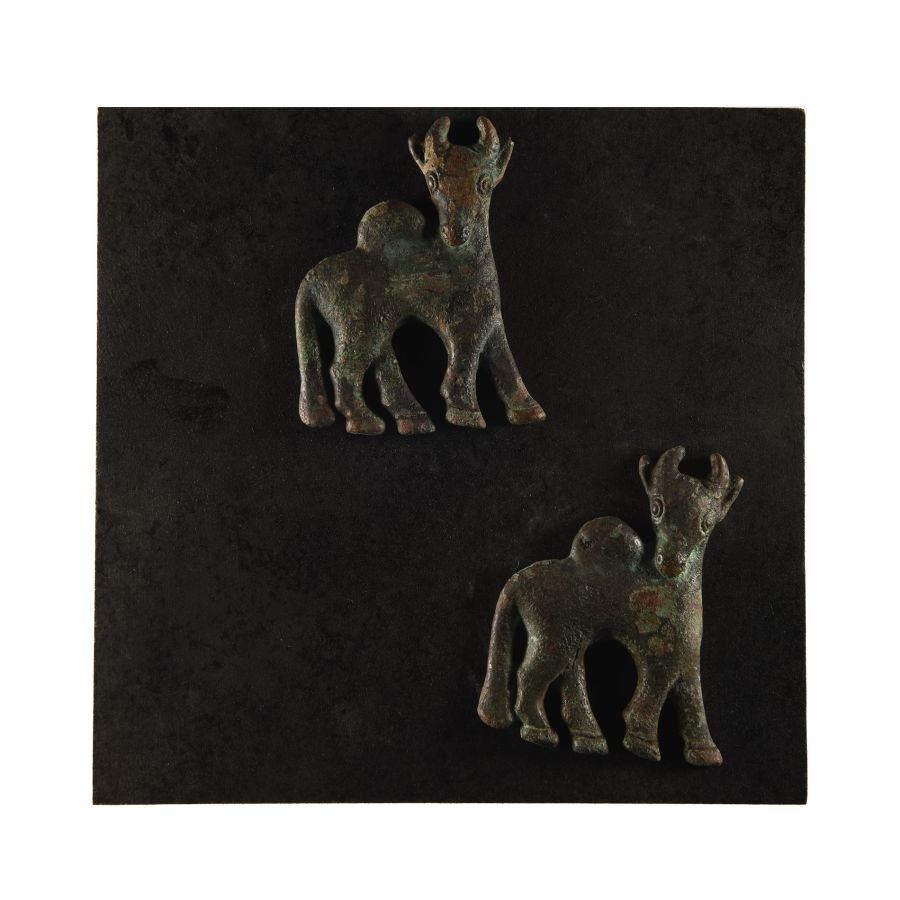
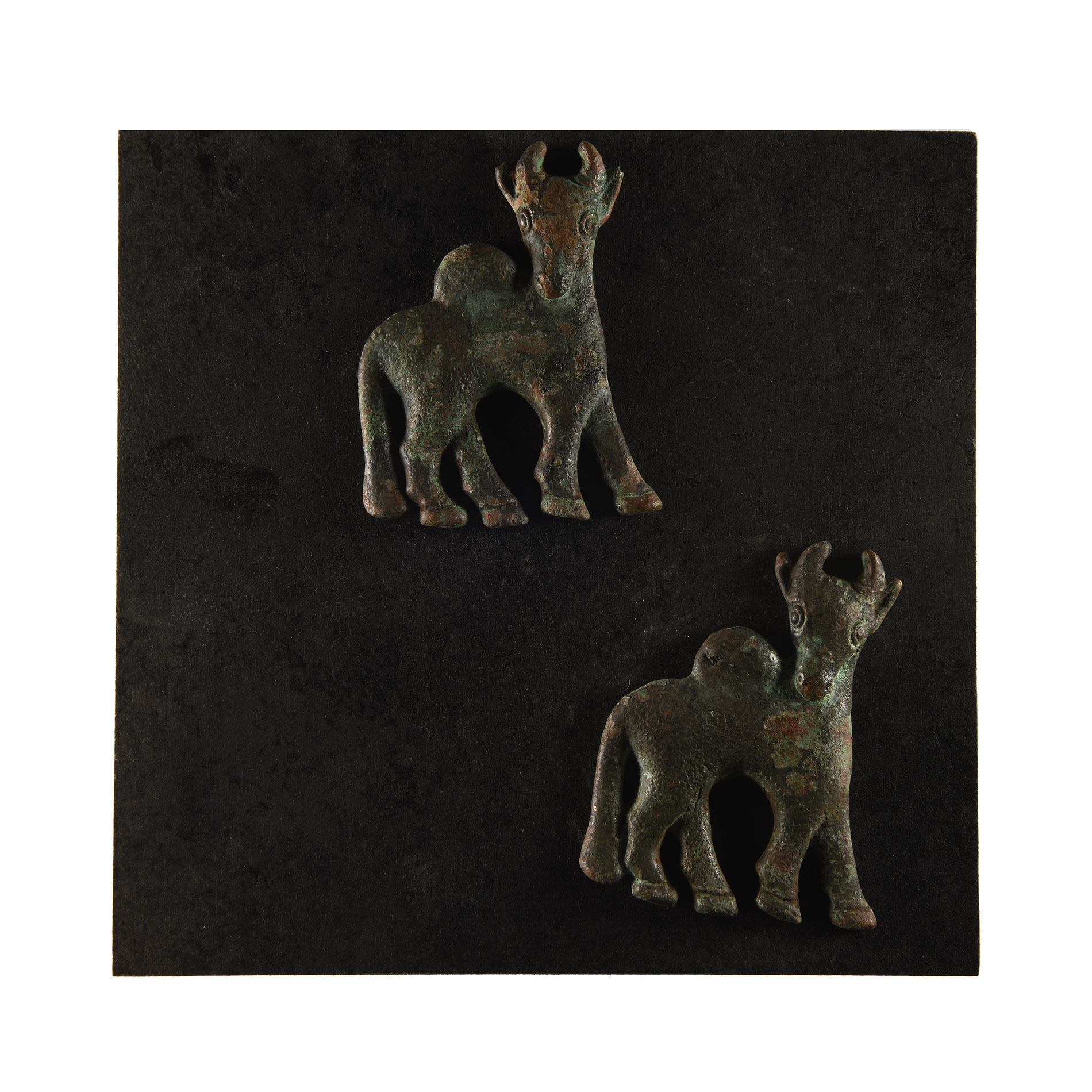
Luristan Bronze Horned Animal Attachment Pair
13TH-7TH CENTURY B.C.
2 5/8 in. (5 7/8 in.) (246 grams total, 68 mm each (15 cm wide including stand)).
Group of two low-relief zebu appliqués mounted on a custom-made display stand. [2, No Reserve]
ProvenanceEx Abelita family collection.
From an old UK collection.
Ex London, UK, gallery, 2000s.
TimeLine Auctions follows a vetting process to ensure the authenticity and legality of all items, reinforcing our commitment to integrity and responsible trading. Each antiquity, antique, and coin lot undergoes thorough examination by a vetting committee of at least ten external specialists, professional trade association members, scientists, and archaeologists: Our Vetting Process
AUCTIONS:
TimeLine is a leading auction house specialising in antiquities, ancient art, collectables, natural history, coins, medals, and books. Our auctions offer museums, collectors, historians, and enthusiasts the opportunity to acquire unique and historically significant pieces.
-
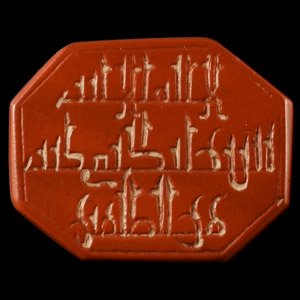
Western Asiatic Gemstone with Kufic Inscription
20th century A.D.Sold for (Inc. bp): £52
Octagonal form bearing Kufic script over three lines to one face; possibly red jade or jasper. 4.29 grams, 25 mm
with a London, UK gallery 1971-early 2000s. -
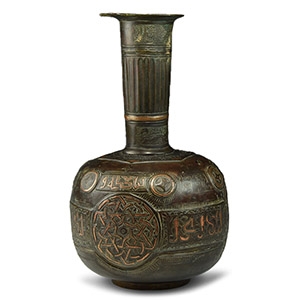
Western Asiatic Signed Bronze Calligraphic Vessel
Circa 13th-14th century A.D.Sold for (Inc. bp): £286
With basal ring, tall tubular neck, flared rim; scroll foliage detailing to the rim and shoulder, fluted neck, interlace roundel and calligraphic band to the equator; base restored, rim partly absent, holes to shoulder and lower body; base restored, possibly a marriage. 3.1 kg, 37 cm
Fair condition, base restored, rim partly absent, holes to shoulder and lower body.
Property of a Hampstead gentleman; from his family collection formed since the 1970s. -
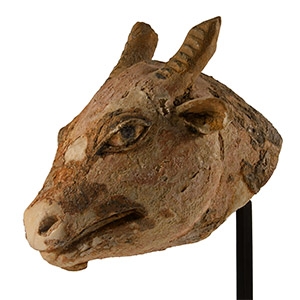
Western Asiatic Marble Ibex Head with Painted Eyes and Remains of Original Pigment
Mid 1st millennium B.C.Sold for (Inc. bp): £7,150
Carved in the round with fine facial detailing; flaring nostrils and deep-set mouth, beard beneath the chin; inlaid eyes with raised black lids framing the large pupils, curving horns with ribbed detailing picked out in black pigment; mounted on a custom-made display stand. 1.4 kg total, 23.2 cm high including stand
Acquired on the London art market, 1993. Property of a gentleman. This lot has been checked against the Interpol Database of stolen works of art and is accompanied by search certificate no.12069-214290.
In Mesopotamian art, wild sheep, ibexes, gazelles, antelopes, and goats of various species are frequently represented in art from the earliest times until the Parthian period.
