
Loading, please wait...
LOT 1084
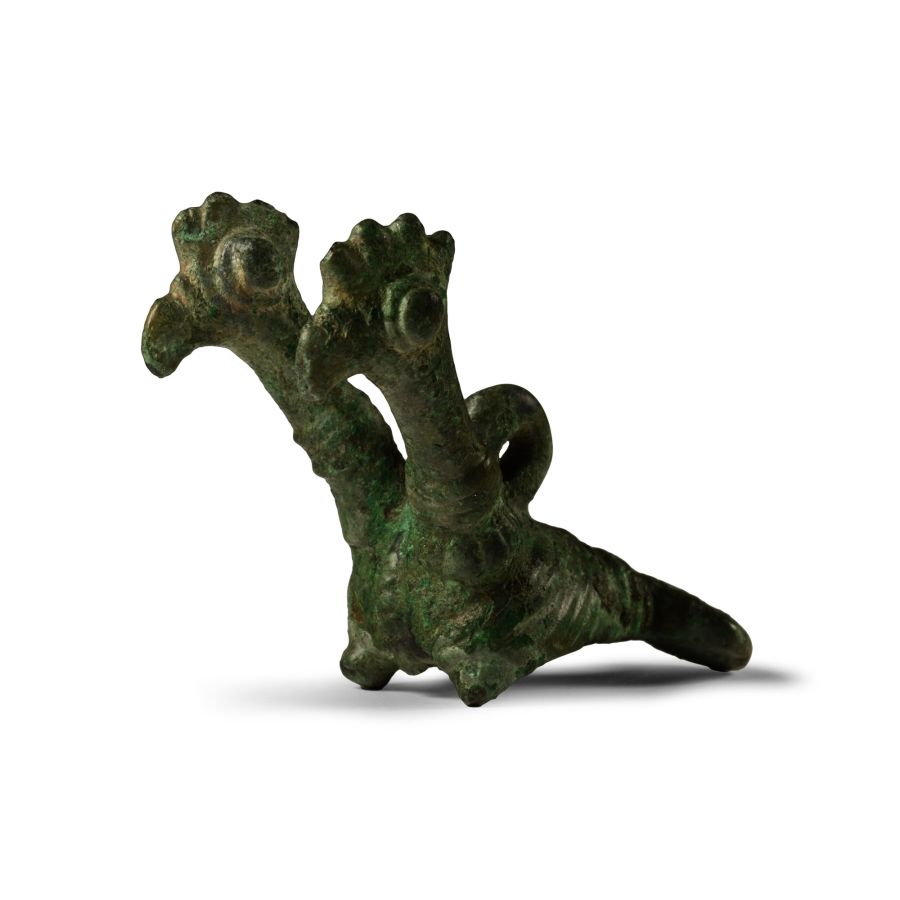
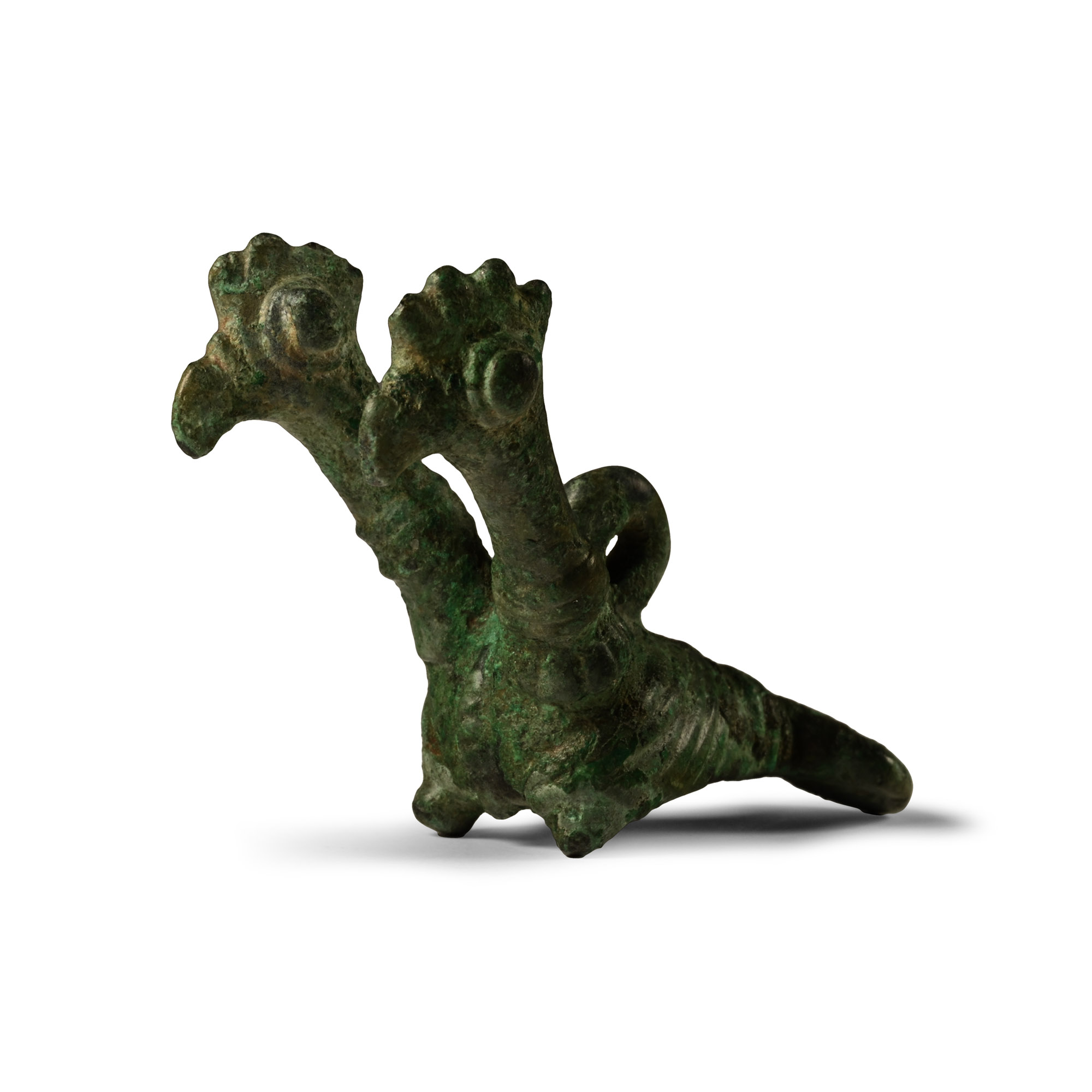
Luristan Bronze Double Peacock Pendant
13TH-7TH CENTURY B.C.
2 3/4 in. (58 grams, 71 mm).
Modelled in the round with hollow to the underside, two heads on long necks with collars, loop to the rear. [No Reserve]
ProvenanceFrom a North Yorkshire, UK, private collection.
Acquired from Adam Partridge Auctioneers, Macclesfield, UK.
Property of Mr A.B., an American collector.
TimeLine Auctions follows a vetting process to ensure the authenticity and legality of all items, reinforcing our commitment to integrity and responsible trading. Each antiquity, antique, and coin lot undergoes thorough examination by a vetting committee of at least ten external specialists, professional trade association members, scientists, and archaeologists: Our Vetting Process
AUCTIONS:
TimeLine is a leading auction house specialising in antiquities, ancient art, collectables, natural history, coins, medals, and books. Our auctions offer museums, collectors, historians, and enthusiasts the opportunity to acquire unique and historically significant pieces.
-
Luristan Bronze Double Peacock Pendant
13th-7th century B.C.Sold for (Inc. bp): £169
Modelled in the round with hollow to the underside, two heads on long necks with collars, loop to the rear. 58 grams, 71 mm
From a North Yorkshire, UK, private collection. Acquired from Adam Partridge Auctioneers, Macclesfield, UK. Property of Mr A.B., an American collector. -
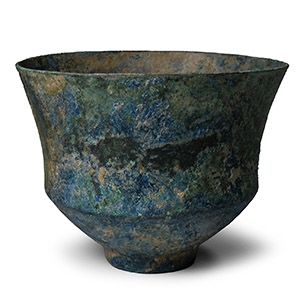
Luristan Bronze Flared Bowl
13th-7th century B.C.Sold for (Inc. bp): £260
Bell-shaped jar with narrow foot and carinated profile. 217 grams, 12 cm diameter
Ex London, UK, gallery, 1971-early 2000s. Property of a London gentleman. -
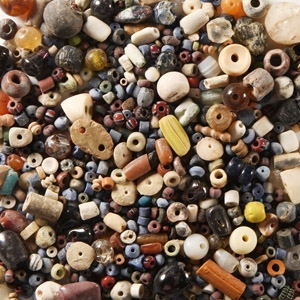
Western Asiatic Mixed Stone and Glass Necklace Bead Collection
1st millennium B.C. and laterSold for (Inc. bp): £130
Comprising a large quantity of variously shaped beads in lapis lazuli, red jasper, rock crystal, glass and other materials. 78.4 grams total, 2-14 mm
UK gallery, early 2000s.
Glass is the premier bead material. Invented in the Middle East around 2500 B. C., glass making spread slowly. There are mainly two types of beads, drawn beads (when the tubes are cut in a short segments, which are usually agitated over heat to smooth off the sharp edges) or wound beads (made by wrapping molten glass around a rock, stick or wire. Once the bead is built up, it can be further pressed or paddled into shape, placed in a mould, or decorated with other colours of glass.
