
Loading, please wait...
LOT 1512
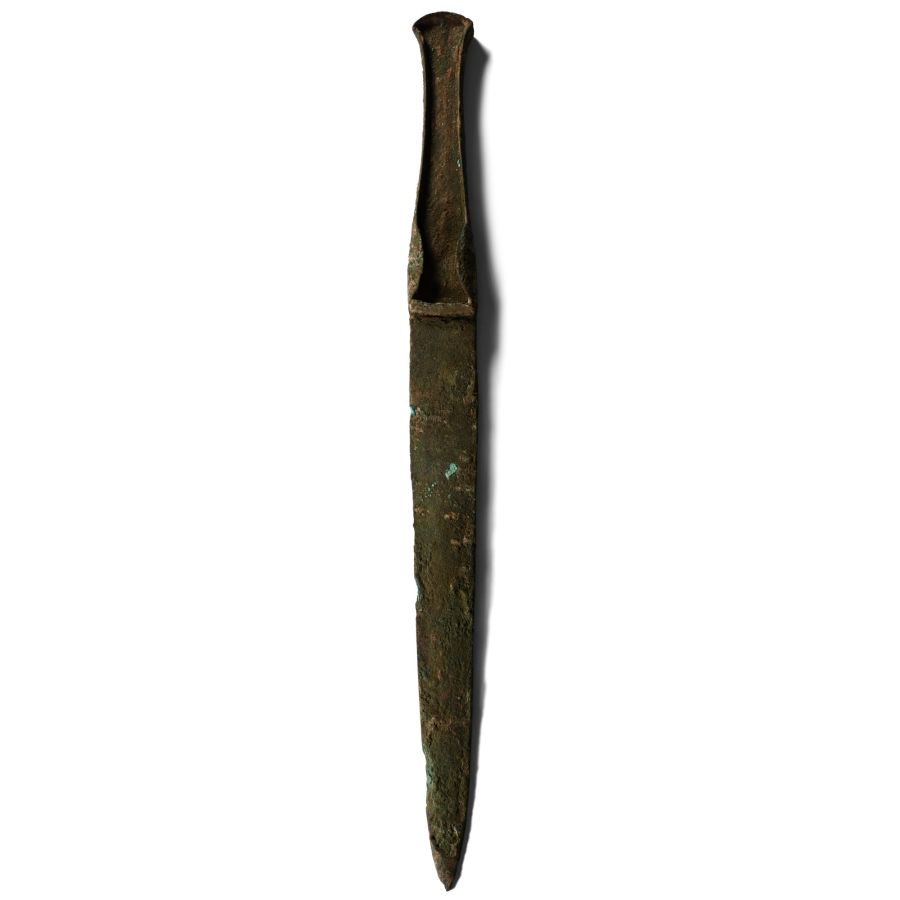
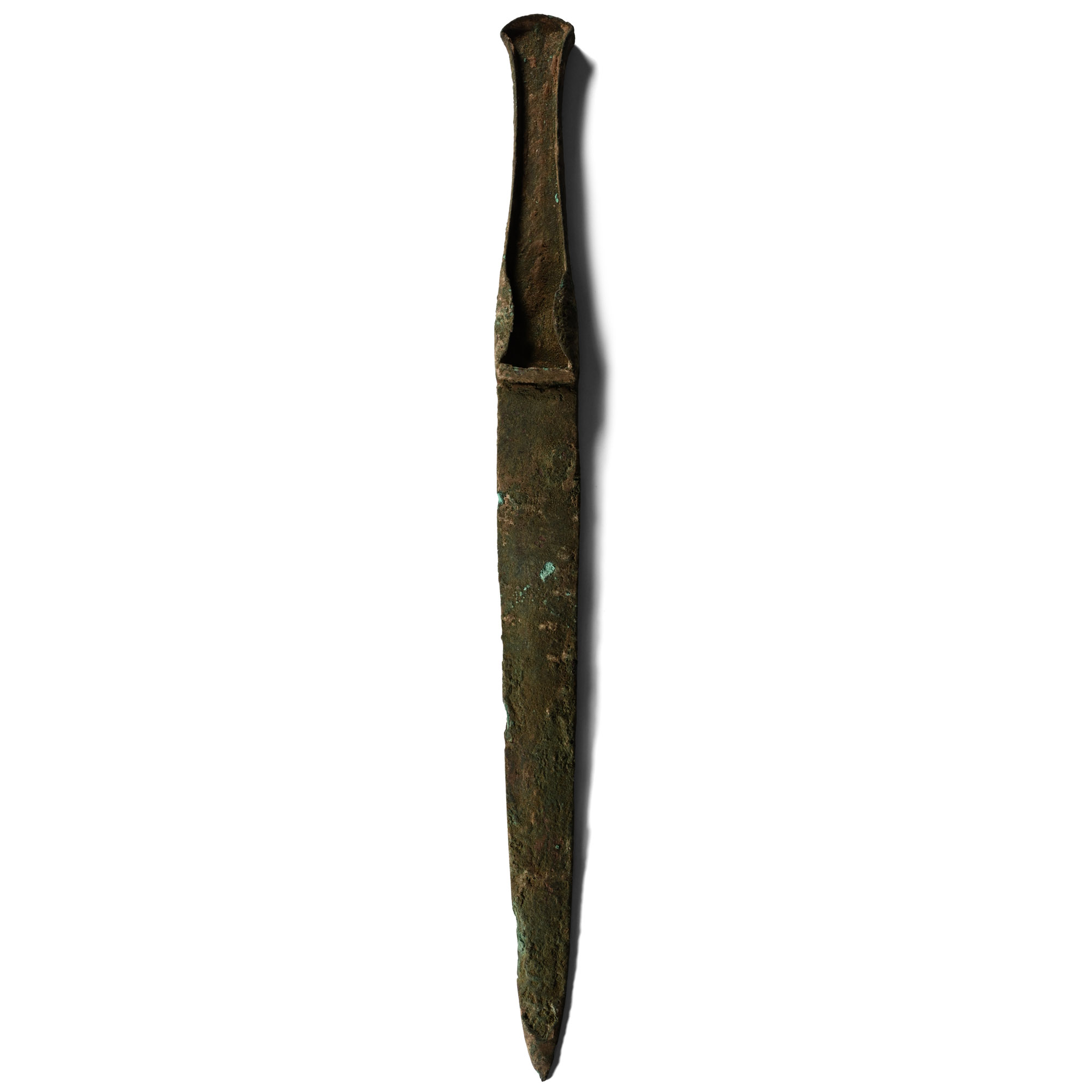
Luristan Bronze Dirk
12TH CENTURY B.C.
15 3/4 in. (283 grams, 40 cm).
With lentoid-section blade, integral tapering hilt with flared finial, lateral flanges to accept a panel of bone or wood to each face forming the grip.
ProvenanceEx London art market, 1980-1990s.
This lot is accompanied by an illustrated lot declaration signed by the Head of the Antiquities Department, Dr Raffaele D'Amato.
Cf. the type in Khorasani, M.M., Arms and Armour from Iran - The Bronze Age to the End of the Qajar Period, Tübingen, 2006, p.377, cat.6, for the type.
FootnotesThe dirk belongs to the type IIIa of the Medvedskaya classification. In these specimens handle and blade are cast in one piece. In Luristan, daggers produced up until the second half of the 2nd millennium B.C. were simple bronze or copper blades with the tangs attached by rivets to a handle made of organic material.
CONDITIONTimeLine Auctions follows a vetting process to ensure the authenticity and legality of all items, reinforcing our commitment to integrity and responsible trading. Each antiquity, antique, and coin lot undergoes thorough examination by a vetting committee of at least ten external specialists, professional trade association members, scientists, and archaeologists: Our Vetting Process
AUCTIONS:
TimeLine is a leading auction house specialising in antiquities, ancient art, collectables, natural history, coins, medals, and books. Our auctions offer museums, collectors, historians, and enthusiasts the opportunity to acquire unique and historically significant pieces.
-
.jpg)
Viking Age Iron Sword of Petersen Type X
Early 10th-mid 11th century A.D.Sold for (Inc. bp): £3,901
A single-handed double-edged cutting sword with wide cutting edges showing usage wear, short boat-shaped cross-guard and a flat tang, pommel of solid tea-cosy type divided into two sections by a shallow groove, traces of wooden scabbard on the blade; cleaned and conserved. 1.24 kg, 90.2 cm
From the private family collection of a lady, UK; acquired in Germany mid 20th century. Accompanied by an academic report by Dr Raffaele D'Amato. This lot has been checked against the Interpol Database of stolen works of art and is accompanied by search certificate number no.12622-236127. This lot has been cleared against the Art Loss Register database, and is accompanied by an illustrated lot declaration signed by the Head of the Antiquities Department, Dr Raffaele D'Amato. -
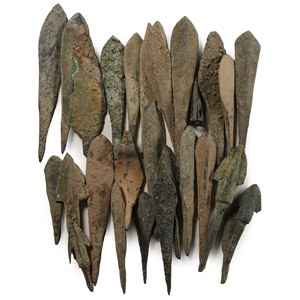
Western Asiatic Bronze Arrowhead Collection
19th-6th century B.C.Estimate: £100 - 140 (+bp*)
Opening Bid: £56
Including triangular, leaf-shaped, barbed, paddle-shaped with a flat, comparatively wide mid-rib, and others. 176 grams total, 25-77 mm
Ex London art market, 1980-1990s. This lot is accompanied by an illustrated lot declaration signed by the Head of the Antiquities Department, Dr Raffaele D'Amato.
Some of the represented arrowheads (paddle-shaped) were typical of the Old Babylonian Empire. The shoulders were pronounced and the arrowhead had a rectangular-section tapering tang. This simple form was popular throughout and are comparatively common finds in the Holy Land. -
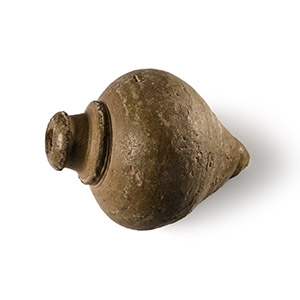
Byzantine 'Greek Fire' Ceramic Fire Bomb or Hand Grenade
9th-11th century A.D.Sold for (Inc. bp): £130
Piriform in profile with narrow point, deep shoulder and domed mouth; intended to be filled with explosive liquid and wick, used as a hand grenade. 125 grams, 79 mm
From an important specialist collection, London, UK, 1990s onwards. Accompanied by an academic paper by military specialist Dr Raffaele D'Amato, dated 15 July 2019 and titled 'Eastern Roman Empire - Greek Fire Bomb or Hand Grenade (μεσαίον kακάβιον) 9th-11th century AD'. This lot is accompanied by an illustrated lot declaration signed by the Head of the Antiquities Department, Dr Raffaele D'Amato.
Apart from the use of siphons or manual flame-throwers called cheirosiphona, special corps of Roman soldiers employed terracotta grenades, in the form of small jars, abundantly evidenced in archaeological excavations. They were called μεσαία kακαβιά or κυτροκακάβια where the former had a bulbous shape and the latter a more cylindrical form.
