
Loading, please wait...
LOT 1361
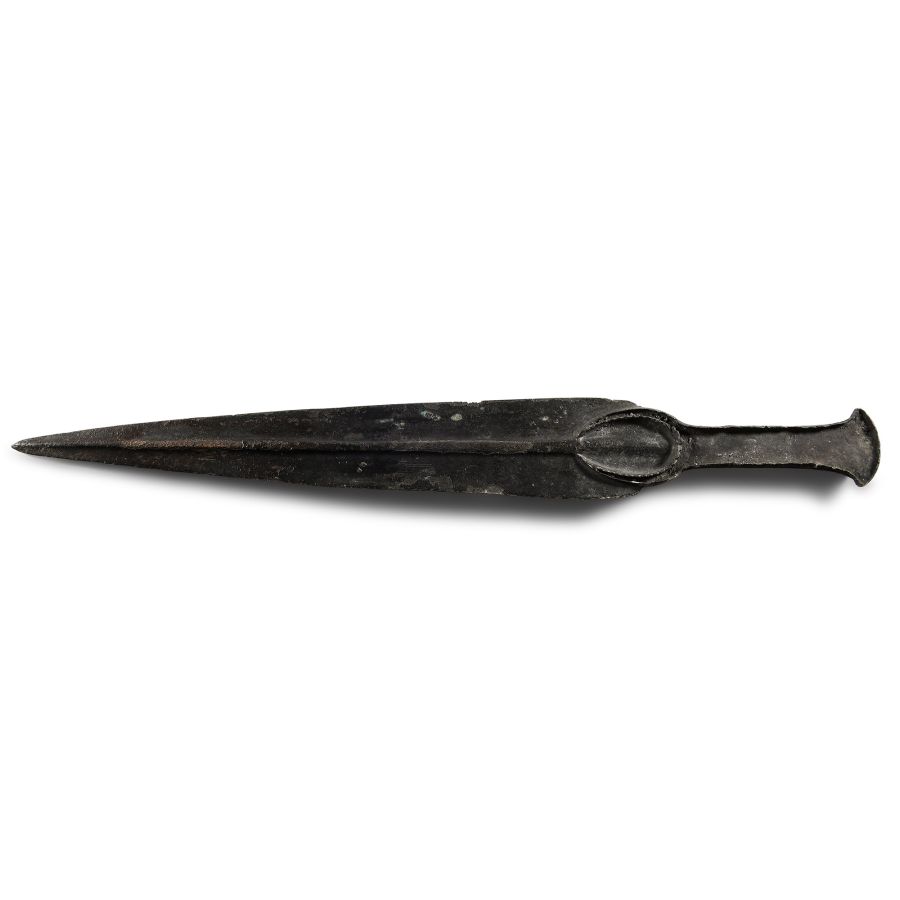
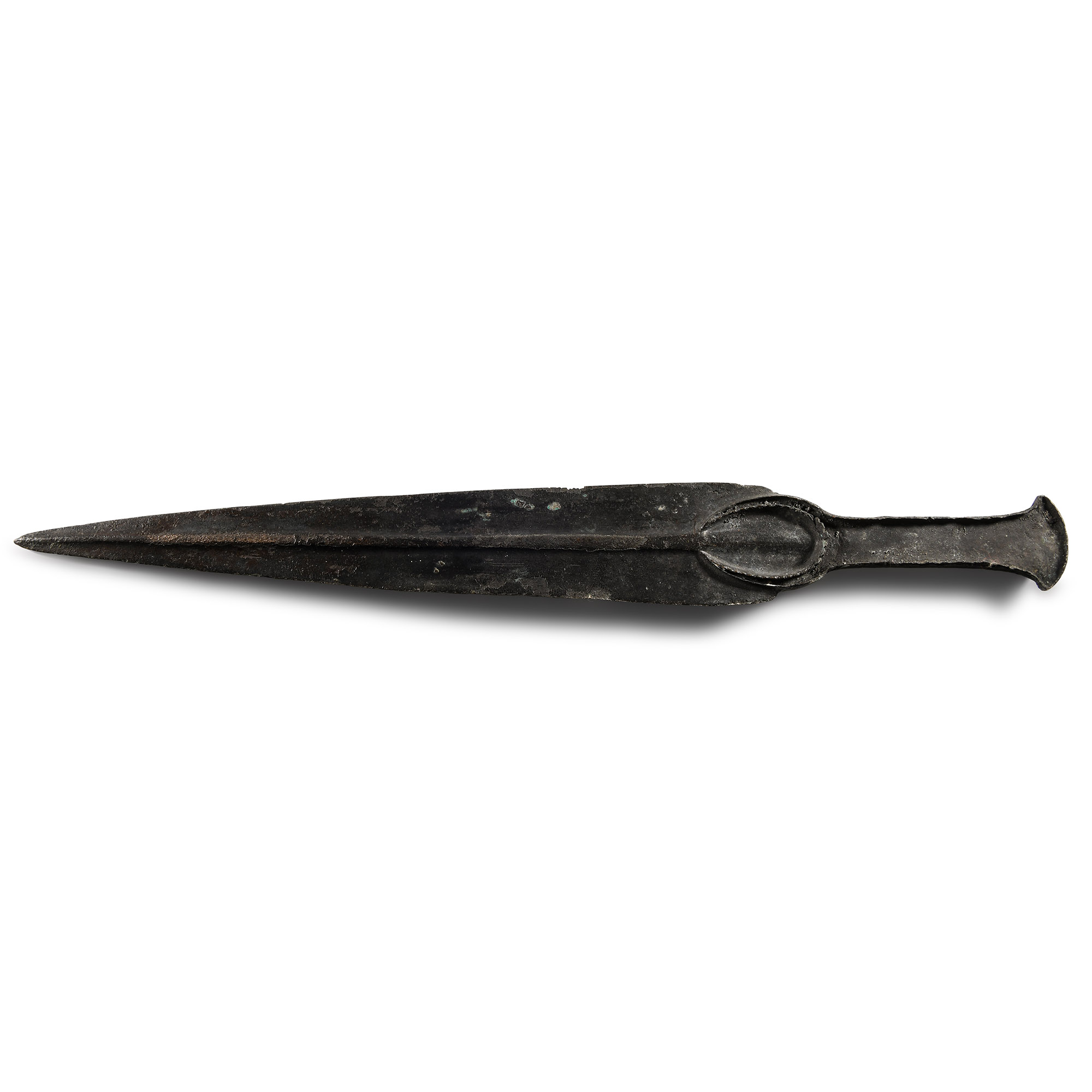
Luristan Bronze Dirk
CIRCA 1000 B.C.
15 3/8 in. (231 grams, 39 cm).
Composed of a leaf-shaped blade with a raised penannular rib and slot below the shoulder connected to the grip with lateral flanges and integral pommel, recessed to accept an organic insert. [No Reserve]
ProvenanceFrom a collection acquired on the UK art market from various auction houses and collections mostly before 2000.
From an important Cambridgeshire estate; thence by descent.
Cf. Khorasani, M.M., Arms and Armour from Iran - The Bronze Age to the End of the Qajar Period, Tuebingen, 2006, p.380, Cat.12, inventory no.655.
FootnotesThis dirk, cast in one piece mould, belongs to the daggers that Medvedskaya believes support the thesis that majority of them were cast in one piece. However, there are examples where the penannular grip was cast on later.
CONDITIONTimeLine Auctions follows a vetting process to ensure the authenticity and legality of all items, reinforcing our commitment to integrity and responsible trading. Each antiquity, antique, and coin lot undergoes thorough examination by a vetting committee of at least ten external specialists, professional trade association members, scientists, and archaeologists: Our Vetting Process
AUCTIONS:
TimeLine is a leading auction house specialising in antiquities, ancient art, collectables, natural history, coins, medals, and books. Our auctions offer museums, collectors, historians, and enthusiasts the opportunity to acquire unique and historically significant pieces.
-
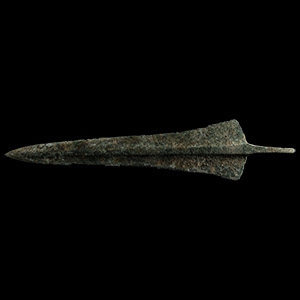
Western Asiatic Bronze Tanged Spearhead
Circa 13th-6th century B.C.Estimate: £100 - 140 (+bp*)
Opening Bid: £50
With leaf-shaped blade and rounded tip, pronounced medial rib and shoulder flanges, short flat-section tang. 255 grams, 31 cm
Acquired 1980-2015. Ex Abelita family collection.
The spearhead belongs to type 2 of spearheads according to the classification of Khorasani. A similar specimen was excavated by Negahban in Marlik. -
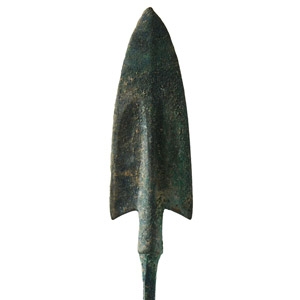
Luristan Bronze Arrowhead
13th-7th century B.C.Sold for (Inc. bp): £72
Heater-shaped with barbs to the rear and midrib developing to a tang. 34 grams, 15.6 cm (139 grams total, 16.7 cm high including stand)
Ex Abelita family collection, 1988. -
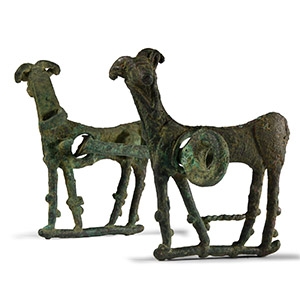
Luristan Bronze Horse Bit with Animals
Circa 11th-7th century B.C.Estimate: £1,500 - 2,000 (+bp*)
Opening Bid: £700
Comprising a pair of ram-shaped cheek-pieces with a hole through the body for the straight mouthpiece with looped terminals. 690 grams, 17.5 cm wide
From a collection formed in Paris in the 1990s.
The horse bits were transformed by Luristan people in to expressions of applied art. Metalworkers employed animal motifs, both realistic and imaginary, for their cheek-pieces. The question of whether these horse bits were for real use or only for use in a funerary context is superfluous, as signs of wear have been documented, and the goads and loops on interiors are functionally designed. The use of such horse bits is clearly documented in Assyrian reliefs of the time of Sennacherib (705-681 B.C.).
