
Loading, please wait...
LOT 1106
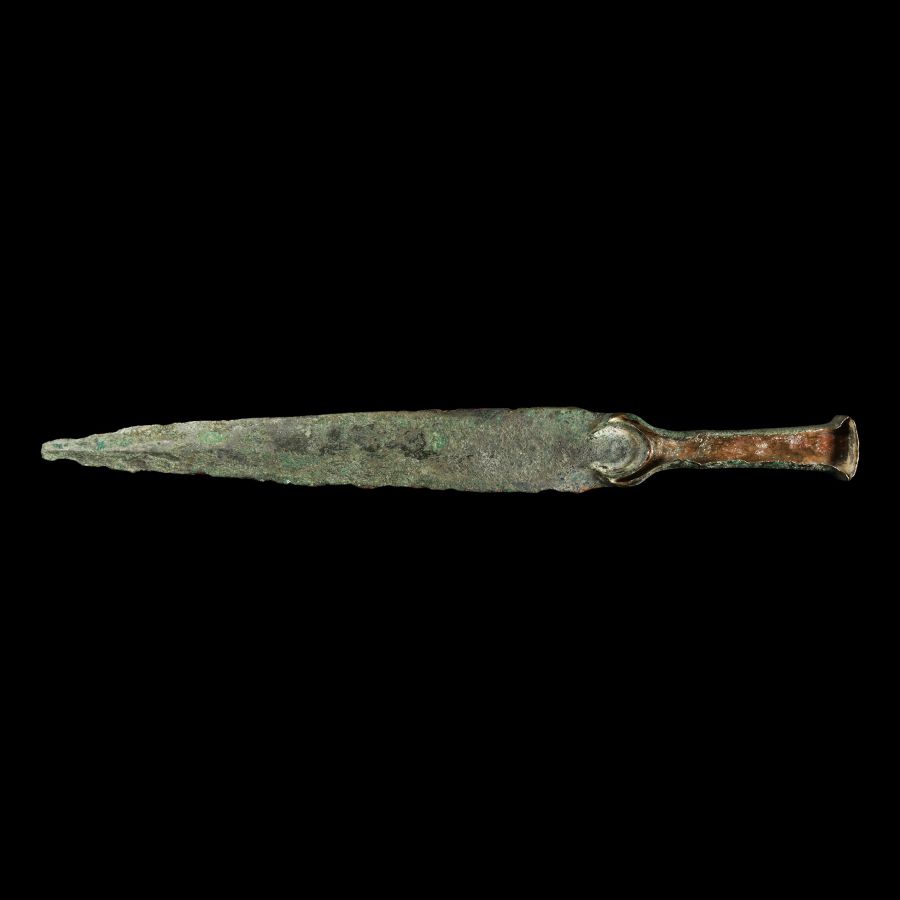
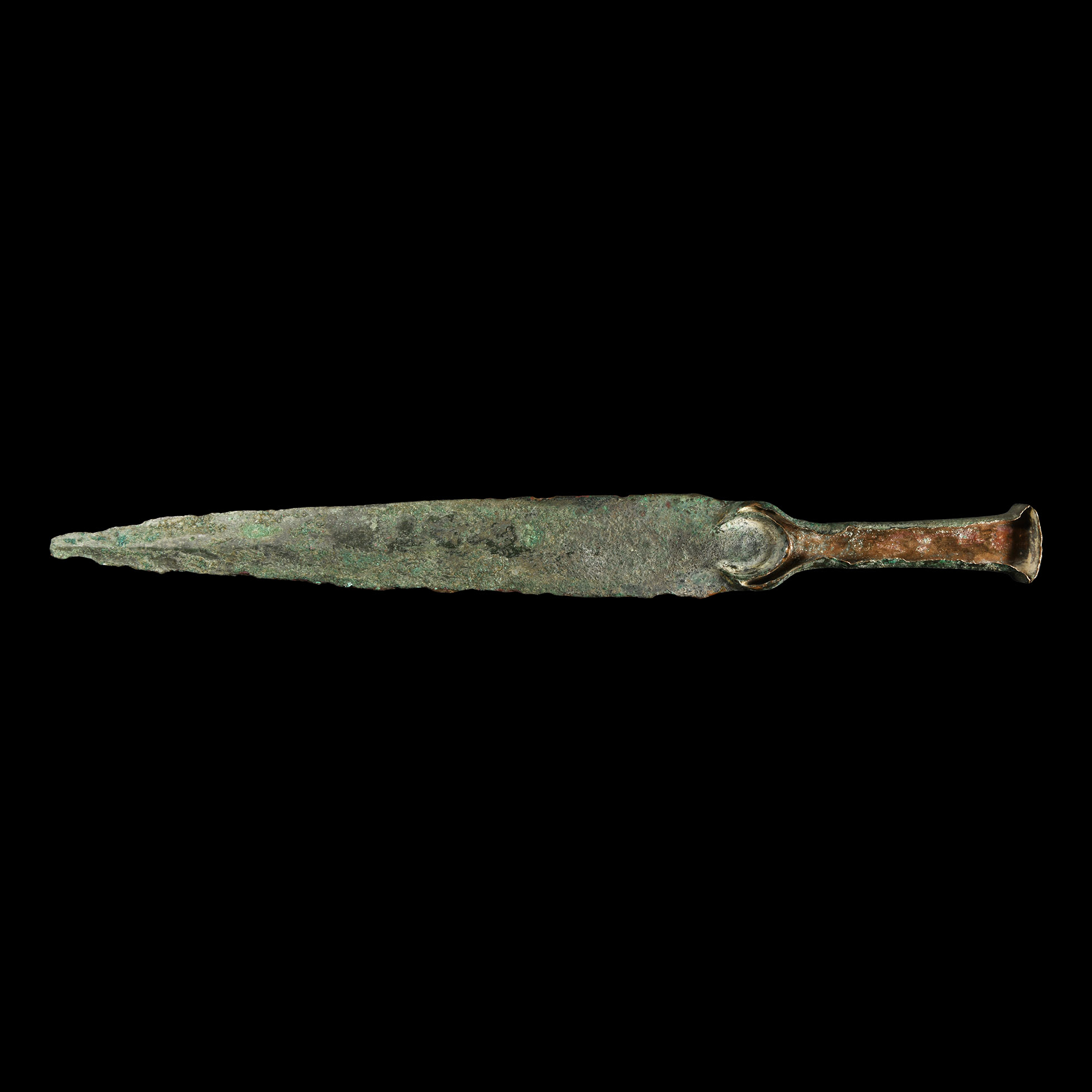
Luristan Bronze Dirk
CIRCA 1000 B.C.
14 3/4 in. (264 grams, 37.5 cm).
Composed of a leaf-shaped blade with a raised penannular rib and slot below the shoulder connected to the grip with lateral flanges and integral pommel, recessed to accept an organic insert.
ProvenanceFrom an old English collection, formed in the 1980s.
The Kusmirek Collection, UK.
Cf. Khorasani, M.M., Arms and Armour from Iran - The Bronze Age to the End of the Qajar Period, Tuebingen, 2006, p.380, Cat.12, inventory no.655.
FootnotesThis dirk, cast in one piece mould, belongs to the daggers that Medvedskaya believes support the thesis that majority of them were cast in one piece. However, there are examples where the penannular grip was cast on later on the dagger or dirk.
CONDITIONTimeLine Auctions follows a vetting process to ensure the authenticity and legality of all items, reinforcing our commitment to integrity and responsible trading. Each antiquity, antique, and coin lot undergoes thorough examination by a vetting committee of at least ten external specialists, professional trade association members, scientists, and archaeologists: Our Vetting Process
AUCTIONS:
TimeLine is a leading auction house specialising in antiquities, ancient art, collectables, natural history, coins, medals, and books. Our auctions offer museums, collectors, historians, and enthusiasts the opportunity to acquire unique and historically significant pieces.
LOT 1106
Luristan Bronze Dirk
Estimate £400 - 800€460 - 930 (for guidance only)$540 - 1,080 (for guidance only)
-
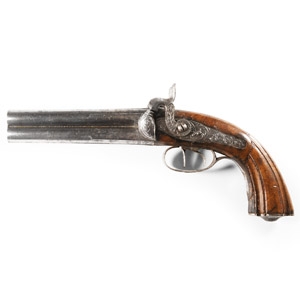
Italian Double-Barrelled Percussion Pistol
19th century A.D.Sold for (Inc. bp): £351
Double-barrelled, single action 9mm calibre smooth bored pistol with 13cm twin 'over-and-under' barrels fitted with twin hammers and triggers with guard, with floriate engraving; fitted with fluted wood stock and iron butt plate; action working. 445 grams, 26 cm
Acquired from Czerny's Auctions, Italy, 2016, lot 15. The Kusmirek Collection, UK. Accompanied by copies of the Czerny's paperwork.
Sold as an exempt item under Section 58 (2) of the Firearms Act, 1968, to be held as a curiosity or ornament. No license required but buyer must be over 18 years of age. Overseas bidders should note that, due to UK regulations governing export of all firearms, overseas buyers will need to make arrangements for shipping this lot out of the UK directly, by air freight, with a specialist company or agent. -
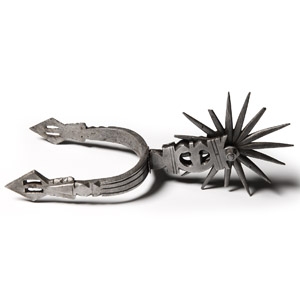
Mexican Iron Rowel Spur
18th-19th century A.D.Estimate: £150 - 200 (+bp*)
Opening Bid: £60
Heelband with geometric motifs, channelling and lozengiform terminals, pierced work neck and large free-running rowel. 252 grams, 22 cm
Acquired from Rusty Old Arms, UK, 2014. The Kusmirek Collection, UK. Accompanied by copies of the ROA invoice and listing. -
.jpg)
French WWII 'Donkey Ears' Trench Periscope
1940s A.D.Sold for (Inc. bp): £143
Aluminium bodied binocular trench periscope with green finish, fitted with folding handle and leather neck strap; with original leather case fitted with shoulder strap and belt/webbing loop. 1.69 kg, 29.5 cm
The Kusmirek Collection, UK.
