
Loading, please wait...
LOT 1086
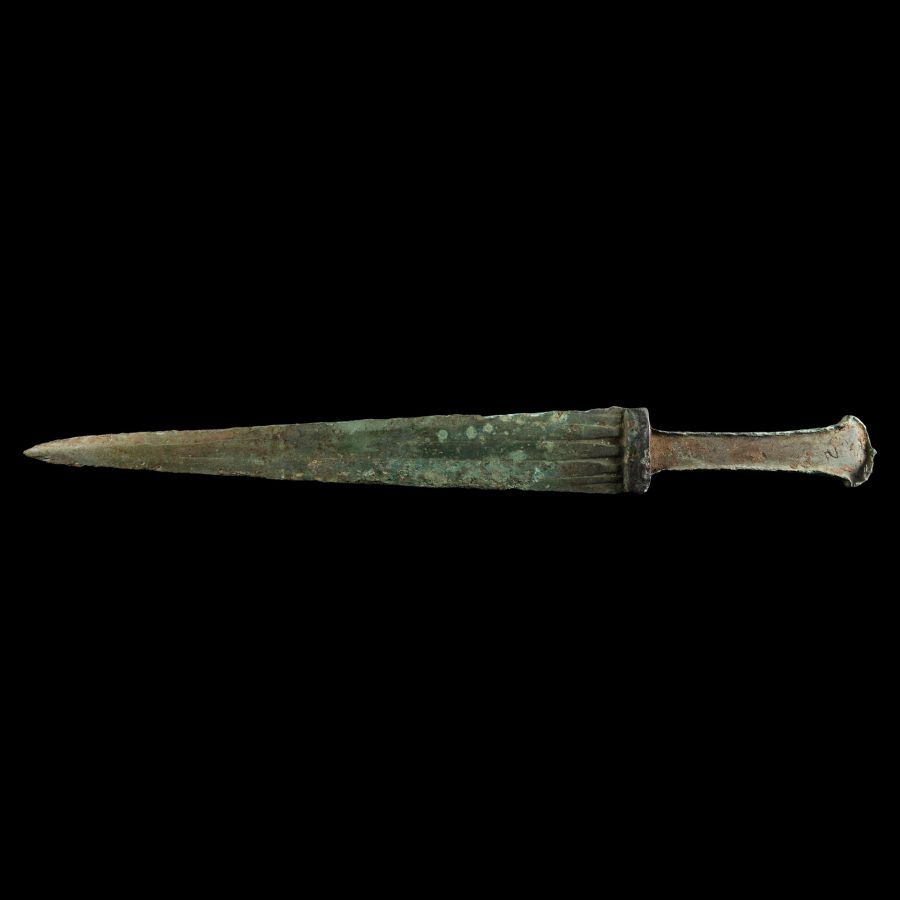
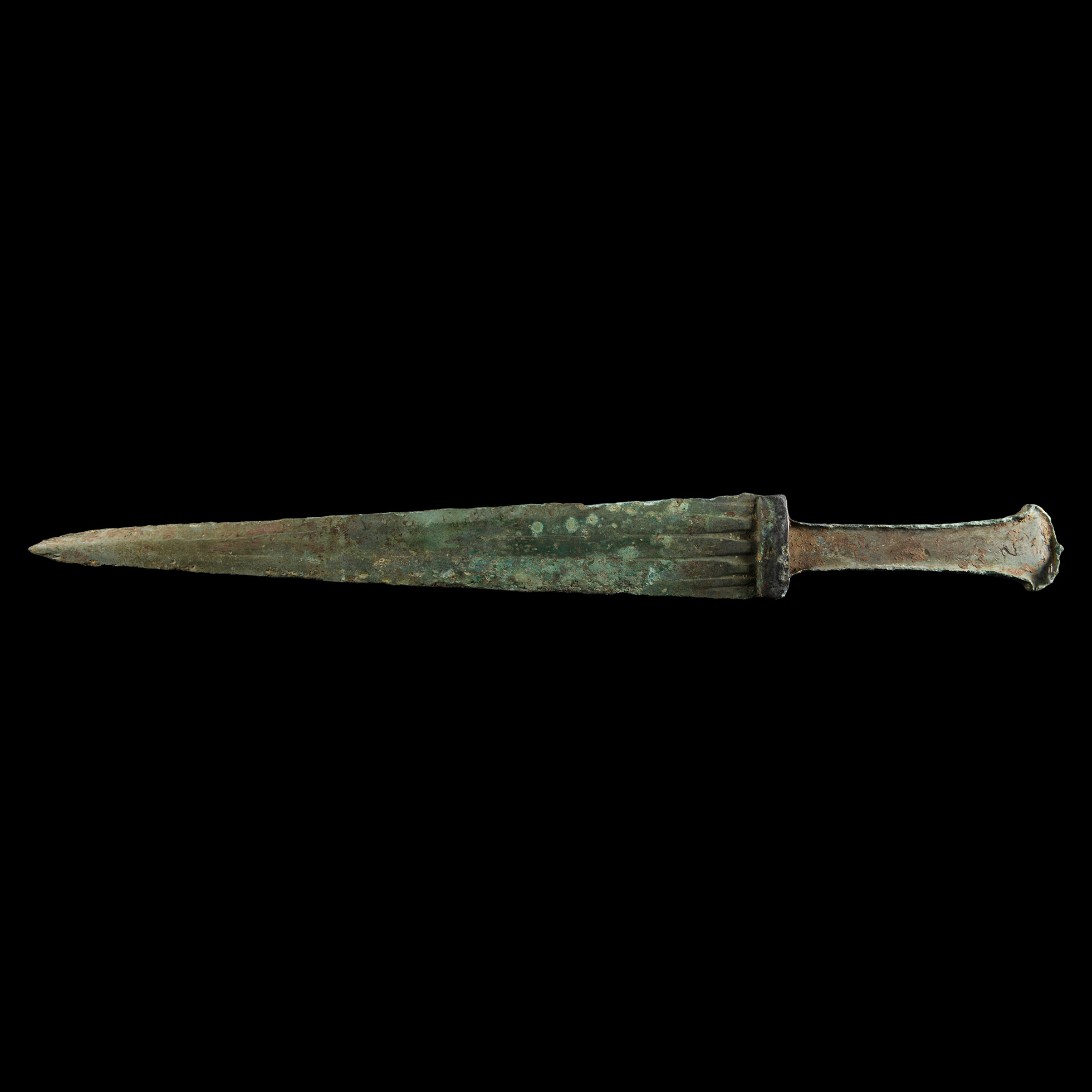
Luristan Bronze Dirk
CIRCA 1000 B.C.
13 in. (188 grams, 33 cm).
Cast in one piece, with narrow blade having almost parallel edges, flanged hilt with narrow grip widening slightly towards the ricasso, decorated from five parallel grooves, and running smoothly into the blade.
ProvenanceEx German collection, Cologne, 1980-1990s.
LiteratureCf.identical type in Khorasani, M.M., Arms and Armour from Iran - The Bronze Age to the End of the Qajar Period, Tübingen, 2006, p.378, cat.8.
FootnotesThe dirk belongs to the type III in the Medvedskaya classification, but with a smallest hand guard at the base. The dating of type III to the 12th century B.C., suggested by Medvedskaya and confirmed by Khorasani, was based on the series of dirks with an inscription of the Babylonian King Nebuchadnezzar I and of the name of Marduk Nadin Ahhe on similar types of daggers.
CONDITIONTimeLine Auctions follows a vetting process to ensure the authenticity and legality of all items, reinforcing our commitment to integrity and responsible trading. Each antiquity, antique, and coin lot undergoes thorough examination by a vetting committee of at least ten external specialists, professional trade association members, scientists, and archaeologists: Our Vetting Process
AUCTIONS:
TimeLine is a leading auction house specialising in antiquities, ancient art, collectables, natural history, coins, medals, and books. Our auctions offer museums, collectors, historians, and enthusiasts the opportunity to acquire unique and historically significant pieces.
-
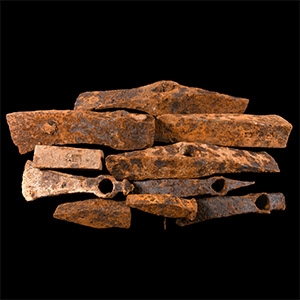
Viking Age And Later Iron Axehead Group
Circa 11th-18th century A.D.Estimate: £100 - 140 (+bp*)
Opening Bid: £50
Composed of socketted axeheads, hammer heads, adze-axes and wedges of various types; including examples stamped with maker's marks. 7.8 kg total, 9.5-26.5 cm
Acquired 1990s-early 2000s. East Anglian private collection. -
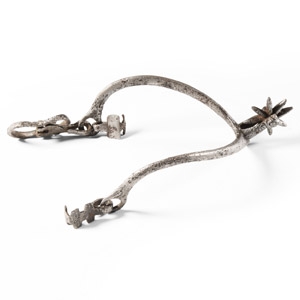
Medieval 'Thames' Iron Rowel Spur
15th century A.D.Sold for (Inc. bp): £104
Composed of an arched heelband, hanging studs and buckle, together with a multi-armed rowel. 104 grams, 14.5 cm
Found in the Thames foreshore at Queenshithe. Acquired from Rusty Old Arms, 2014. The Kusmirek Collection, UK. Accompanied by an ROA invoice and listing. -
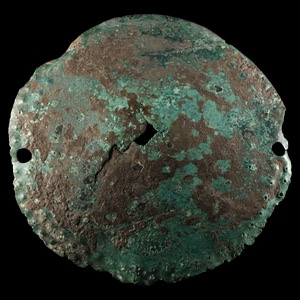
Bronze Age European Boss
2nd-1st millennium B.C.Estimate: £150 - 200 (+bp*)
Opening Bid: £42
Of repoussé form, slightly convex in profile with two concentric bands of pierced ornament and two attachment holes at edge. 36 grams, 95 cm
Ex English collection, pre-2000. The Kusmirek Collection, UK. Accompanied by a previous dealer's certificate of authenticity.
