
Loading, please wait...
LOT 1414
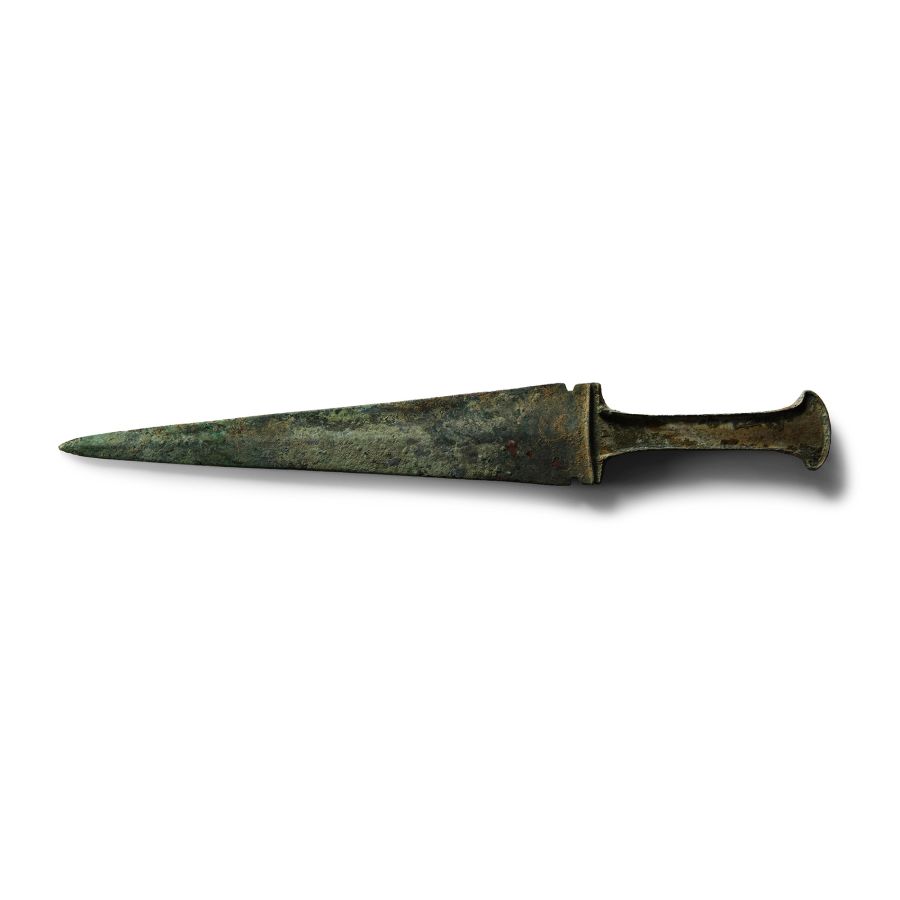
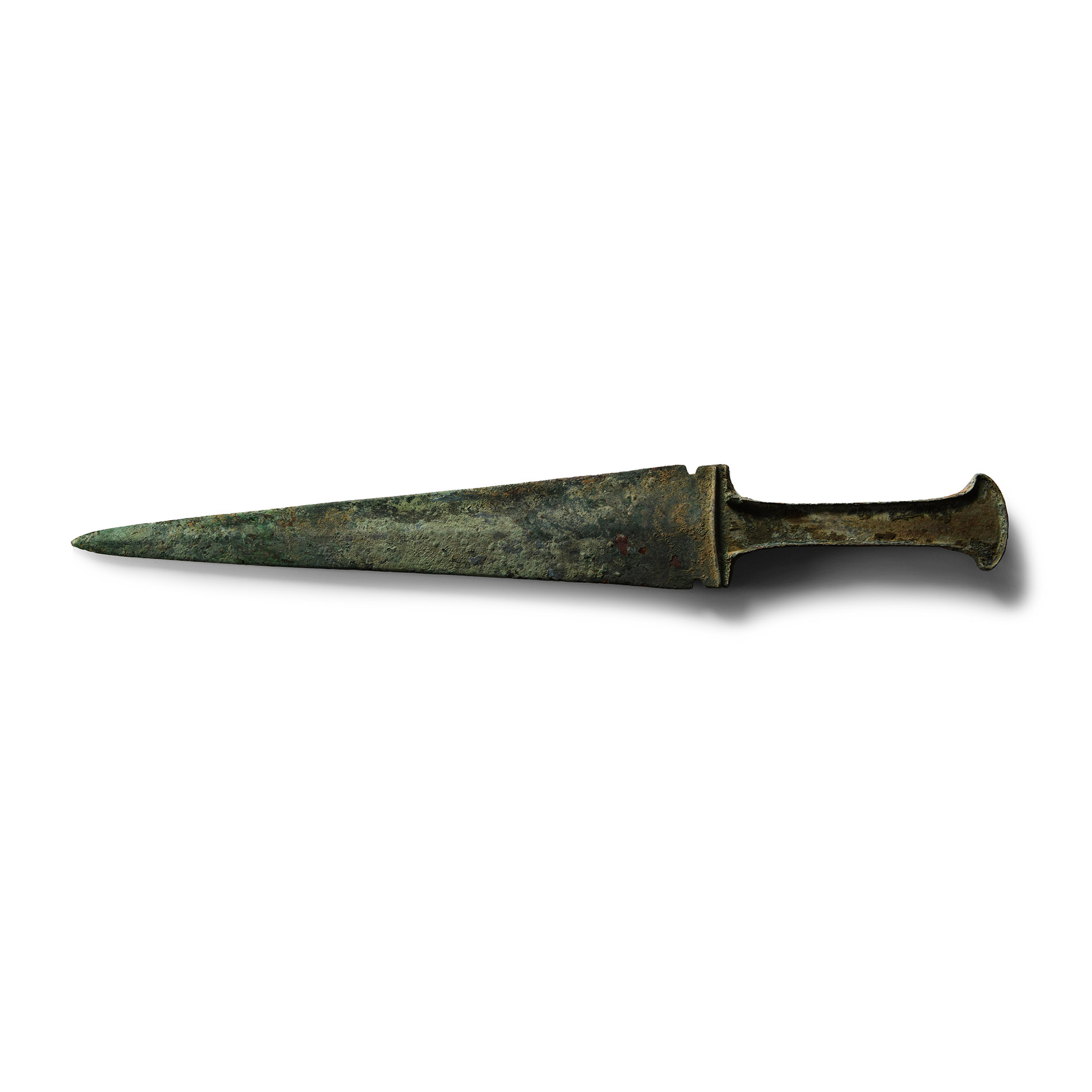
Luristan Bronze Dagger
13TH-7TH CENTURY B.C.
13 3/8 in. (228 grams, 34 cm).
Triangular blade with rib below the shoulder connected to the grip with lateral flanges and integral pommel, recessed to accept an organic insert
ProvenanceEx Abelita family collection, 1988.
LiteratureCf. Khorasani, M.M., Arms and Armour from Iran - The Bronze Age to the End of the Qajar Period, Tuebingen, 2006, p.380, Cat.12, inventory no.655.
CONDITIONTimeLine Auctions follows a vetting process to ensure the authenticity and legality of all items, reinforcing our commitment to integrity and responsible trading. Each antiquity, antique, and coin lot undergoes thorough examination by a vetting committee of at least ten external specialists, professional trade association members, scientists, and archaeologists: Our Vetting Process
AUCTIONS:
TimeLine is a leading auction house specialising in antiquities, ancient art, collectables, natural history, coins, medals, and books. Our auctions offer museums, collectors, historians, and enthusiasts the opportunity to acquire unique and historically significant pieces.
-
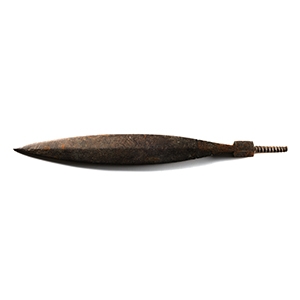
Maasai Leaf-Shaped Iron Spear
20th century A.D.Sold for (Inc. bp): £91
Lenticular in section, leaf-shaped in plan with rectangular block to the shoulder and threaded tang. 447 grams, 37 cm
From an old English collection formed in the 1980s. Property of an Essex gentleman; acquired on the UK art market. -
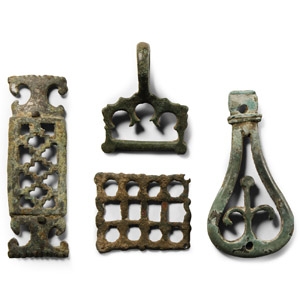
Roman Bronze Belt Mount Group
2nd-6th century A.D.Sold for (Inc. bp): £286
Comprising: a rectangular plaque with stepped void openwork and scrolled ends; a rectangular mount with rectangular and circular voids; a piriform mount with central void, trefoil to the interior; pierced twice for attachment; a pendant with broad loop, D-shaped plaque with three-lobed void. 70 grams total, 40-74 mm
Acquired before 1980. Ex London, UK collector. Property of a Scottish collector, acquired in 2013.
Belt of Antonine Age incorporated openwork designs, many of which show traces of Celtic decorative influence. According to Bishop & Coulston, these fittings were recognisable as the prototypes for those excavated in the 3rd century Roman military sites. -
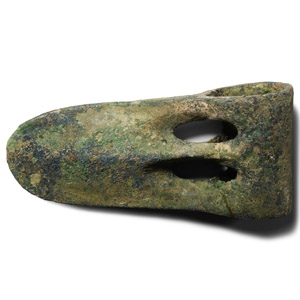
Babylonian Bronze Duck-Billed Axehead
2nd millennium B.C.Sold for (Inc. bp): £156
Duck-billed shaft-hole axehead featuring a curved, tongue-shaped blade with two voided 'eyes' and a raised median ridge; repaired. 168 grams, 10.3 cm
Collected from 1969-1999. From the collection of the late Mr S.M., London, UK.
