
Loading, please wait...

LOT 1273
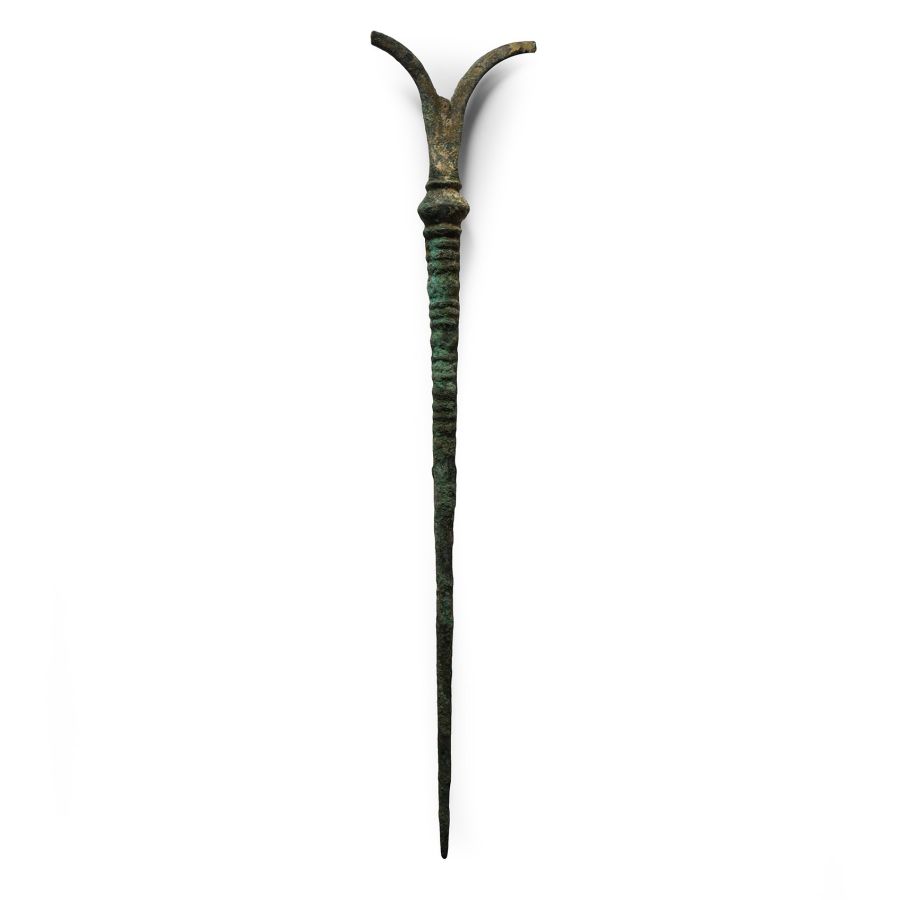
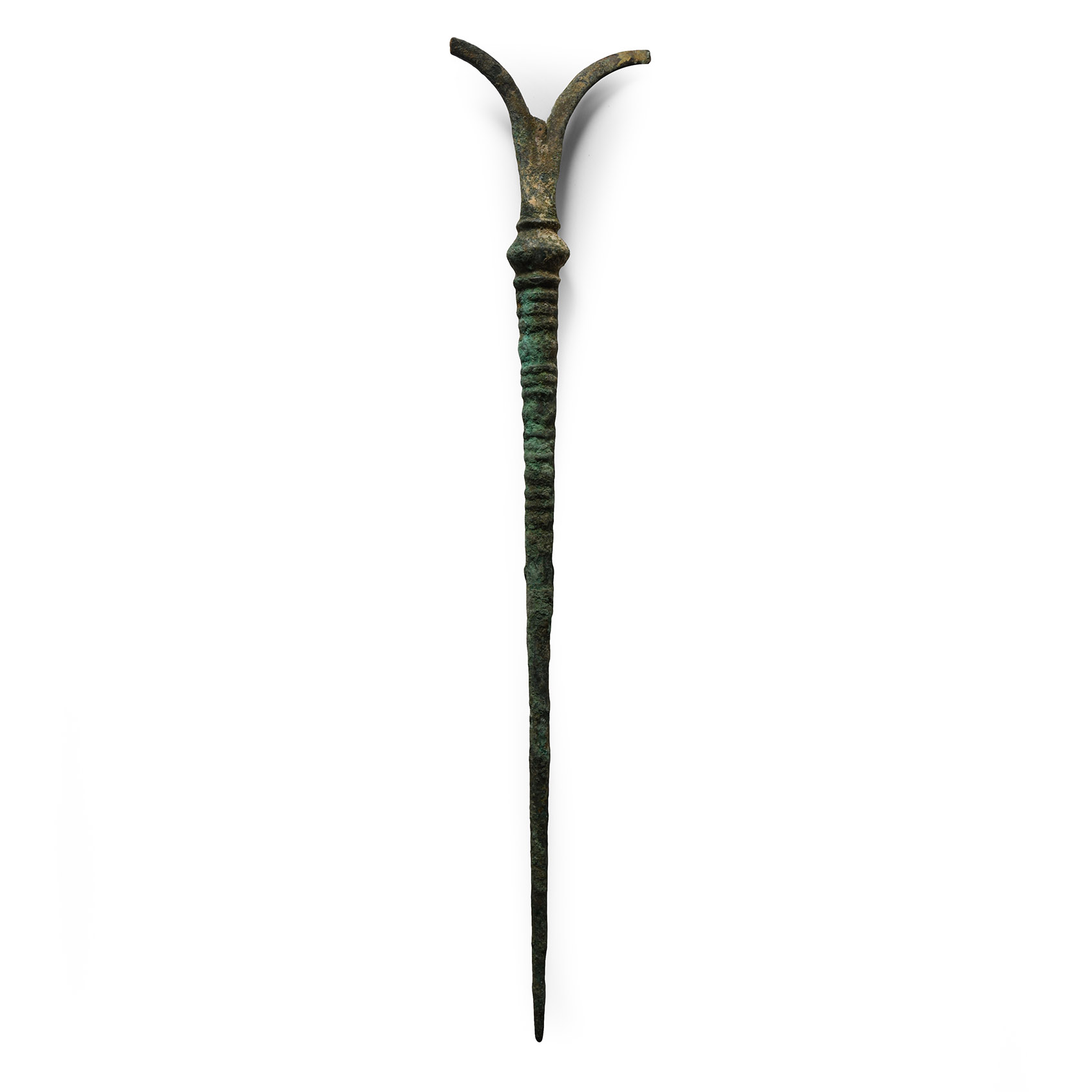
Luristan Bronze Cloak Pin
13TH-7TH CENTURY B.C.
8 7/8 in. (60 grams total, 22.5 cm).
With tapering round-section shank, stepped profile to the upper section and biconvex bulb; divergent antenna arms above. [No Reserve]
ProvenanceFrom a 1990s German collection.
Ex London, UK, gallery.
TimeLine Auctions follows a vetting process to ensure the authenticity and legality of all items, reinforcing our commitment to integrity and responsible trading. Each antiquity, antique, and coin lot undergoes thorough examination by a vetting committee of at least ten external specialists, professional trade association members, scientists, and archaeologists: Our Vetting Process
AUCTIONS:
TimeLine is a leading auction house specialising in antiquities, ancient art, collectables, natural history, coins, medals, and books. Our auctions offer museums, collectors, historians, and enthusiasts the opportunity to acquire unique and historically significant pieces.
-
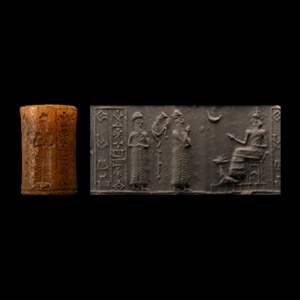
Akkadian Alabaster Cylinder Seal of Kiruzum (or Hurruzum), Servant of (the Goddess) Ninsianna
Late 3rd-early 2nd millennium B.C.Sold for (Inc. bp): £2,340
With frieze depicting a throne-room scene, seated king in tiered robe confronted by two robed supplicants with an altar and idol, two columns of cuneiform text; supplied with a museum-quality impression. 42 grams, 38 mm
From the 'S' collection, acquired 1970-1990s. The collection was seen and studied by W.G. Lambert, late Professor of Assyriology at the University of Birmingham, 1970-1993. This lot has been checked against the Interpol Database of stolen works of art and is accompanied by search certificate number no.12245-222160. -
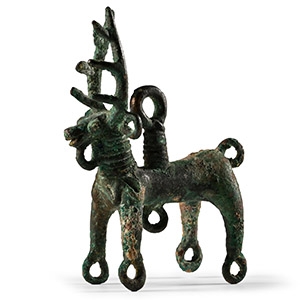
Caucasian Stag Figure with Attachment Loops
1st millennium B.C.Estimate: £2,000 - 3,000 (+bp*)
Opening Bid: £1,000
Modelled in the round with vertical antlers, loops to the hooves and tail, vertical bar to the midriff with loop finials and coiled shank, coils to the neck. 111 grams, 83 mm
From the collection of a former Israeli ambassador, Mr N.M., 1960s-1980s. Kept in the UK since 1992. Private collection, London. This lot has been checked against the Interpol Database of stolen works of art and is accompanied by a search certificate number no.12264-221463. -
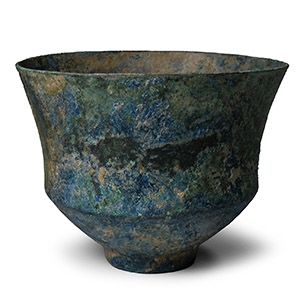
Luristan Bronze Flared Bowl
13th-7th century B.C.Sold for (Inc. bp): £260
Bell-shaped jar with narrow foot and carinated profile. 217 grams, 12 cm diameter
Ex London, UK, gallery, 1971-early 2000s. Property of a London gentleman.
