
Loading, please wait...
LOT 1484
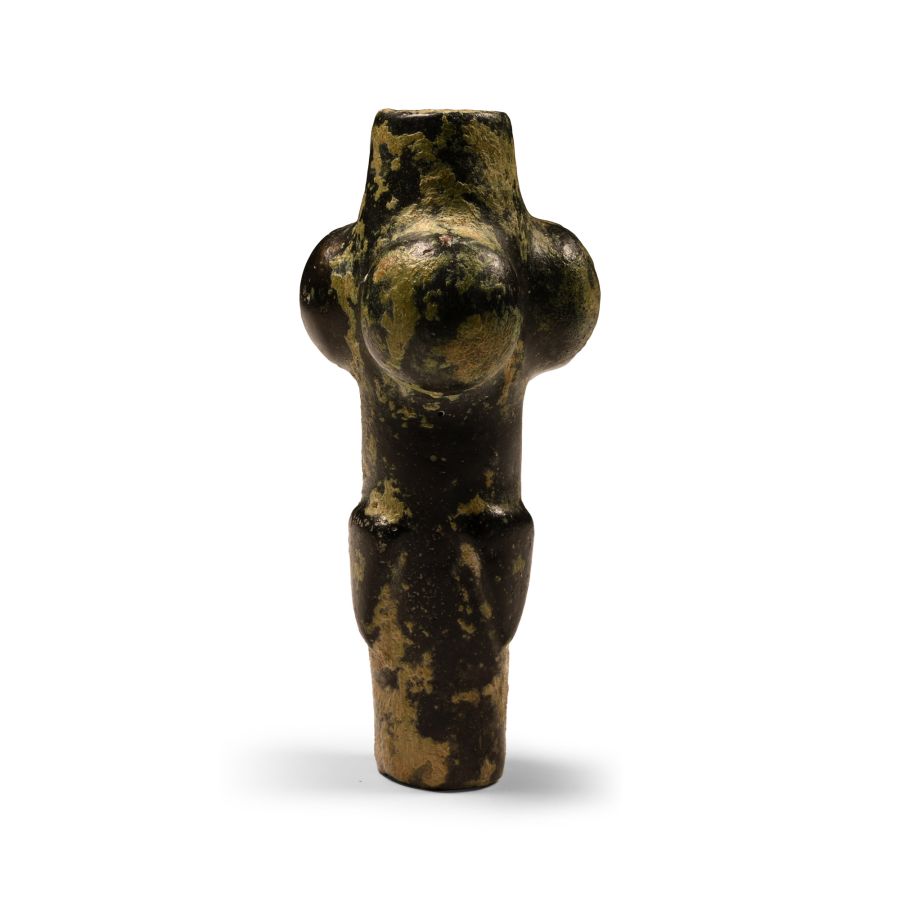
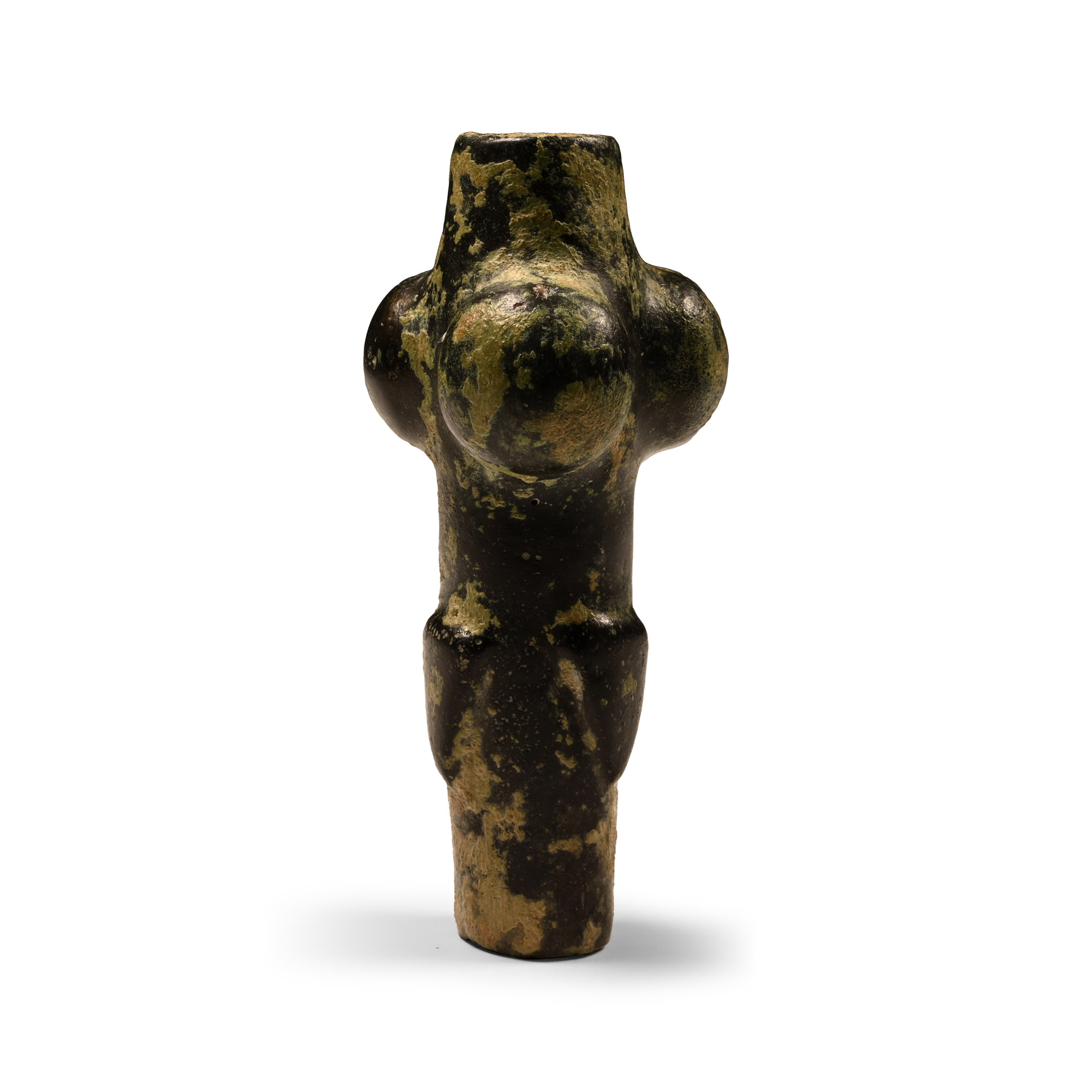
Luristan Bronze Bulbous Macehead
CIRCA 7TH-6TH CENTURY B.C.
3 7/8 in. (167 grams, 98 mm).
With three round knobs at the top, radiating from the hollow shaft, with a further three heater-shaped projections below. [No Reserve]
ProvenancePrivate collection, UK.
LiteratureCf. Muscarella, O.W., Bronze and Iron, Ancient Near Eastern Artifacts in the Metropolitan Museum of Art, New York, 1988, nos.68-71, for similar.
CONDITIONTimeLine Auctions follows a vetting process to ensure the authenticity and legality of all items, reinforcing our commitment to integrity and responsible trading. Each antiquity, antique, and coin lot undergoes thorough examination by a vetting committee of at least ten external specialists, professional trade association members, scientists, and archaeologists: Our Vetting Process
AUCTIONS:
TimeLine is a leading auction house specialising in antiquities, ancient art, collectables, natural history, coins, medals, and books. Our auctions offer museums, collectors, historians, and enthusiasts the opportunity to acquire unique and historically significant pieces.
-
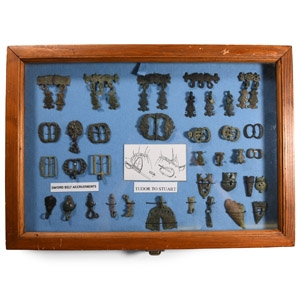
Cased Tudor to Stuart 'Published' Sword Belt Accruement Collection
16th century A.D.Sold for (Inc. bp): £104
Collection of military belt fittings including buckles and frames, strap hooks, scabbard chapes and other items, all mounted and labelled in a felt-lined glazed wooden display case; many of these objects are published in the Detector Finds book series. 3.8 kg total, 52.5 x 37 x 6 cm including case
From the collection of the famous author, writer and speaker, Gordon Bailey, Essex, UK; formed since 1968. -
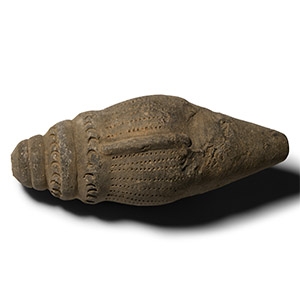
Turco-Mongol 'Greek Fire' Ceramic Fire Bomb or Hand Grenade
13th-15th century A.D.Sold for (Inc. bp): £156
A hollow vessel with cylindrical body, short neck and domed mouth, four raised lugs to the body, bands of impressed dots in-between, raised neck with impressed crescents; intended to be filled with explosive liquid and a wick, and used as a hand grenade. 357 grams, 14.7 cm
From a specialist collection of militaria, London, UK, collected 1990s onwards.
This was a type of ceramic fire grenade, similar to the ones used by the Eastern Romans but of Turco-Mongol type. Apart from the use of manual flame-throwers, special corps of soldiers employed terracotta grenades, in the form of small jars, abundantly evidenced in archaeological excavations. -
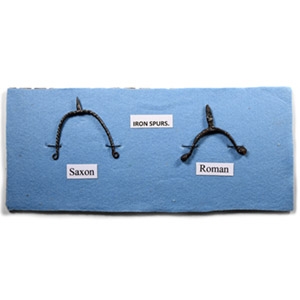
Saxon and Roman Iron Military Spur Display
Circa 2nd-10th century A.D.Sold for (Inc. bp): £286
Comprising a Roman U-shaped spur with lateral lugs and prick spur; an Anglo-Saxon iron spur with barley twist body and small terminals. 254 grams total, 82-83 mm
From the collection of the famous author, writer and speaker, Gordon Bailey, Essex, UK; formed since 1968.
The Romans employed a light spur (calcar) made of bronze or iron, U-shaped and barely covering the heel. To the rear of the spur was a small point, and this form continued to be in use through the early Medieval period. The Saxon spurs were very similar to the Roman examples, although slightly larger and with a more spiked point.
