
Loading, please wait...

LOT 1437
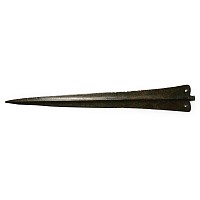
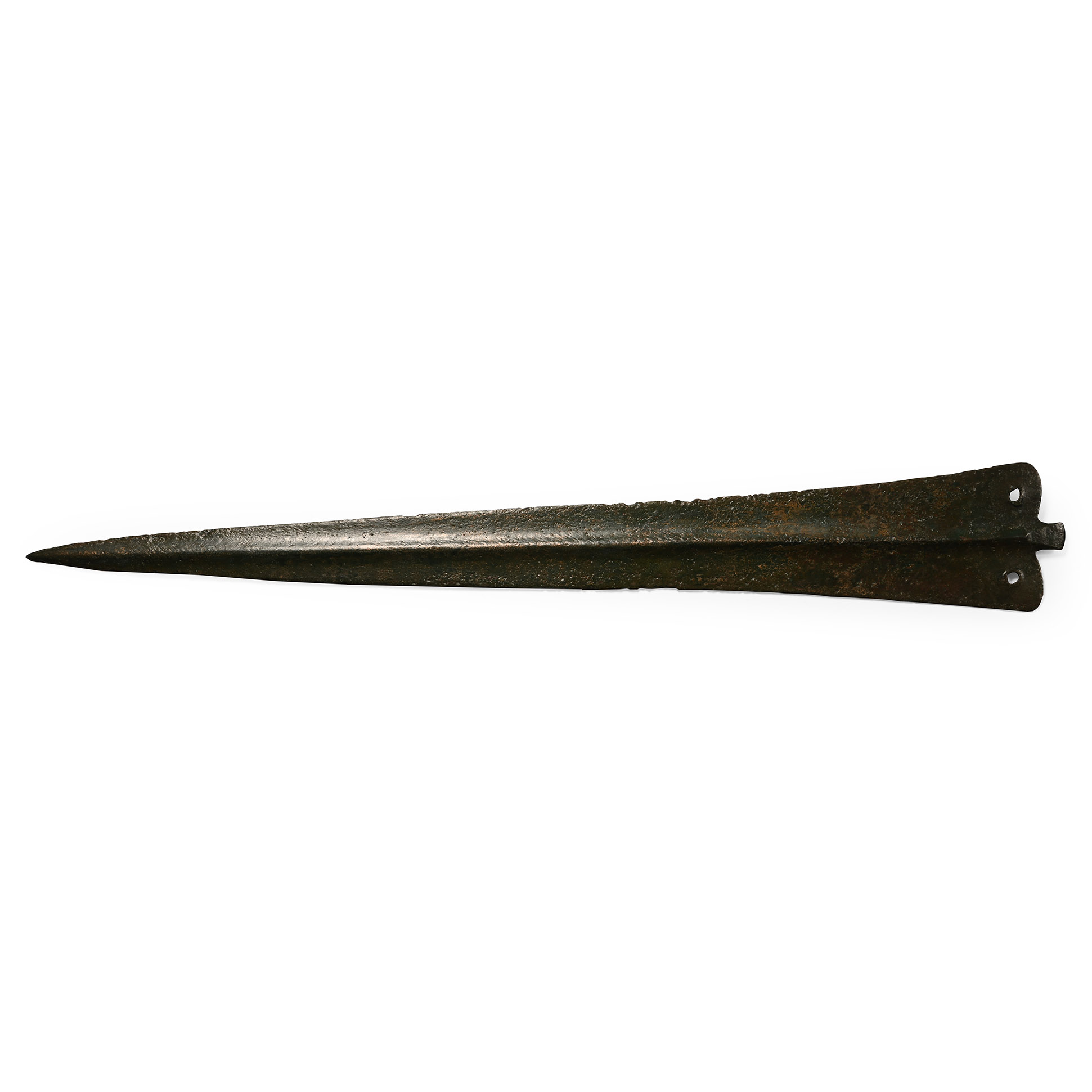
Luristan Bronze Blade
1200-1100 B.C.
14 3/8 in. (193 grams, 36.5 cm).
With a long pointed triangular blade and a short tang, two rivet holes at the base of the blade.
ProvenanceAcquired 1980-2015.
Ex Abelita family collection.
This lot is accompanied by an illustrated lot declaration signed by the Head of the Antiquities Department, Dr Raffaele D’Amato.
This lot is accompanied by an illustrated lot declaration signed by the Head of the Antiquities Department, Dr Raffaele D'Amato.
See Khorasani, M.M., Arms and Armor from Iran: The Bronze Age to the End of the Qajar Period, Tübingen, 2006, p.632, no.283, for type.
FootnotesThe Luri people produced a quantity of fine metalwork, which according to Dr. Khorasani, could be due to a settled period which arose as a result of the defeat of the Elamites by the Babylonians, leaving the Luristani people in relative peace for a period of time after 1200 BC. According to Khorasani 'A culture of innovation and experimentation flourished, and the repertoire of the Luristan smiths expanded in the period between 1150–1050 BC.'
CONDITIONTimeLine Auctions follows a vetting process to ensure the authenticity and legality of all items, reinforcing our commitment to integrity and responsible trading. Each antiquity, antique, and coin lot undergoes thorough examination by a vetting committee of at least ten external specialists, professional trade association members, scientists, and archaeologists: Our Vetting Process
AUCTIONS:
TimeLine is a leading auction house specialising in antiquities, ancient art, collectables, natural history, coins, medals, and books. Our auctions offer museums, collectors, historians, and enthusiasts the opportunity to acquire unique and historically significant pieces.
-
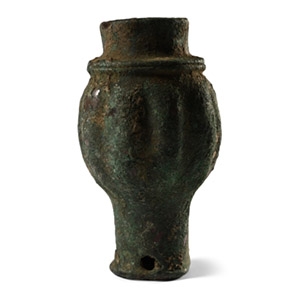
Luristan Bronze Macehead
13th-7th century B.C.Estimate: £100 - 140 (+bp*)
Opening Bid: £55
Comprising a cylindrical shaft with flared mouth, rounded flanges around the swollen head, horizontal stepped bands; Sara Gorz type. 416 grams, 98 mm
Acquired 1980-2015. Ex Abelita family collection. This lot is accompanied by an illustrated lot declaration signed by the Head of the Antiquities Department, Dr Raffaele D’Amato. This lot is accompanied by an illustrated lot declaration signed by the Head of the Antiquities Department, Dr Raffaele D'Amato. -
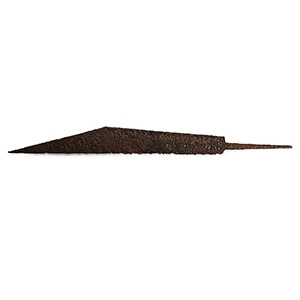
Large Viking Age Iron Broken-Backed Knife 'Seax' Blade
8th-10th century A.D.Sold for (Inc. bp): £117
With scooped forward edge, straight single edge and arched triangular back; transverse mounting tang. 208 grams, 37.5 cm
From a North American collection formed in the 1970s-1990s. This lot is accompanied by an illustrated lot declaration signed by the Head of the Antiquities Department, Dr Raffaele D'Amato.
This knife seems to be of type IV, like the one found in the Thames at Wandsworth. Based on its similarities with a specimen from Canterbury, it could be dated to the 8th century A.D. Underwood classifies these kind of knives under the typology C (angled back-curved cutting edge) dating them from the mid 6th to early 8th century A.D. -
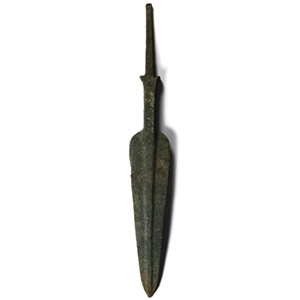
Amlash Type Bronze Spear-Head
12th-11th century B.C.Estimate: £100 - 140 (+bp*)
Opening Bid: £50
Leaf-shaped blade and rectangular-section shank developing from the raised midrib, flared below with a rectangular-section tang. 300 grams, 36.5cm
Ex London art market, 1980-1990s. This lot is accompanied by an illustrated lot declaration signed by the Head of the Antiquities Department, Dr Raffaele D'Amato.
The weapon belongs to the type 1 of the spear-head classification of Khorasani, mainly from Marlik or Amlash areas. Similar pieces have been dated by Stutzinger to 1200-1100 B.C.
