
Loading, please wait...
LOT 1131
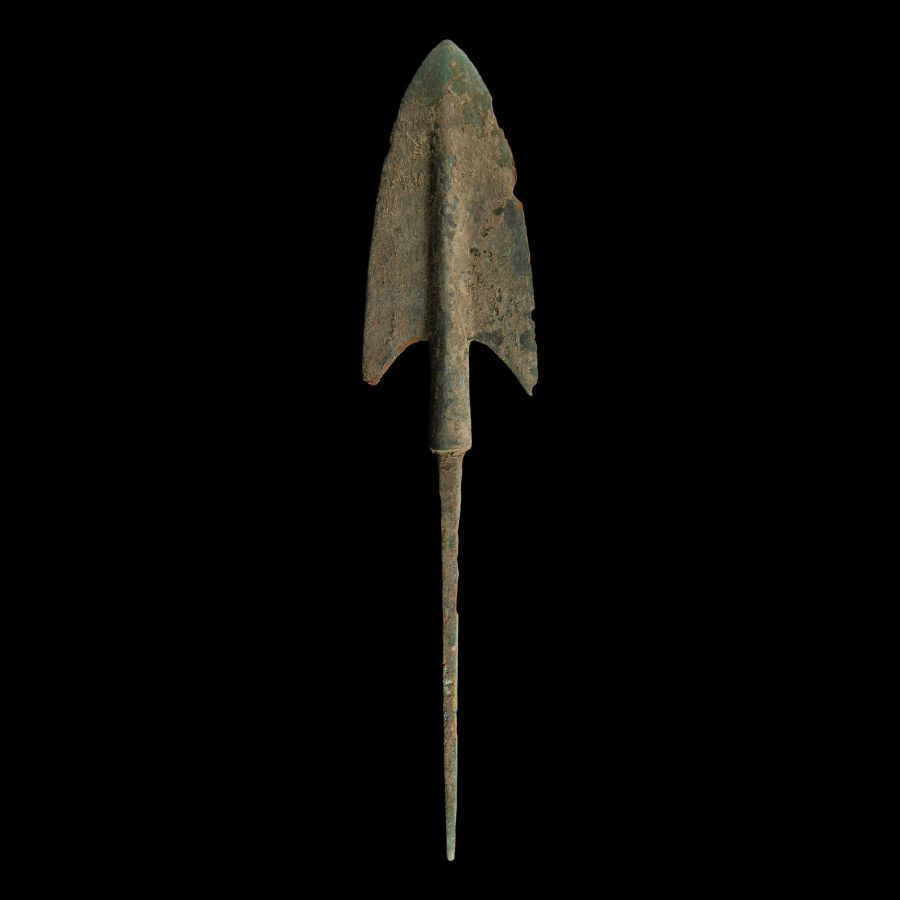
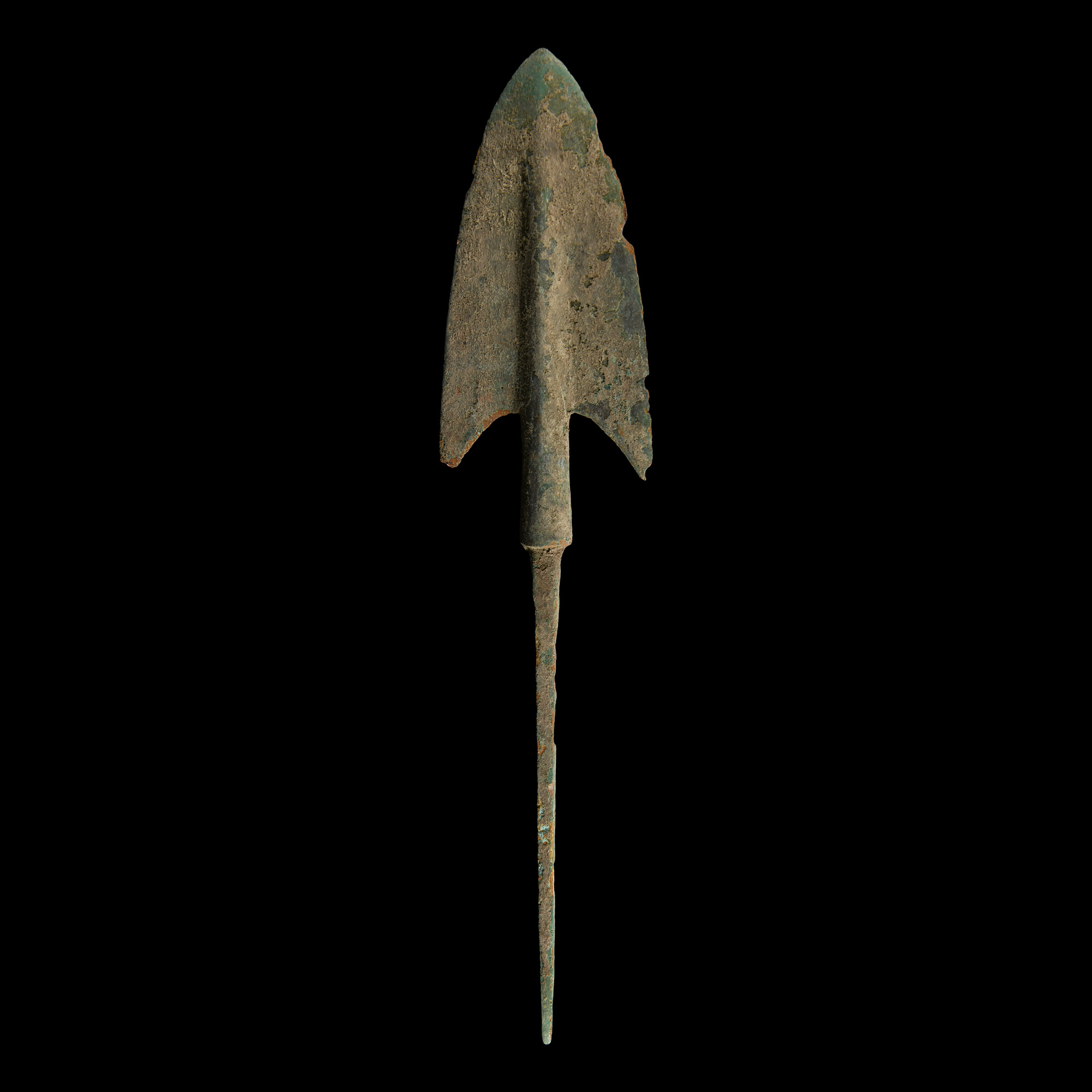
Luristan Bronze Barbed Arrowhead
2ND-1ST MILLENNIUM B.C.
6 1/8 in. (31 grams, 15.5 cm).
Formed with a midrib and tapering rectangular-section tang. [No Reserve]
ProvenanceAcquired 1980-2015.
Ex Abelita family collection.
TimeLine Auctions follows a vetting process to ensure the authenticity and legality of all items, reinforcing our commitment to integrity and responsible trading. Each antiquity, antique, and coin lot undergoes thorough examination by a vetting committee of at least ten external specialists, professional trade association members, scientists, and archaeologists: Our Vetting Process
AUCTIONS:
TimeLine is a leading auction house specialising in antiquities, ancient art, collectables, natural history, coins, medals, and books. Our auctions offer museums, collectors, historians, and enthusiasts the opportunity to acquire unique and historically significant pieces.
-
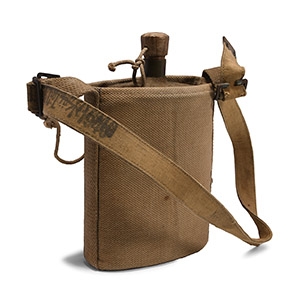
British WWII Water Bottle
Dated 1940 A.D.Sold for (Inc. bp): £39
Felt covered steel water bottle of oval cylindrical shape with wood plug stopper with cord retainer and fitted with canvas carry cover and shoulder strap with printed 'H S & CO Ltd ' maker name and War Department 'broad arrow' mark and date. 592 grams, bottle 23.5 cm high
The Kusmirek Collection, UK. -
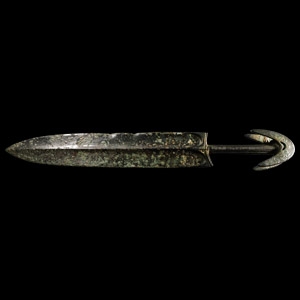
Amarlu Type Bronze Short Sword
Late 2nd millennium B.C.Sold for (Inc. bp): £1,755
Composed of a massive triangular blade with a slightly raised mid-rib flanked by three parallel rows on each side, the guard formed with a pronounced trident shape, ornamented with small geometric square recesses, the hilt with square-section grip incised with four vertical rows of similar square recesses, double broad crescentic open pommel surmounted by a broad raised median rib which links the double crescentic halves; repaired. 911 grams, 53 cm
One horn cracked and repaired
Acquired 1970s-1980s. From the collection of a Surrey, UK, gentleman.
Moorey, analysing similar swords found in Amarlu, stated that the blade and tang were made first, forged to shape by hammering at a high temperature. The next step was to cover the tang with a clayed material. Once dry, this material formed the core for the casting. Then a hollow mould of the exact shape of the shoulder, grooved hilt and pommel was made around the clay core covering the tang. Finally, liquid metal was poured into the mould. The weapon was then finished by hammering the pommel and shoulder to the hilt. -
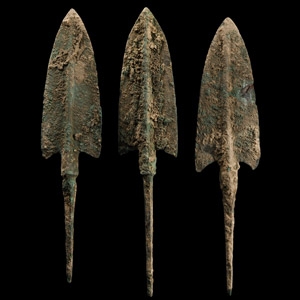
Western Asiatic Bronze Arrowhead Group
1st millennium B.C.Sold for (Inc. bp): £39
Three tanged arrowheads with broadly leaf-shaped heads with shallow barbs, each with a raised midrib to both faces. 83 grams total, 13.5-14.5 cm
Ex private collection, 1980s. Acquired on the UK art market in the 1990s.
