
Loading, please wait...
LOT 1018
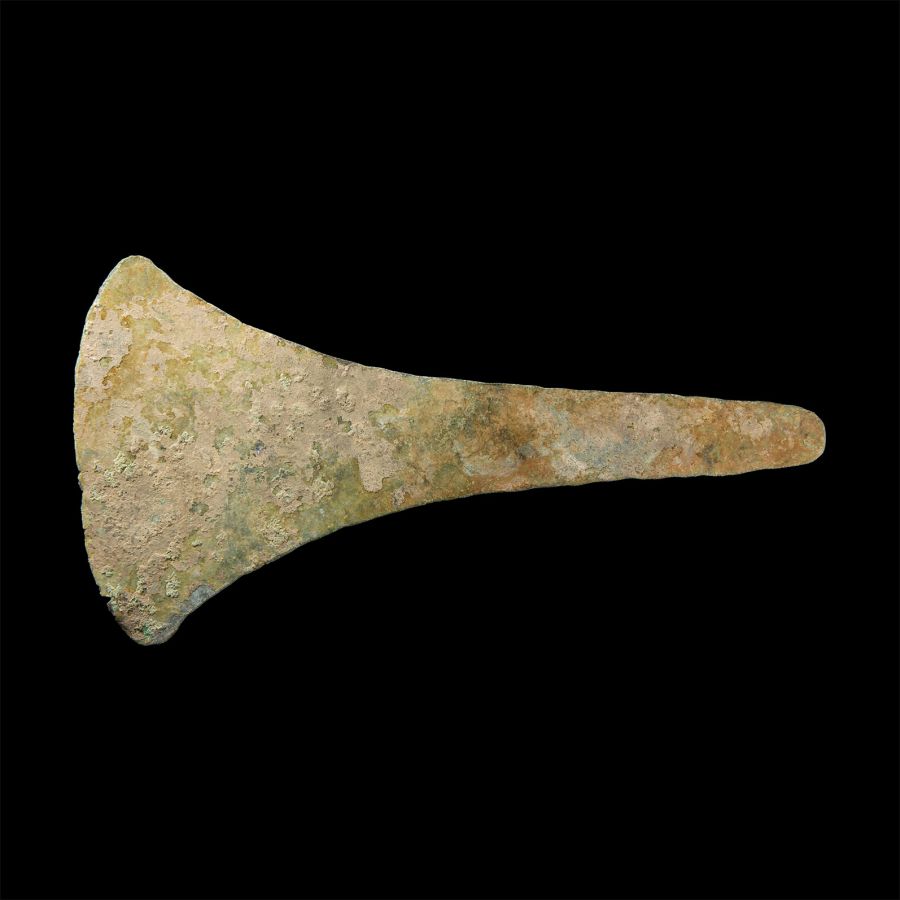
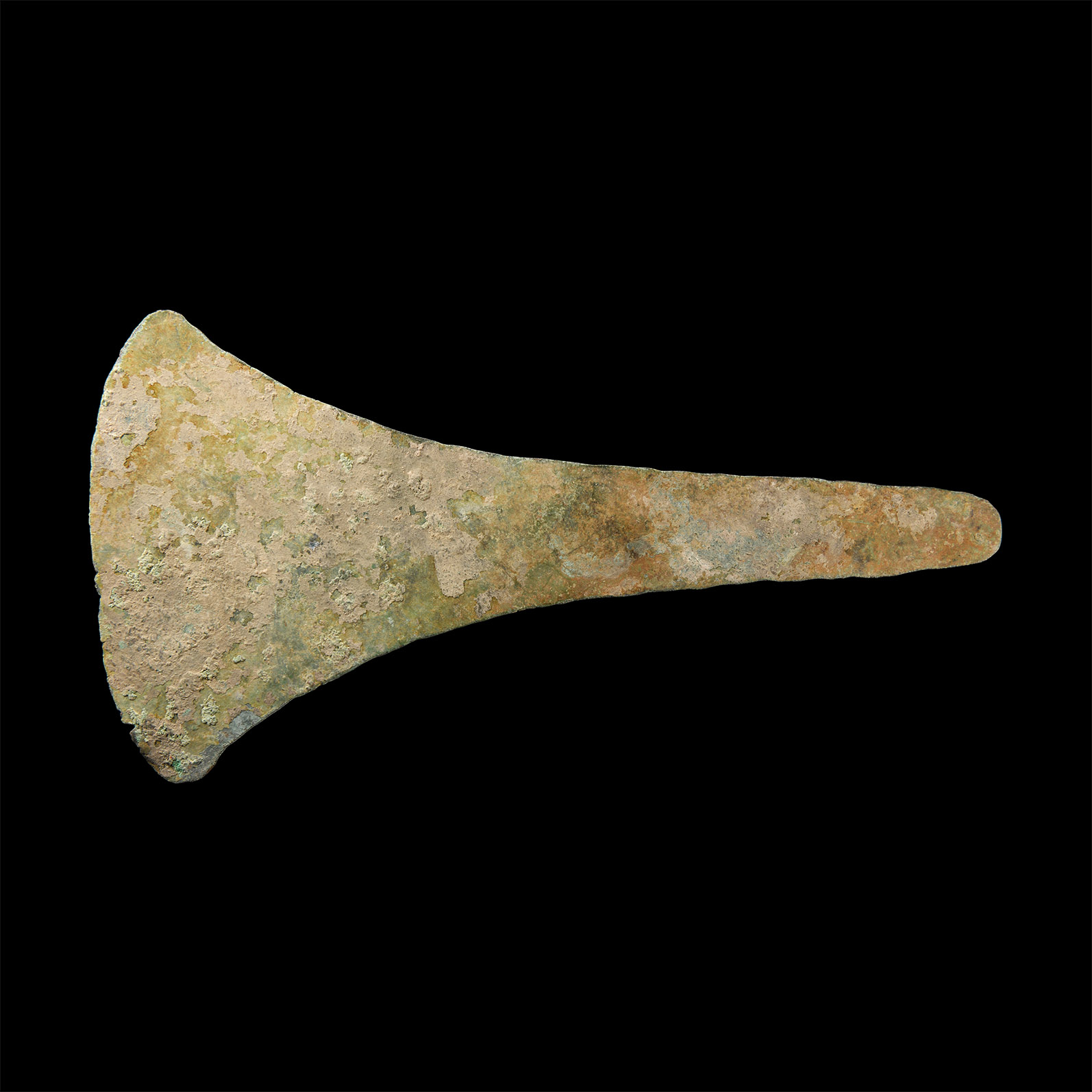
Luristan Bronze Axehead
2ND-1ST MILLENNIUM B.C.
8 5/8 in. (120 grams, 22 cm).
The fan-shaped cheeks leading to a convex cutting edge; rounded butt and flat in section.
ProvenanceAcquired 1980-2015.
Ex Abelita family collection.
TimeLine Auctions follows a vetting process to ensure the authenticity and legality of all items, reinforcing our commitment to integrity and responsible trading. Each antiquity, antique, and coin lot undergoes thorough examination by a vetting committee of at least ten external specialists, professional trade association members, scientists, and archaeologists: Our Vetting Process
AUCTIONS:
TimeLine is a leading auction house specialising in antiquities, ancient art, collectables, natural history, coins, medals, and books. Our auctions offer museums, collectors, historians, and enthusiasts the opportunity to acquire unique and historically significant pieces.
-
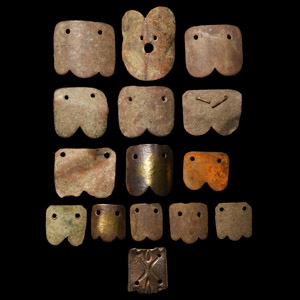
Post Roman Squama Armour
5th-9th century A.D.Sold for (Inc. bp): £65
Each scale B-shaped, slightly convex sides, two equally spaced circular holes along the straight edge. 55 grams total, 19-38 mm
The Kusmirek Collection, UK.
This object is not typical of 'squama' which usually has scales that are rectangular with one rounded end, and numerous attachment holes at the square end in pairs. However, it can be a type widespread in the post Roman age, with various specimens found in Britain (PAS SWYOR-CA6BBB, BM-95F434 and NCL-34BE90. -
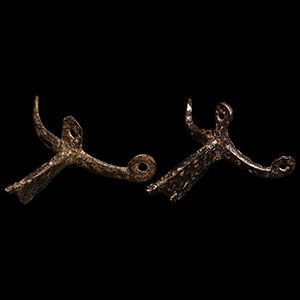
Roman Provincial Iron Spur Group
2nd-3rd century A.D.Sold for (Inc. bp): £143
With central barbed spike positioned under the pierced central hole, fitted on both sides with arms having circular shaped eyelet-like protuberances. 29.6 grams total, 54-62 mm
Acquired on the German art market around 2000. From the collection of a South African gentleman.
The prick spur was the first type of spur to be invented, and it consists of a goad or prick, more or less pointed, connected to side arms or a heel plate. They went around the rider’s heel and had a straight post on the back that was used to cue the horse. Often this was sharp, obviously intended to prick the horse, The type here represented seems to be a provincial variant of Roman Imperial prick spur fitted with three eyelets. -
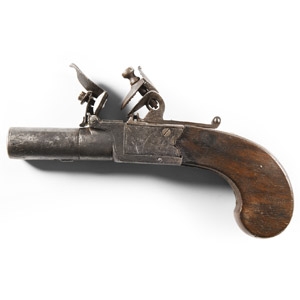
Flintlock Pocket Pistol
18th century A.D.Estimate: £400 - 600 (+bp*)
Opening Bid: £150
With 40mm (1½") turn-off barrel, box-lock with sliding safety marked 'CLARK' left and 'LONDON' right; fitted with plain wood butt and octagonal escutcheon; action working. 280 grams, 16 cm
Acquired on the UK market. Property of a Kent collector.
Sold as an exempt item under Section 58 (2) of the Firearms Act, 1968, to be held as a curiosity or ornament. No license required but buyer must be over 18 years of age. Overseas bidders should note that, due to UK regulations governing export of all firearms, overseas buyers will need to make arrangements for shipping this lot out of the UK directly, by air freight, with a specialist company or agent.
