
Loading, please wait...
LOT 1123
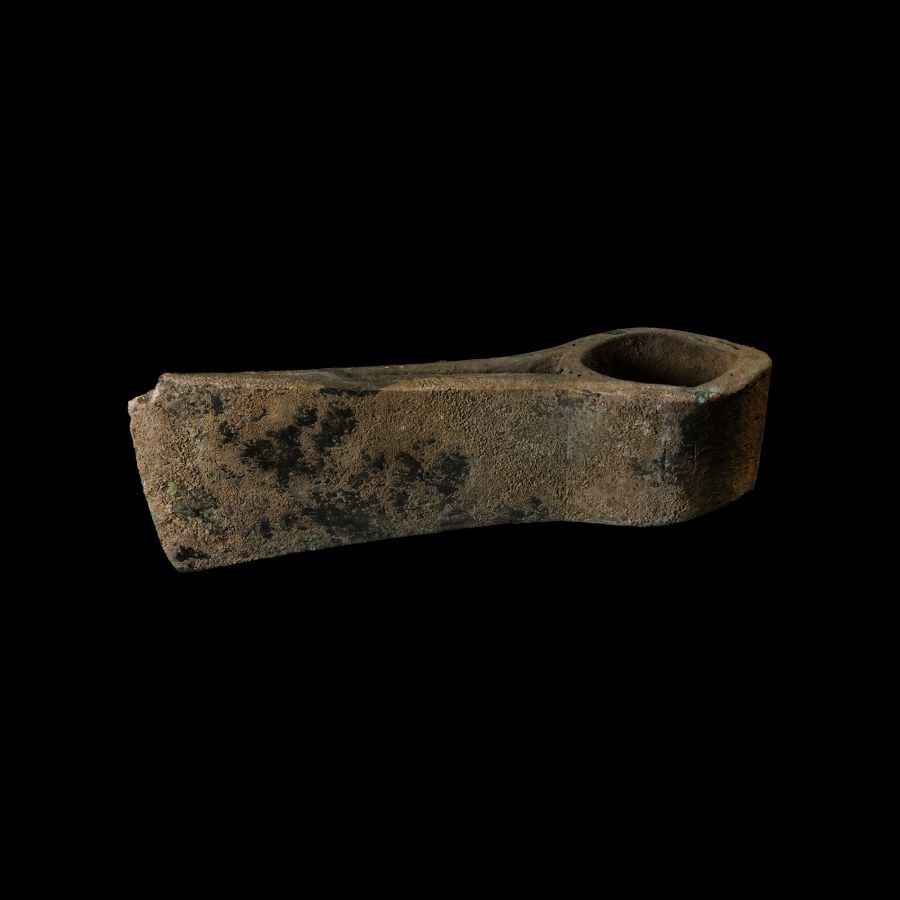
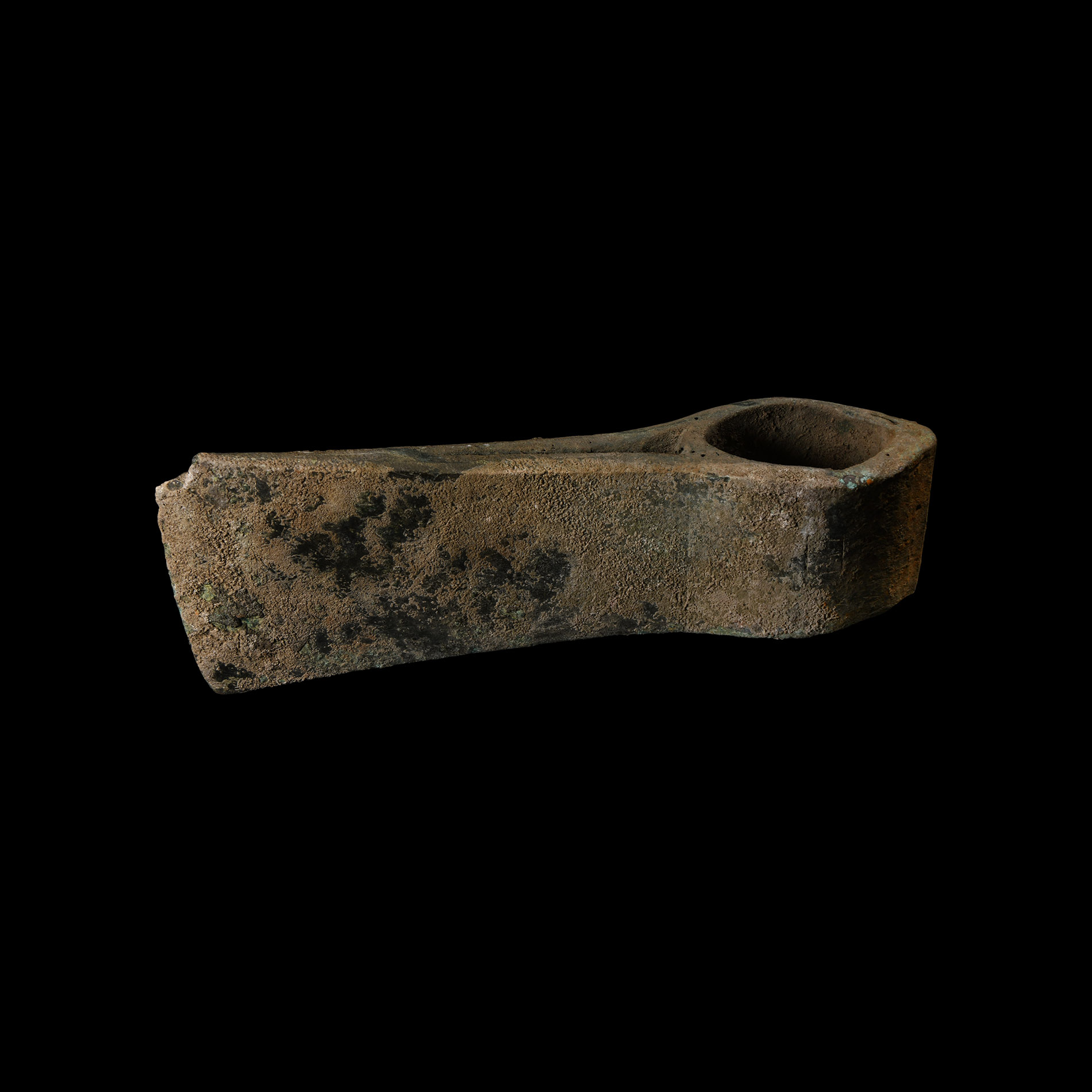
Luristan Bronze Axehead
12TH-11TH CENTURY B.C.
6 7/8 in. (939 grams, 17.5 cm).
With elliptical socket and slightly flaring cheeks with cutting edge.
ProvenanceAcquired 1990s-early 2000s.
East Anglian private collection.
The axe corresponds to the Maxwell-Hyslop Type 20A, similar to specimens from Ordu and purely Asiatic in inspiration. An axe from Giyan has a distinct shaft tube which is not present on the Ordu axe, but the shape of the blade is similar and it is probable that smiths travelling over the Eastern Anatolian and Persian trade routes were responsible for making these typologies of axes.
CONDITIONTimeLine Auctions follows a vetting process to ensure the authenticity and legality of all items, reinforcing our commitment to integrity and responsible trading. Each antiquity, antique, and coin lot undergoes thorough examination by a vetting committee of at least ten external specialists, professional trade association members, scientists, and archaeologists: Our Vetting Process
AUCTIONS:
TimeLine is a leading auction house specialising in antiquities, ancient art, collectables, natural history, coins, medals, and books. Our auctions offer museums, collectors, historians, and enthusiasts the opportunity to acquire unique and historically significant pieces.
LOT 1123
Luristan Bronze Axehead
Estimate £100 - 140€120 - 160 (for guidance only)$140 - 190 (for guidance only)
-
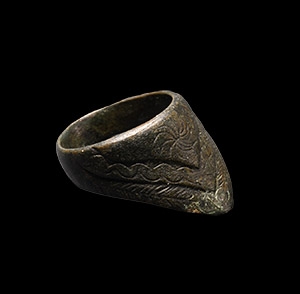
Byzantine Bronze Archer's Thumb Ring
14th-15th century A.D.Sold for (Inc. bp): £104
Comprising a tapering hoop and triangular plaque, three bands of incised ornament. 9.59 grams, 27.27 mm overall, 21.60 mm internal diameter (approximate size British X 1/2, USA 11 3/4, Europe 26.92, Japan 25)
Acquired by the vendor's father on the UK art market, before 1990. -
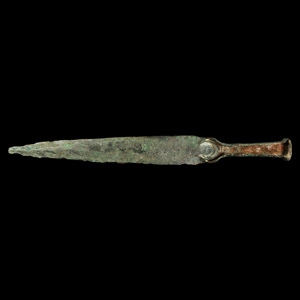
Luristan Bronze Dirk
Circa 1000 B.C.Estimate: £400 - 800 (+bp*)
Opening Bid: £139
Composed of a leaf-shaped blade with a raised penannular rib and slot below the shoulder connected to the grip with lateral flanges and integral pommel, recessed to accept an organic insert. 264 grams, 37.5 cm
From an old English collection, formed in the 1980s. The Kusmirek Collection, UK.
This dirk, cast in one piece mould, belongs to the daggers that Medvedskaya believes support the thesis that majority of them were cast in one piece. However, there are examples where the penannular grip was cast on later on the dagger or dirk. -
.jpg)
Tower Yeomanry Percussion Carbine
Dated 1844 A.D.Sold for (Inc. bp): £572
Produced with a 51cm (20") round smooth-bore .65" barrel bearing set of London proof marks fitted with percussion lock marked 'crown-over-V R' and 'TOWER 1844' with steel captive ramrod and wood full stock fitted with brass butt plate, trigger guard, ferrule and fore-end, the side sling bar a later replacement; action working well to half and full cock. 2.95 kg, 90 cm
Acquired from M J Noble Ltd, 2015. The Kusmirek Collection, UK. Accompanied by a copy of invoice and information.
Sold as an exempt item under Section 58 (2) of the Firearms Act, 1968, to be held as a curiosity or ornament. No license required but buyer must be over 18 years of age. Overseas bidders should note that, due to UK regulations governing export of all firearms, overseas buyers will need to make arrangements for shipping this lot out of the UK directly, by air freight, with a specialist company or agent.
