
Loading, please wait...
LOT 1384
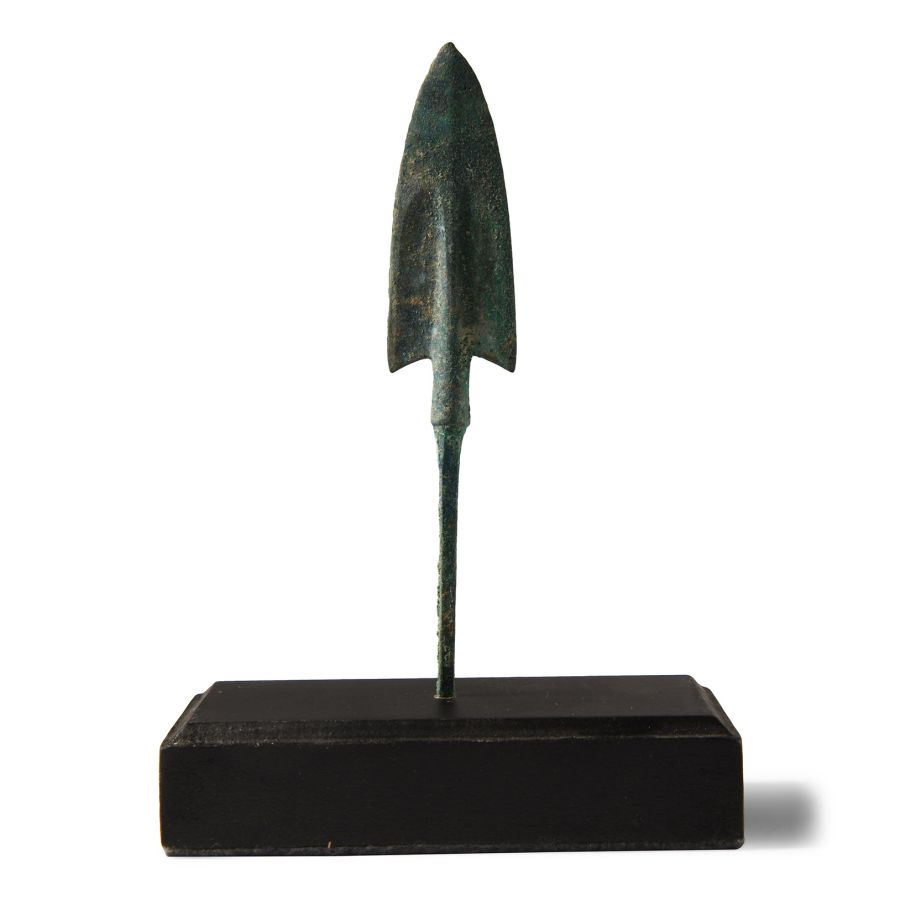
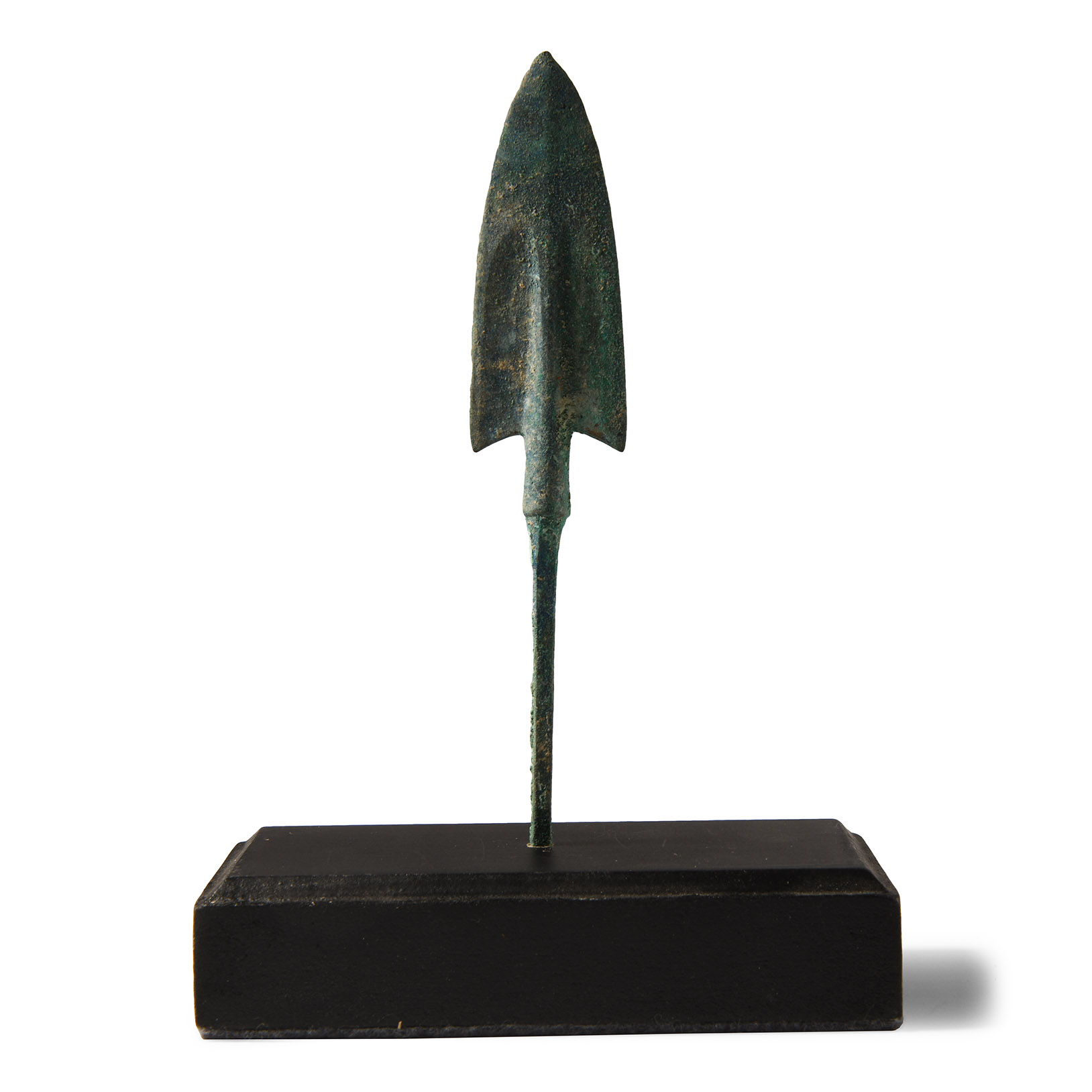
Luristan Bronze Arrowhead
13TH-7TH CENTURY B.C.
6 1/8 in. (6 1/2 in.) (34 grams, 15.6 cm (139 grams total, 16.7 cm high including stand)).
Heater-shaped with barbs to the rear and midrib developing to a tang. [No Reserve]
ProvenanceEx Abelita family collection, 1988.
CONDITIONTimeLine Auctions follows a vetting process to ensure the authenticity and legality of all items, reinforcing our commitment to integrity and responsible trading. Each antiquity, antique, and coin lot undergoes thorough examination by a vetting committee of at least ten external specialists, professional trade association members, scientists, and archaeologists: Our Vetting Process
AUCTIONS:
TimeLine is a leading auction house specialising in antiquities, ancient art, collectables, natural history, coins, medals, and books. Our auctions offer museums, collectors, historians, and enthusiasts the opportunity to acquire unique and historically significant pieces.
-
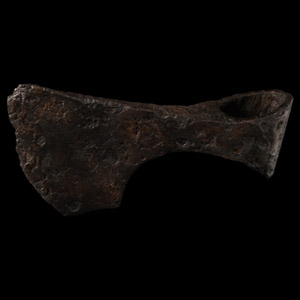
Viking Iron Bearded Axehead
Circa 9th-11th century A.D.Sold for (Inc. bp): £208
With curved edge to the blade, square chin and scooped underside, rounded socket. 390 grams, 15 cm
From the private collection of a London gentleman, from his grandfather's collection formed before the early 1970s. -
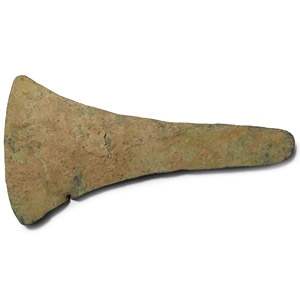
Western Asiatic Bronze Flat Axe
4th millennium B.C.Estimate: £100 - 140 (+bp*)
Opening Bid: £50
Formed with a rounded butt and slightly flared cutting edge; flat in cross-section. 138 grams, 18.5 cm
Acquired 1980-2015. Ex Abelita family collection.
This type of flat axes appeared in the last phase of the Late Chalcolithic Age. Flat axes without lugs were used as cutting tools or in war. In the later examples the sides of the blades was gradually widening towards the convex cutting edge. -
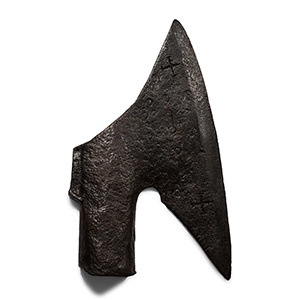
Iron Executioner's Axehead
Circa 16th-17th century A.D.Sold for (Inc. bp): £910
With substantial D-section socket and flange to the rear at the mouth; trapezoidal blade offset to one side, with punched cross crosslet motifs to one face. 2.8 kg, 33 cm high
From the private collection of a London gentleman, from his grandfather's collection formed before the early 1970s.
