
Loading, please wait...
LOT 1049
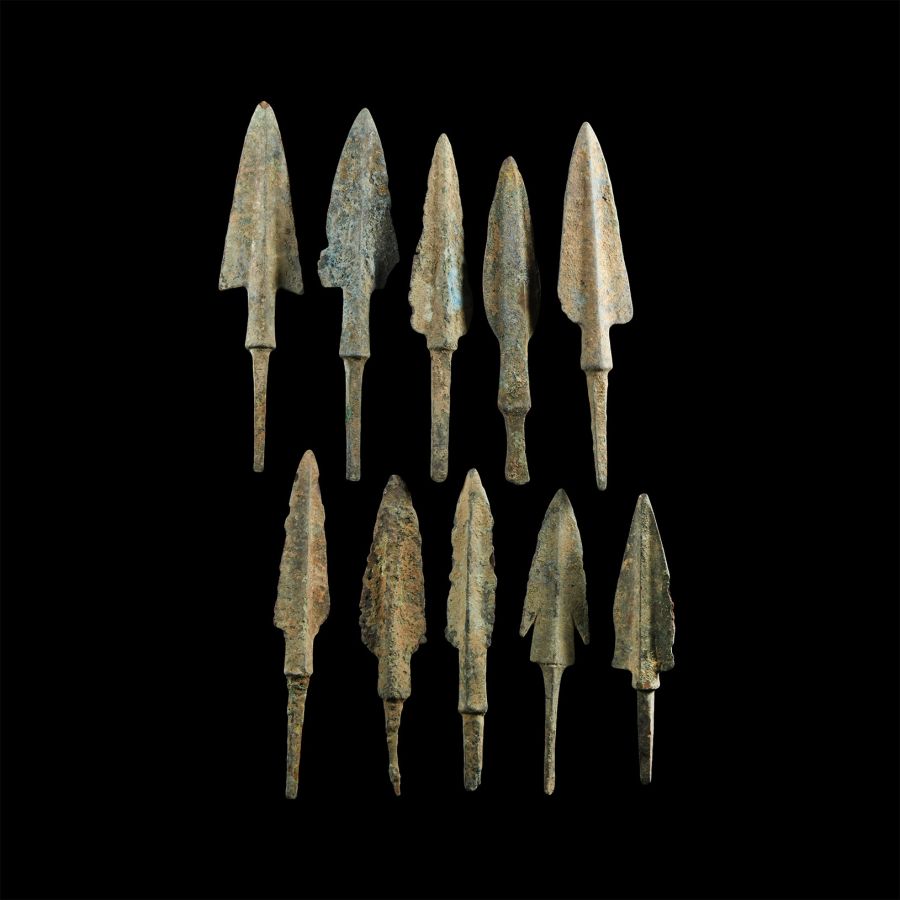
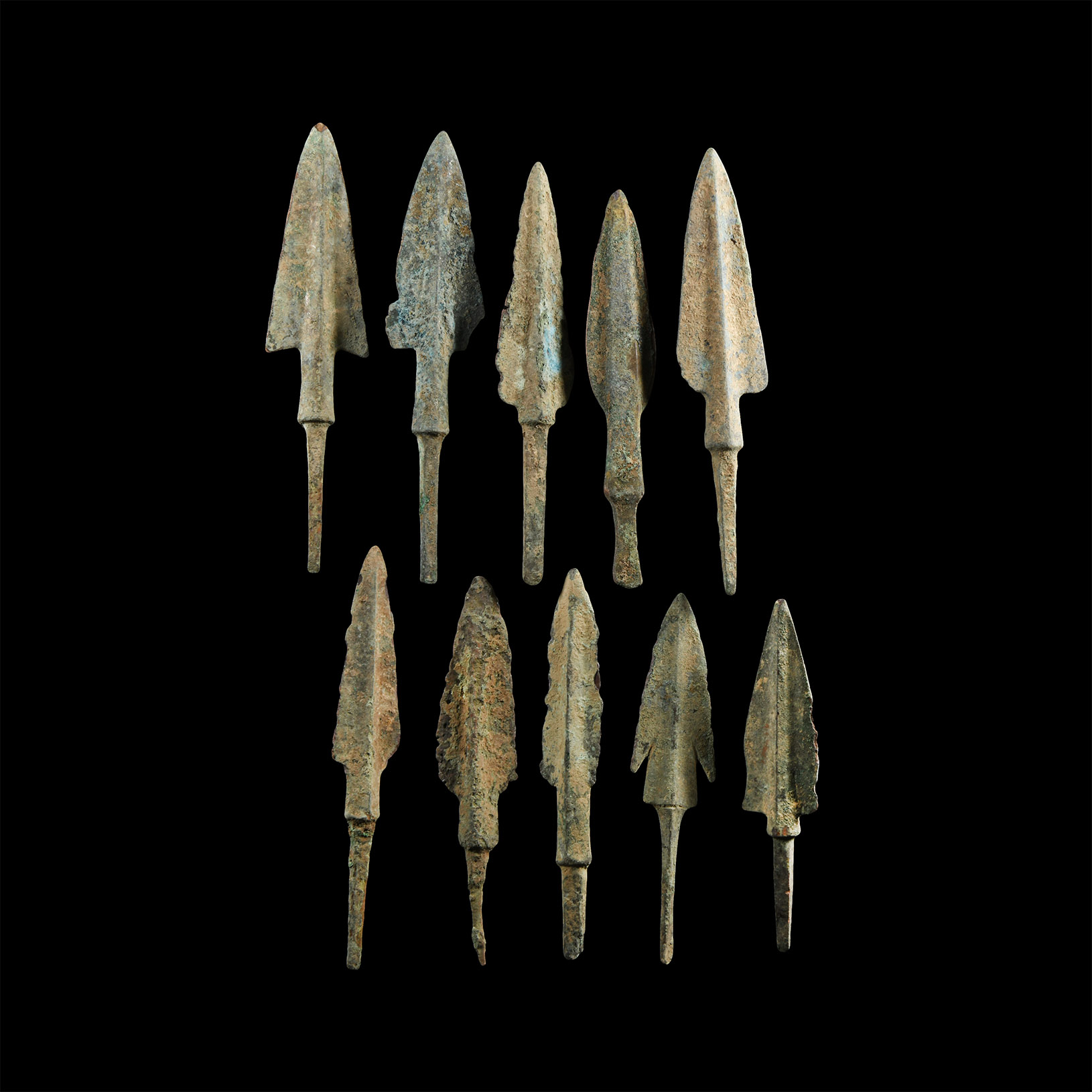
Luristan Bronze Arrowhead
2ND-1ST MILLENNIUM B.C.
3 1/8 - 4 1/8 in. (175 grams total, 8.1-10.5 cm).
The group comprising various types of tanged arrowheads, including barbed and leaf-shaped examples. [10]
ProvenanceAcquired 1990s.
From the collection of a late Japanese weaponry collector.
TimeLine Auctions follows a vetting process to ensure the authenticity and legality of all items, reinforcing our commitment to integrity and responsible trading. Each antiquity, antique, and coin lot undergoes thorough examination by a vetting committee of at least ten external specialists, professional trade association members, scientists, and archaeologists: Our Vetting Process
AUCTIONS:
TimeLine is a leading auction house specialising in antiquities, ancient art, collectables, natural history, coins, medals, and books. Our auctions offer museums, collectors, historians, and enthusiasts the opportunity to acquire unique and historically significant pieces.
LOT 1049
Luristan Bronze Arrowhead
Estimate £150 - 200€170 - 230 (for guidance only)$200 - 270 (for guidance only)
-
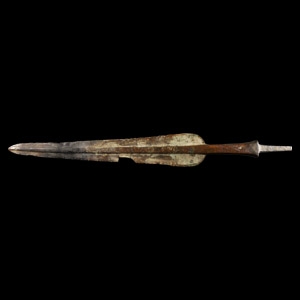
Amlash Tanged Spearhead
12th century B.C.Estimate: £250 - 350 (+bp*)
Opening Bid: £83
Composed of a tapering leaf-shaped blade with raised midrib, splayed neck and tapering tang. 637 grams, 49 cm
Acquired on the London art market, prior to 1980s. The Kusmirek Collection, UK.
The weapon belongs to the type 1 of the Khorasani spearhead classification, mainly from Marlik or Amlash areas. Similar pieces have been dated by Stutzinger to 1200-1100 B.C. -
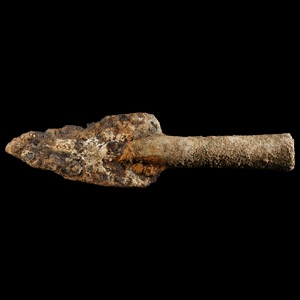
Greek Bronze Socketted Spear with Iron Head
12th-10th century B.C.Estimate: £100 - 140 (+bp*)
Opening Bid: £50
With foliate head and short tubular socketted shaft. 119 grams, 15 cm
Ex German collection, Cologne, 1980-1990s.
Snodgrass assigns the Athenian iron spearheads to the type A, i.e. spearheads with a leaf-shaped blade, a long socket and a midrib running to the tip. The bronze ones were assigned to typologies C – small, with a leaf-shaped blade (like the present specimen) - and D – with the socket as long as the blade, rounded shoulders and pronounced midrib. Both socket types were beaten round a cylindrical bar, a conservative method to produce bronze sockets even if the head was in iron. -
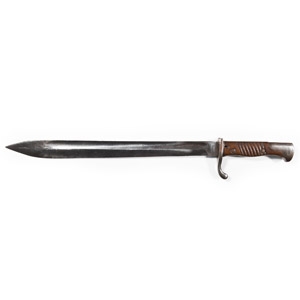
German WWI Erfurt 'Butcher' Bayonet
20th century A.D.Sold for (Inc. bp): £130
Featuring a fullered blade with wood-scale hilt and press-release stud; stamped with a maker's mark and issue date. 557 grams, 50.2 cm
Acquired from The Lanes Armoury, Brighton, UK. The Kusmirek Collection, UK. Accompanied by a Lanes Armoury certificate of authenticity.
