
Loading, please wait...
LOT 1405
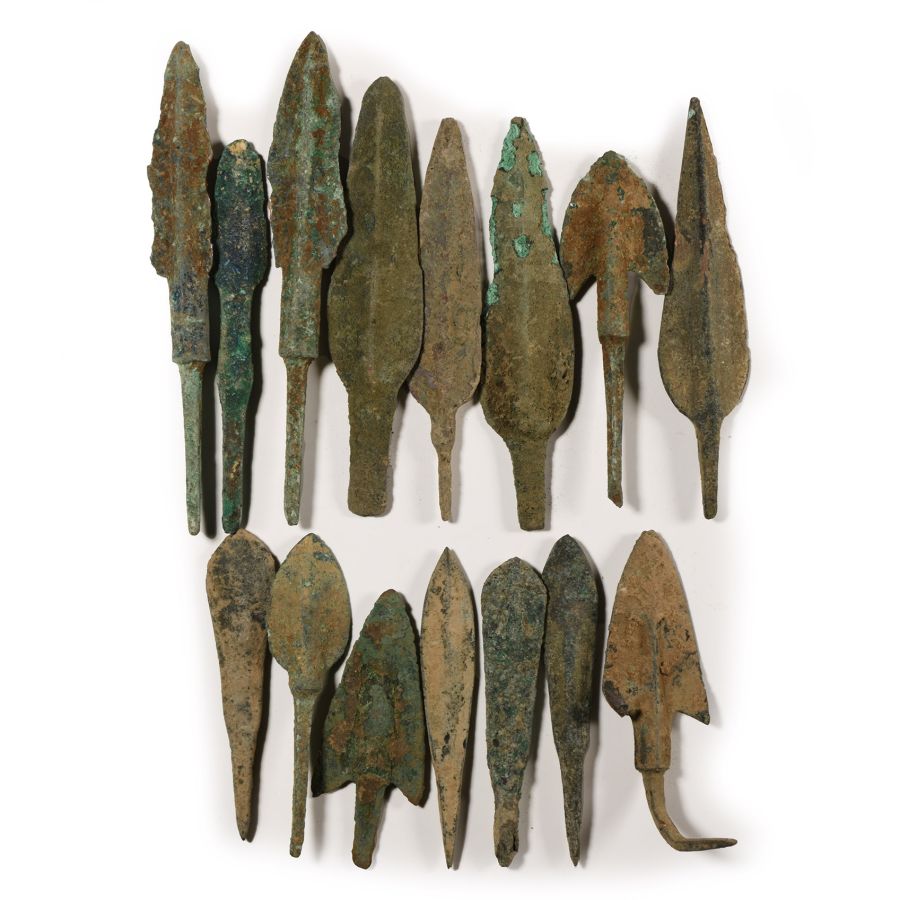
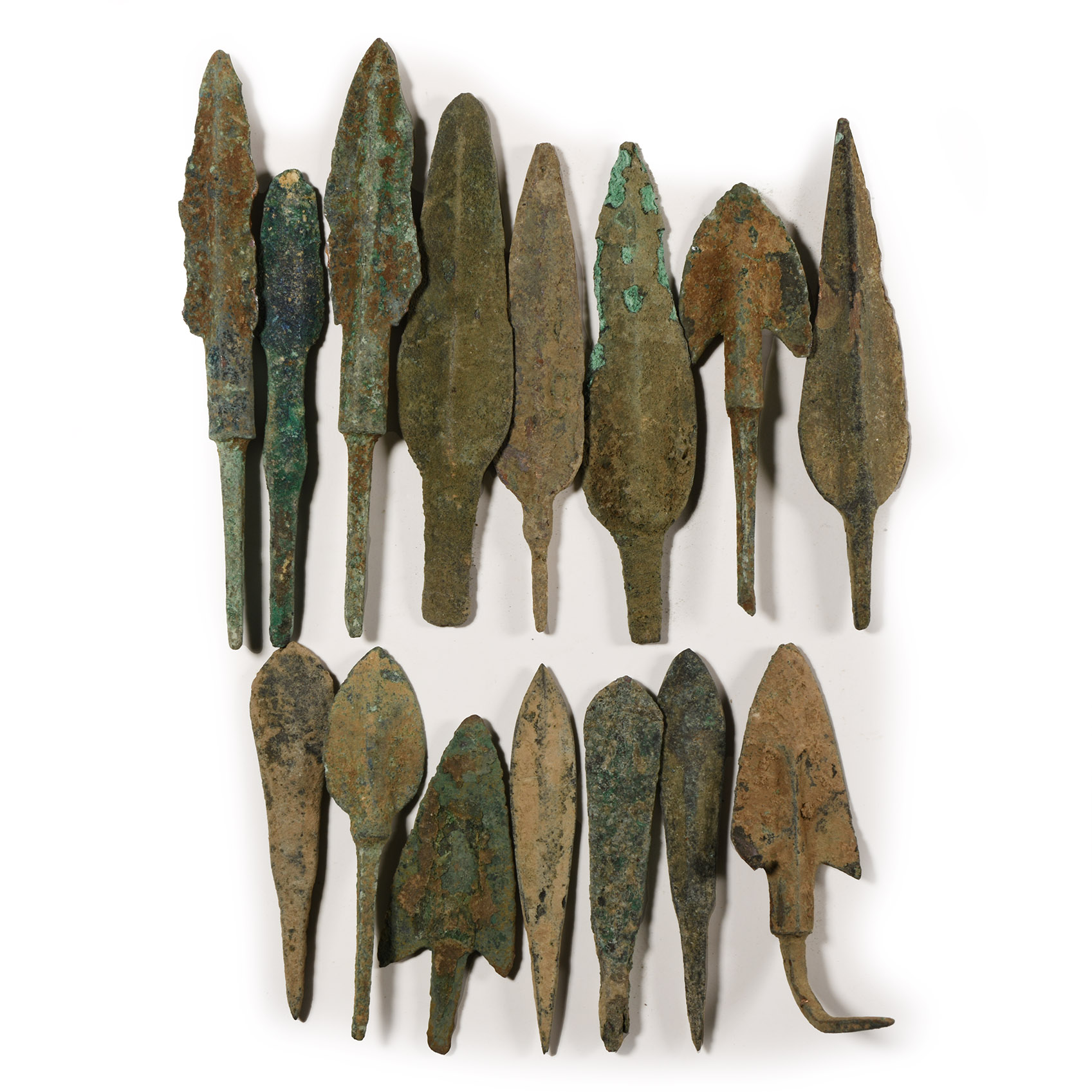
Luristan Bronze Arrowhead Group
CIRCA 13TH-7TH CENTURY B.C.
2 3/8 - 4 1/8 in. (200 grams total, 6.1-10.6 cm).
Including leaf-shaped, barbed-and-tanged, ribbed and other types. [14]
ProvenanceAcquired 1980-2015.
Ex Abelita family collection.
TimeLine Auctions follows a vetting process to ensure the authenticity and legality of all items, reinforcing our commitment to integrity and responsible trading. Each antiquity, antique, and coin lot undergoes thorough examination by a vetting committee of at least ten external specialists, professional trade association members, scientists, and archaeologists: Our Vetting Process
AUCTIONS:
TimeLine is a leading auction house specialising in antiquities, ancient art, collectables, natural history, coins, medals, and books. Our auctions offer museums, collectors, historians, and enthusiasts the opportunity to acquire unique and historically significant pieces.
-
.jpg)
Medieval 'Thames' Iron Dagger with Wood Handle
Circa 15th century A.D.Sold for (Inc. bp): £260
Sturdy single-edged triangular whittle-tang blade with thick back; with reproduction wooden handle. 137 grams, 34 cm
Found Billingsgate spoil from the Thames foreshore, London, UK, circa 1984. Property of an Essex collector. -
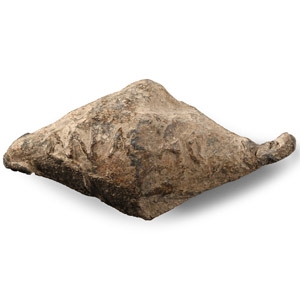
Roman 'Pompey the Great' Lead Slingshot
1st century B.C.Sold for (Inc. bp): £286
Biconical lead slingshot (glans) with inscription in Latin letters 'CN' (Cneius) 'MAG' (Magnus) on one side, and 'IMP' for 'IMPERATOR' (victorious general) to the other side, i.e Gnaeus Pompeius Magnus Imperator (Pompey the Great the victorious general). 75 grams, 51 mm
From a Spanish collection. From the collection of a London antiquarian. Accompanied by an academic paper by military specialist Dr Raffaele D'Amato, dated 4th May 2022 and titled 'Roman Res Publica - Lead Slingshots (glandes) of Caesarian Age - 45 B.C circa'. Accompanied by a printed copy of the Spanish cultural export licence 2022/07273.
The shot (Völling type 1C) is marked with the abbreviated name of Gnaeus Pompey; it was used in quantity at the Battle of Monda (or Munda) against Julius Caesar, 17th March 45 BC. The projectiles were made of different materials: lead (glandes) or in pottery or stone (lapides missiles). Sometimes they were signed with the name of the general, like our specimen. -
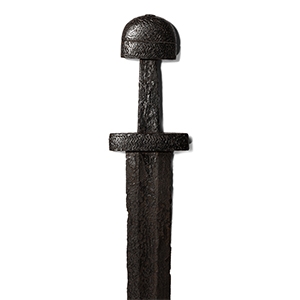
Viking Peterson Type X Sword with Inlaid Hilt
Circa 10th-11th century A.D.Sold for (Inc. bp): £3,900
With pattern-welded double-edged blade, showing well-defined shallow fullers and wide cutting edges, the fullers occupying not less than one third of the entire width and running to a point about 19 cm from the tip; massive, simply decorated hilt; the pommel, as well as the cross-guard, with visible zig-zag patterns; the pommel of solid tea-cosy type, divided into two sections by a well marked groove, the bottom being the larger, the curved top portion of the pommel further divided into three lobes; traces of inlay visible on the pommel and on the cross-guard. 1.25 kg, 94 cm
Acquired on the European art market in the 1990s. From the property of a Suffolk collector.
The blade shows in its central section, and on both cutting edges, the blodiձa style pattern-welding through the central portion of the blade (Oakeshott, 1960, fig.70). The fine pattern-welded blade patterns of Viking swords are the blodiձa (Blood-Eddy) and 'ann' (rows of mown hay) known from Norse poetry.
