
Loading, please wait...
LOT 1408
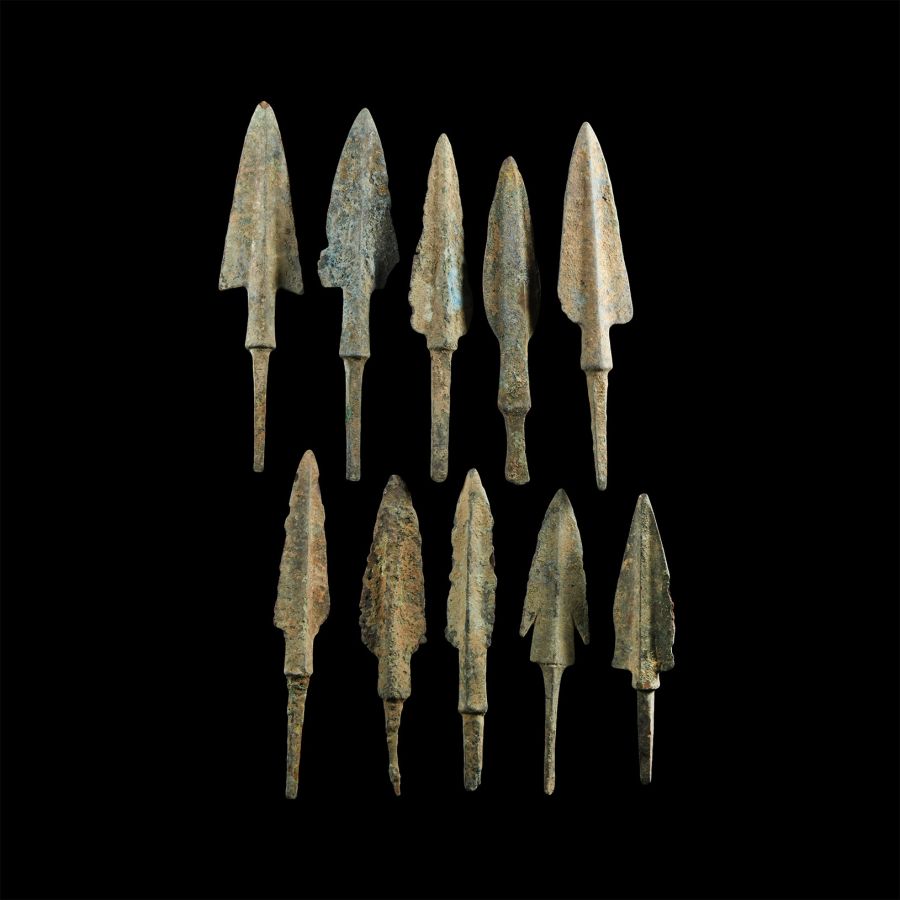
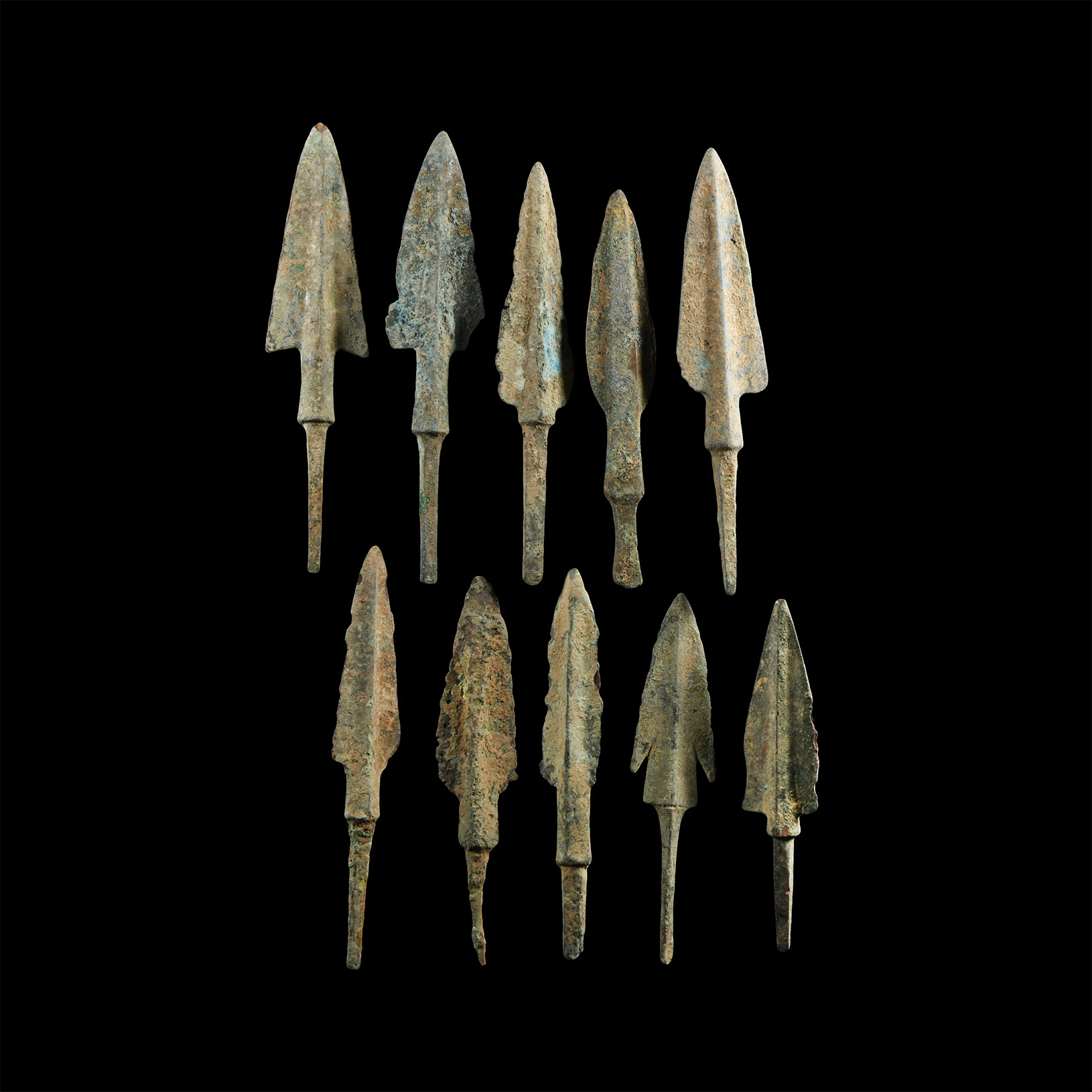
Luristan Bronze Arrowhead Group
14TH-10TH CENTURY B.C.
3 1/8 - 4 1/8 in. (158 grams total, 8-10.5 cm).
Comprising tanged arrowheads, including barbed and leaf-shaped examples. [9]
ProvenanceAcquired 1990s.
From the collection of a late Japanese weaponry collector.
Cf. Khorasani, M.M., Arms and Armour from Iran. The Bronze Age to the End of the Qajar Period, Tübingen, 2006, items 469-471.
FootnotesThe arrowheads seems to belong to the subtypes A and B of the Khorasani classification. They are mainly small triangular arrowheads with rounded and barbed shoulders. Some have angular or rounded midribs. The characteristic is also the cylindrical stem and the rectangular-sectioned tang. Many similar arrowheads were found in the Marlik excavations.
CONDITIONTimeLine Auctions follows a vetting process to ensure the authenticity and legality of all items, reinforcing our commitment to integrity and responsible trading. Each antiquity, antique, and coin lot undergoes thorough examination by a vetting committee of at least ten external specialists, professional trade association members, scientists, and archaeologists: Our Vetting Process
AUCTIONS:
TimeLine is a leading auction house specialising in antiquities, ancient art, collectables, natural history, coins, medals, and books. Our auctions offer museums, collectors, historians, and enthusiasts the opportunity to acquire unique and historically significant pieces.
-
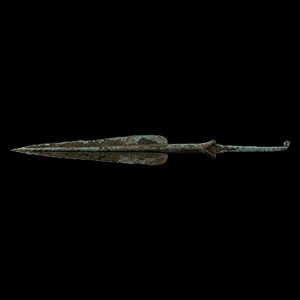
Marlik Type Bronze Tanged Spearhead
12th-11th century B.C.Estimate: £100 - 140 (+bp*)
Opening Bid: £50
With heavily ridged and tapering blade, short collared shaft and a square-section tapering tang bent at the tip. 159 grams, 31.5 cm
Acquired 1980-2015. Ex Abelita family collection.
The weapon belongs to type I of the Khorasani classification. Similar weapons have been excavated in Marlilk by Professor Negahban and dated by Stutzinger to the late 13th-early 12th century B.C. -
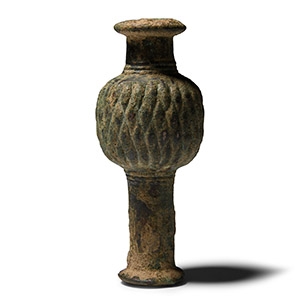
Luristan Bronze 'Pineapple' Macehead
13th-7th century B.C.Estimate: £400 - 600 (+bp*)
Opening Bid: £200
Of Sara Gorz type with cylindrical shaft extended over the top, rounded knobs around the swollen head, flanked by horizontal grooved bands. 272 grams, 12.5 cm high
Fine condition.
Acquired mid 1980s to early 1990s. Private family collection formed in London, UK. -
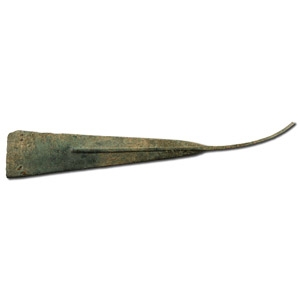
Western Asiatic Bronze Sword Sheath
2nd-1st millennium B.C.Estimate: £300 - 400 (+bp*)
Opening Bid: £150
Triangular in plan, terminating in an exaggerated curving point; the outer face pierced towards the top and with a raised midrib; the convex interior possibly containing fragmentary remains of a weapon. 355 grams, 56 cm
From a Japanese collection, 1990s.
Scabbards with a curve at their base are shown on reliefs and seals from Anatolia from the middle of the second millennium to the 9th century B.C.
