
Loading, please wait...
LOT 1078
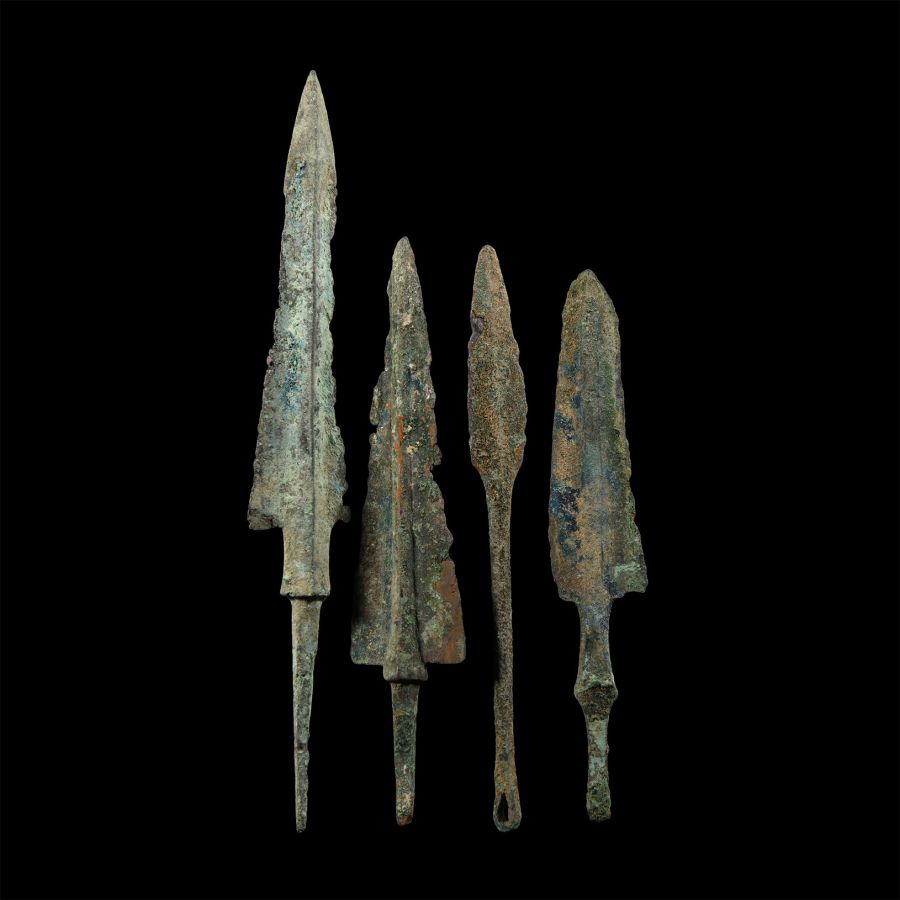
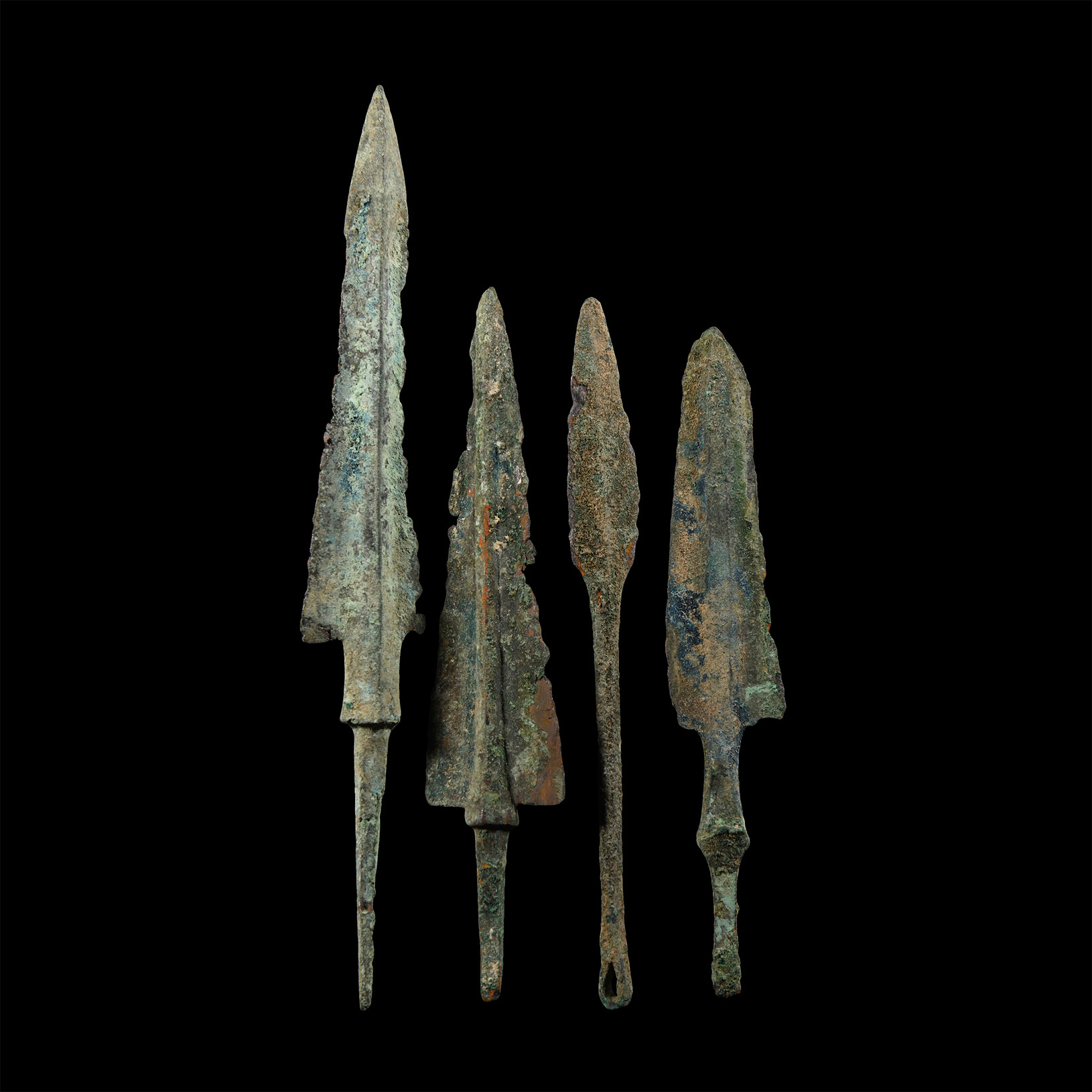
Luristan Bronze Arrowhead Group
2ND-1ST MILLENNIUM B.C.
4 1/4 - 6 in. (74 grams total, 10.7 - 15 cm).
Four tanged arrowheads of mainly leaf-shaped types, three with pronounced midribs. [4, No Reserve]
ProvenanceEx G. White collection, 1990s.
CONDITIONTimeLine Auctions follows a vetting process to ensure the authenticity and legality of all items, reinforcing our commitment to integrity and responsible trading. Each antiquity, antique, and coin lot undergoes thorough examination by a vetting committee of at least ten external specialists, professional trade association members, scientists, and archaeologists: Our Vetting Process
AUCTIONS:
TimeLine is a leading auction house specialising in antiquities, ancient art, collectables, natural history, coins, medals, and books. Our auctions offer museums, collectors, historians, and enthusiasts the opportunity to acquire unique and historically significant pieces.
-
.jpg)
Roman Bronze Military Helmet Section
3rd century A.D.Sold for (Inc. bp): £975
From the right side of the face mask, the upper edge with an embossed band of diagonal lines, Jupiter’s eagle embossed to the centre, looking back and holding a laurel crown in its beak; a hole for the fastening thongs at ear-level. 87 grams, 19.7 cm
Acquired 1960s-1990s. Late Alison Barker collection, a retired London barrister.
The decoration of Roman weaponry contained themes that were directly associated with state propaganda, as well as with the Imperial cult. As the god-protector of the state and the army, Jupiter was the most esteemed. The combination of an eagle (helmet), Minerva and bust of Mars (armour) can also be understood as an image of dii militares. -
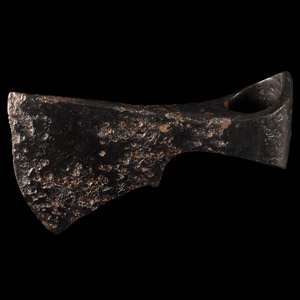
Viking Iron Bearded Axehead
9th-12th century A.D.Sold for (Inc. bp): £234
Composed of a flanged and rounded butt, shaped lower edge and convex cutting edge. 688 grams, 16.2 cm
Ex American collection, acquired 1980-200. The Kusmirek Collection, UK. -
.jpg)
Cromwellian Pikeman's Pot Helmet
1642-1651 A.D.Sold for (Inc. bp): £2,340
Of Morion Cabasset Type, the iron bowl composed of two rivetted parts with a crest; plume holder to the rear; wide sloping brim with smooth border and rivets; repaired. 1.16 kg, 35 cm
Ex Michael D Long Ltd, UK. The Kusmirek Collection, UK. Accompanied by an academic report by Dr Raffaele D'Amato. This lot has been checked against the Interpol Database of stolen works of art and is accompanied by search certificate number no.11769-204122.
A complete set of pikeman's armour consisted of a gorget, back and breast plates, and tassets. With the outbreak of the Civil War, obsolete equipment which had been stored in the Tower of London or in private armouries was brought into service together with more modern equipment. Helmets of this type were often furnished of cheek-pieces made of horizontal rows of blades.
