
Loading, please wait...
LOT 1036
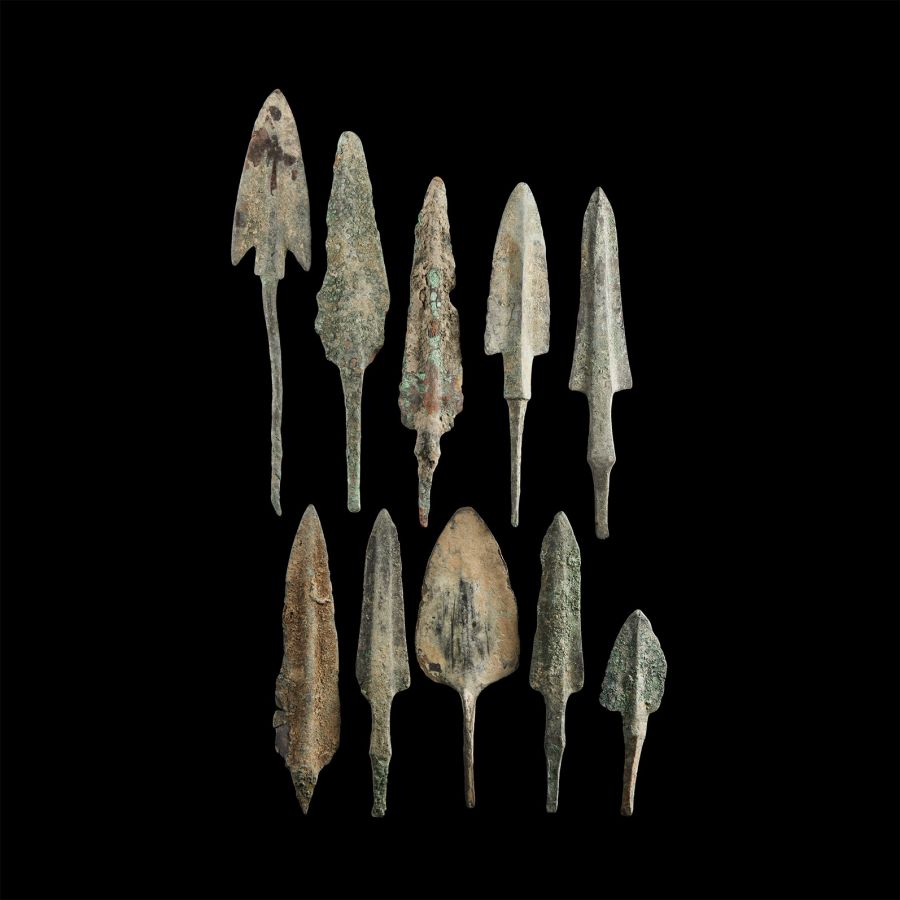
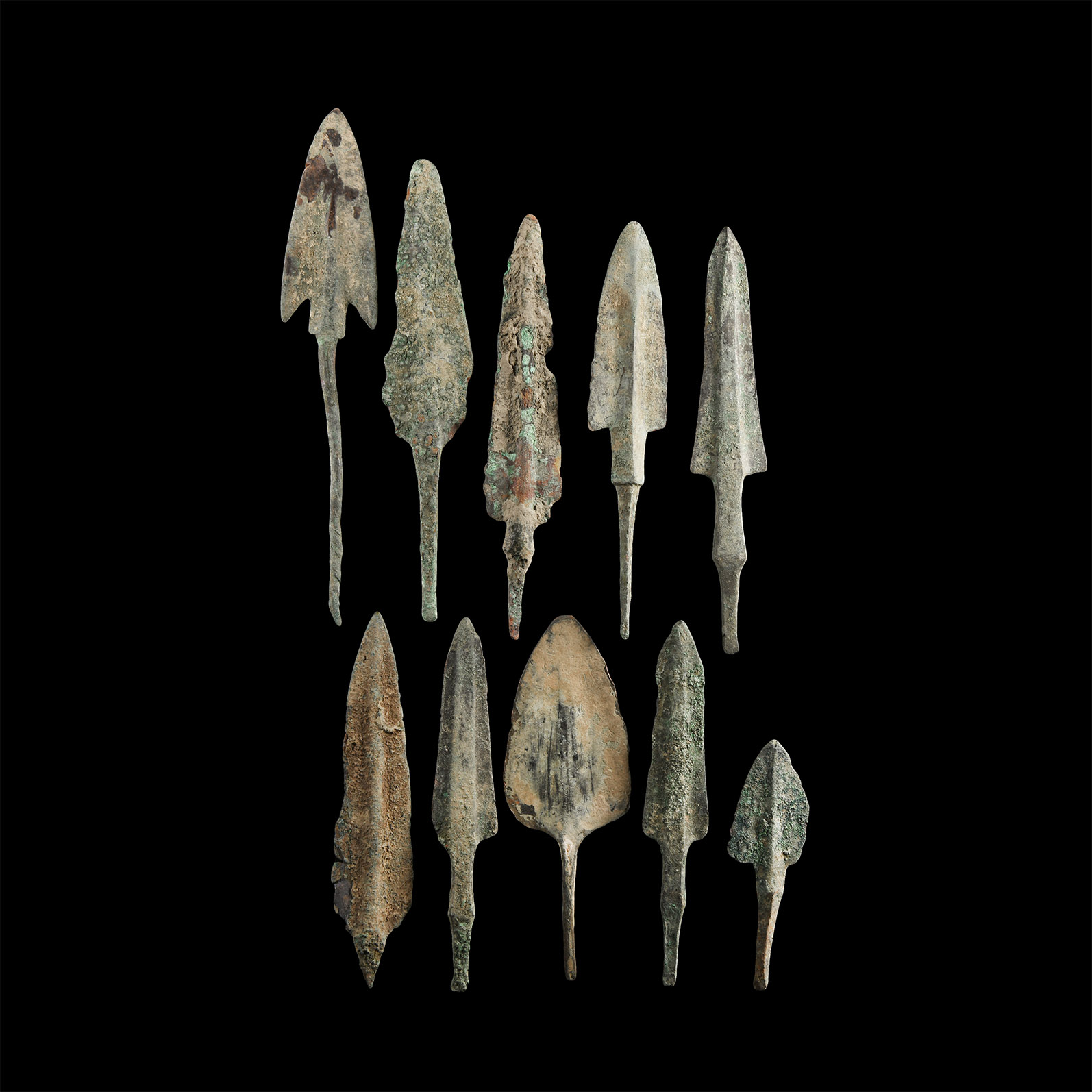
Luristan Bronze Arrowhead Group
2ND-1ST MILLENNIUM B.C.
2 1/2 - 4 3/4 in. (182 grams total, 6.4-12 cm).
Composed of tanged arrowheads of leaf-shaped and barbed types, most with midribs. [10]
ProvenanceAcquired 1990s.
From the collection of a late Japanese weaponry collector.
TimeLine Auctions follows a vetting process to ensure the authenticity and legality of all items, reinforcing our commitment to integrity and responsible trading. Each antiquity, antique, and coin lot undergoes thorough examination by a vetting committee of at least ten external specialists, professional trade association members, scientists, and archaeologists: Our Vetting Process
AUCTIONS:
TimeLine is a leading auction house specialising in antiquities, ancient art, collectables, natural history, coins, medals, and books. Our auctions offer museums, collectors, historians, and enthusiasts the opportunity to acquire unique and historically significant pieces.
LOT 1036
Luristan Bronze Arrowhead Group
Estimate £150 - 200€170 - 230 (for guidance only)$200 - 270 (for guidance only)
-
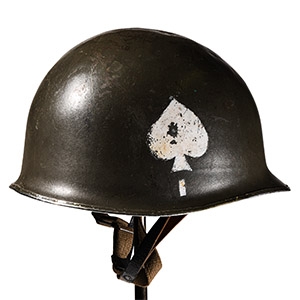
Vietnam M1 Helmet
1950-1970 A.D. or laterSold for (Inc. bp): £150
American Vietnam War era helmet with composition liner with leather lining; leather and fabric chin strap; ace over 1 painted to one side in white. 1.5 kg, 28.5 cm wide
The Kusmirek Collection, UK. -
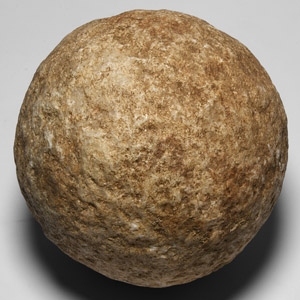
Roman Marble Ballista Catapult Shot
1st-3rd century A.D.Sold for (Inc. bp): £169
Suitable for use with an onager or other catapult-type siege weapon; with smooth, finished surface. 2.13 kg, 11.5 cm
Acquired 1971-1972. From the collection of the vendor's father. Property of a London, UK, collector.
The operation of the onager (Latin for 'wild ass') is first mentioned in 353 A.D. by Ammianus Marcellinus in his Res Gestae and more fully in Vegetius's Epitoma Rei Militaris probably written in the reign of Emperor Theodosius I (378-395 A.D.). -
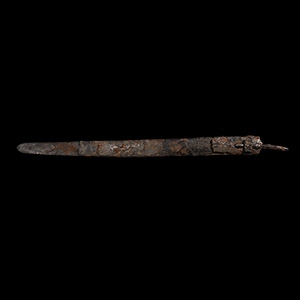
Iron Age Celtic La Tene III Sword
1st century B.C.Sold for (Inc. bp): £780
Accompanied by a scabbard with fragments of the slider; the sword with lentoid-section two-edged iron blade, tapering gently to a broad point; slightly bent square-section tang; the fragments of the scabbard show a broad, slender sheath with stepped lower end, the obverse face rolled over the edges to clasp the reverse plate; the suspension elements comprising a fragment of the transverse bars clasping the front and back plates connected to vertical flared straps with a stepped slider-loop to the centre, once framed by two more similar bars with vertical straps forming a hollow square in which the slider-loop sits; mounted on a wall display mount. 1.5 kg total, 87 cm
Private collection, Munich, Germany, 1970s. Private collection, London, UK, 2014, acquired from the above.
Celtic swords of this period were longer, reaching one meter in length, with the tip having the tendency to be rounded, while the scabbards were less decorated or more simply ornamented than the swords of the previous period.
