
Loading, please wait...
LOT 1140
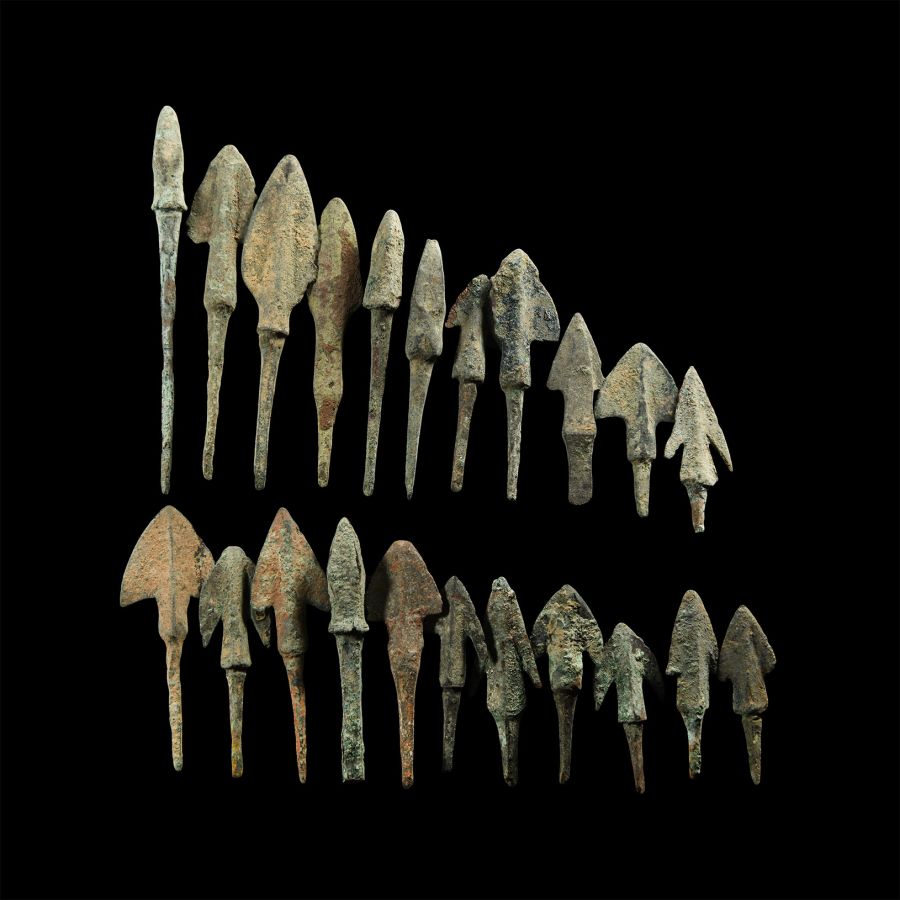
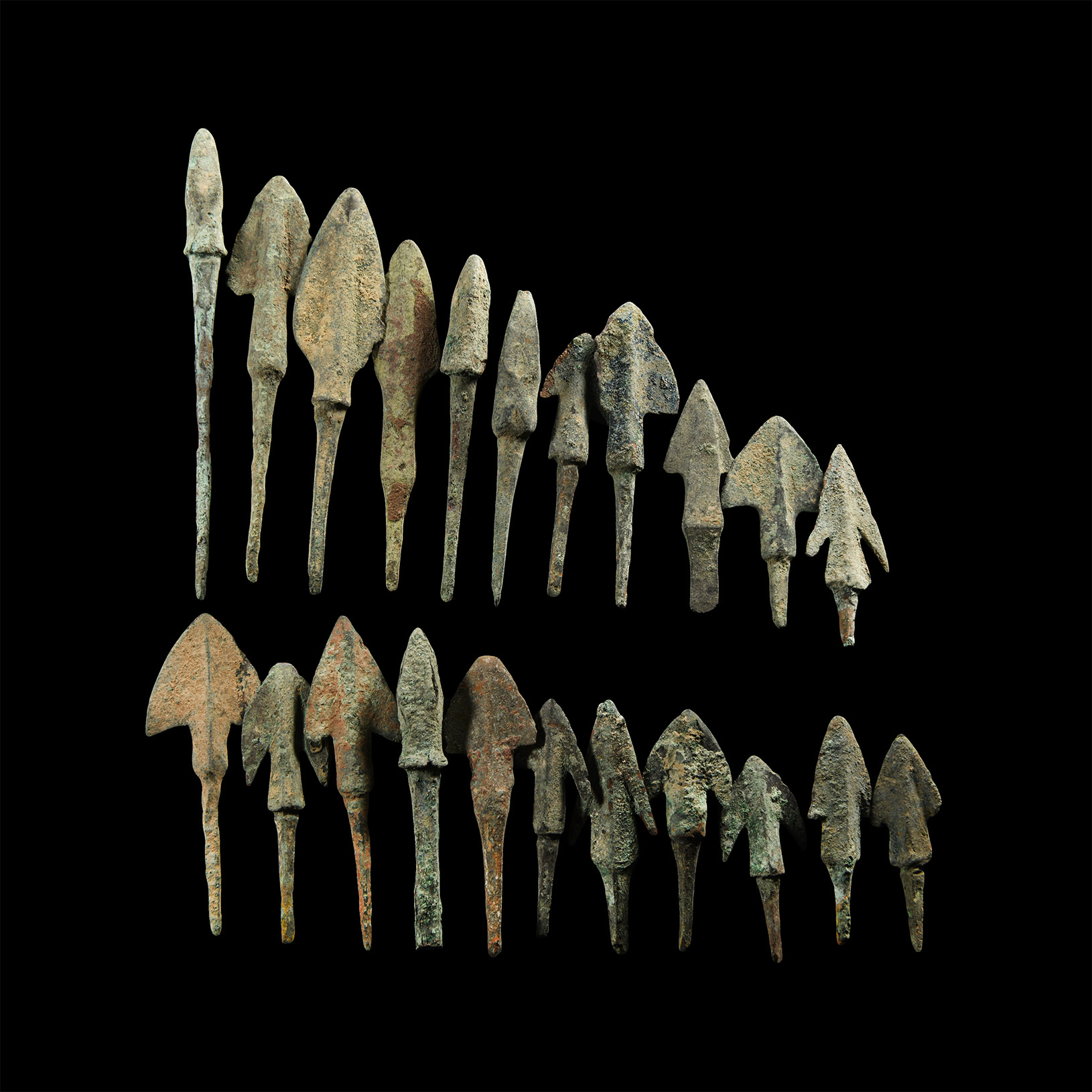
Luristan Bronze Arrowhead Group
2ND-1ST MILLENNIUM B.C.
1 1/2 - 3 1/2 in. (162 grams total, 39-88 mm).
Mainly comprising tanged examples of barbed, conical and leaf-shaped types with midribs. [22]
ProvenanceAcquired 1990s.
From the collection of a late Japanese weaponry collector.
TimeLine Auctions follows a vetting process to ensure the authenticity and legality of all items, reinforcing our commitment to integrity and responsible trading. Each antiquity, antique, and coin lot undergoes thorough examination by a vetting committee of at least ten external specialists, professional trade association members, scientists, and archaeologists: Our Vetting Process
AUCTIONS:
TimeLine is a leading auction house specialising in antiquities, ancient art, collectables, natural history, coins, medals, and books. Our auctions offer museums, collectors, historians, and enthusiasts the opportunity to acquire unique and historically significant pieces.
-
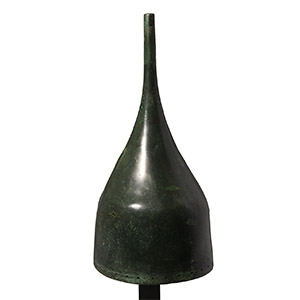
Neo-Assyrian Bronze Military Helmet
8th century B.C.Sold for (Inc. bp): £16,900
With lateral seams, attachment holes to lower edge, bowl with tall conical peak; mounted on a custom-made stand. 3.5 kg total, 55.5 cm high including stand
Acquired on the UK art market. From a private collection, 1980s. Ex central London gallery. The Kusmirek Collection, UK. Accompanied by an academic report by Dr Raffaele D'Amato. This lot has been checked against the Interpol Database of stolen works of art and is accompanied by search certificate number no.11765-203977.
From the reign of King Tiglatpilesar III (744-727 B.C.) or possibly later. The army of the Neo-Assyrian Empire consisted of large units of cavalry and skilled archers. Mobile workshops and smiths produced vast quantities of arrows and spears that were required while on campaign. The royal palaces of Nineveh, Ashur, and Nimrud were adorned with reliefs depicting Neo-Assyrian troops including foot soldiers in similar pointed bronze helmets. The helmet was originally bimetallic, made of bronze and iron. Although the iron section is now preserved only in fragments, having deteriorated long ago; the bronze half remains. -
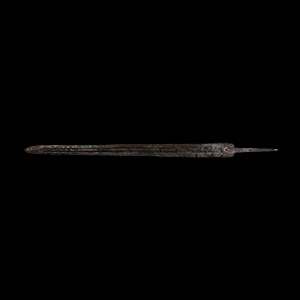
Roman Iron Spatha Sword
3rd-4th century A.D.Sold for (Inc. bp): £975
Comprising a wide double-edged blade of Illerup-Wyhl typology; blood channels and later inlays to both sides. 652 grams, 83 cm
Acquired 1990s-early 2000s. East Anglian private collection.
Specimens of Roman spathae of 2nd-3rd centuries have been found in large numbers in Danish bogs (Nydam, Straubing, Thorsberg, Illerup). The Straubing-Nydam type shows straight and convergent cutting edges, the width of which is reduced along the blade. -
.jpg)
French WWII 'Donkey Ears' Trench Periscope
1940s A.D.Sold for (Inc. bp): £143
Aluminium bodied binocular trench periscope with green finish, fitted with folding handle and leather neck strap; with original leather case fitted with shoulder strap and belt/webbing loop. 1.69 kg, 29.5 cm
The Kusmirek Collection, UK.
