
Loading, please wait...
LOT 1183
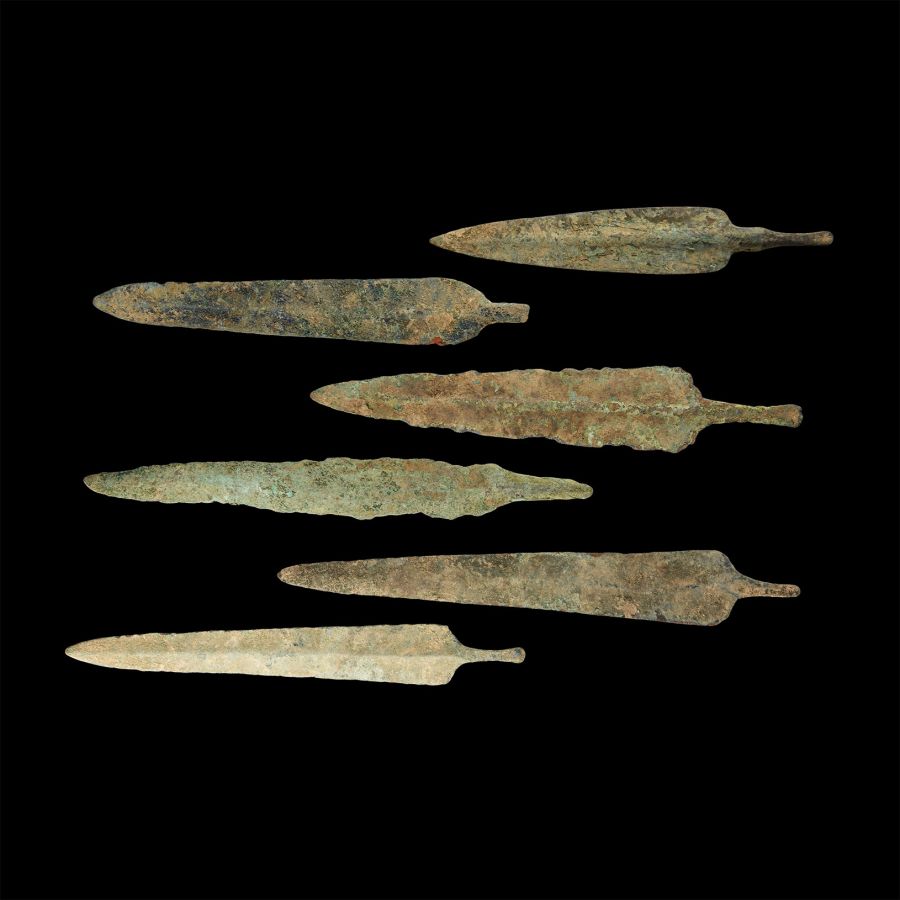
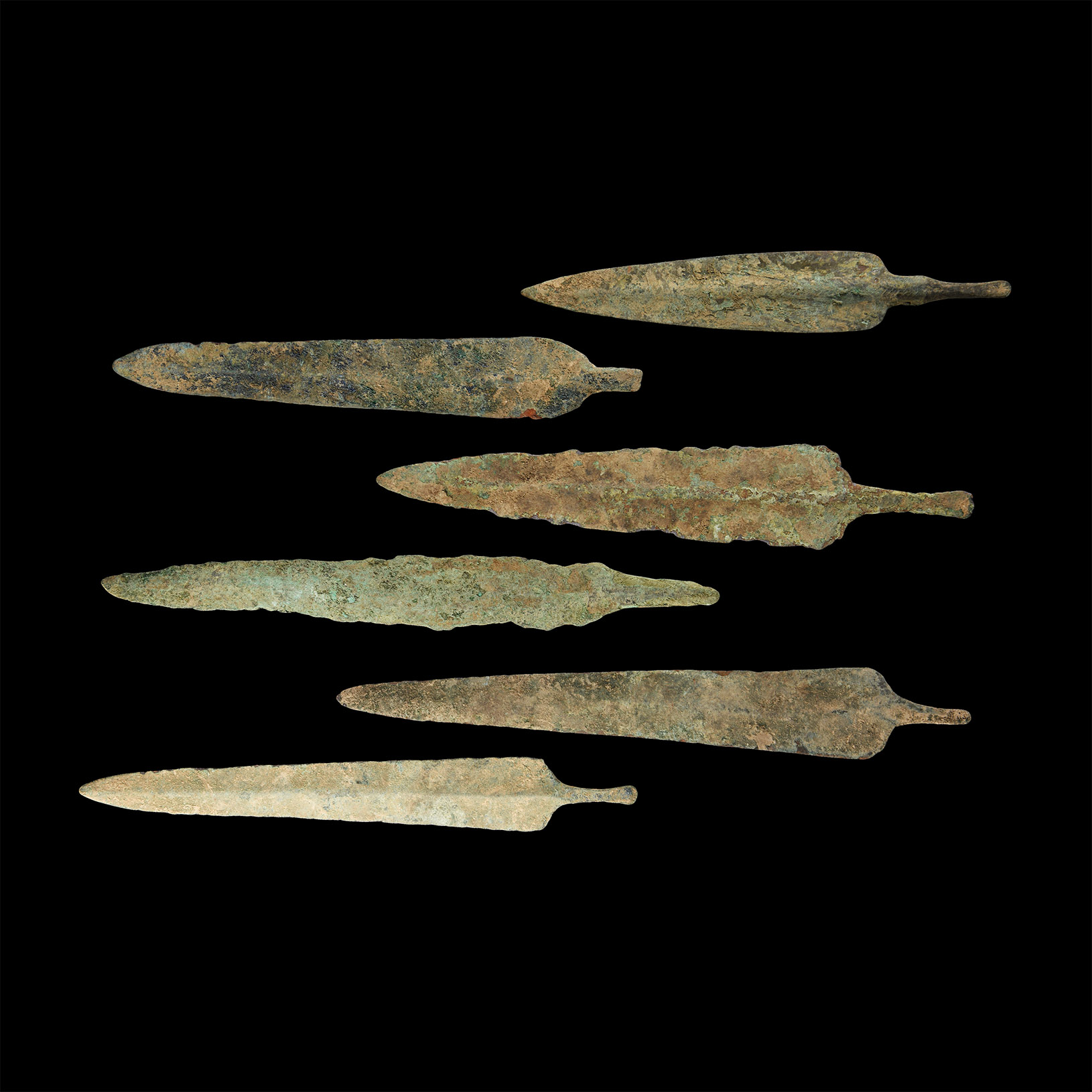
Luristan Bronze Arrowhead Group
2ND-1ST MILLENNIUM B.C.
5 3/4 - 7 1/2 in. (268 grams total, 14.5-19 cm).
Mainly of leaf-shaped type with short tangs, including examples with midribs. [6]
ProvenanceAcquired 1990s.
From the collection of a late Japanese weaponry collector.
TimeLine Auctions follows a vetting process to ensure the authenticity and legality of all items, reinforcing our commitment to integrity and responsible trading. Each antiquity, antique, and coin lot undergoes thorough examination by a vetting committee of at least ten external specialists, professional trade association members, scientists, and archaeologists: Our Vetting Process
AUCTIONS:
TimeLine is a leading auction house specialising in antiquities, ancient art, collectables, natural history, coins, medals, and books. Our auctions offer museums, collectors, historians, and enthusiasts the opportunity to acquire unique and historically significant pieces.
LOT 1183
Luristan Bronze Arrowhead Group
Estimate £150 - 200€170 - 230 (for guidance only)$200 - 270 (for guidance only)
-
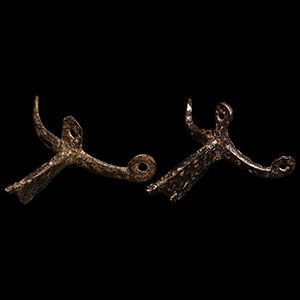
Roman Provincial Iron Spur Group
2nd-3rd century A.D.Sold for (Inc. bp): £143
With central barbed spike positioned under the pierced central hole, fitted on both sides with arms having circular shaped eyelet-like protuberances. 29.6 grams total, 54-62 mm
Acquired on the German art market around 2000. From the collection of a South African gentleman.
The prick spur was the first type of spur to be invented, and it consists of a goad or prick, more or less pointed, connected to side arms or a heel plate. They went around the rider’s heel and had a straight post on the back that was used to cue the horse. Often this was sharp, obviously intended to prick the horse, The type here represented seems to be a provincial variant of Roman Imperial prick spur fitted with three eyelets. -
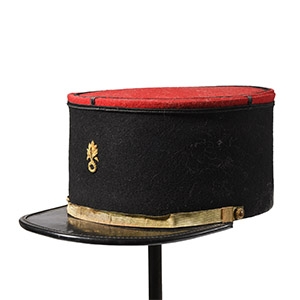
French Foreign Legion Kepi
Circa 1930-1940s A.D.Sold for (Inc. bp): £104
Black and red cloth with gold-coloured banding and 'button'; red lining and typed label reading 'Sergent BUYUKISPIR Haluk 1o R.E. Quartier Viénot C.S.L.E./S.I.H.L.E....'. 197 grams, 24.5 cm wide
Acquired from Czerny's Auctions, Italy, lot 104, 2016. The Kusmirek Collection, UK. Accompanied by copy of Czerny's invoice and information. -
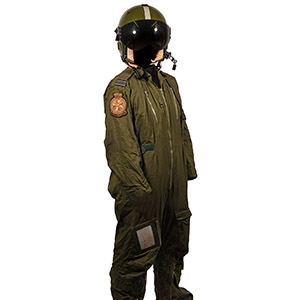
Mk3C Fighter Flying Helmet and Suit
1980s A.D.Sold for (Inc. bp): £572
Including MK 9 flying suit coveralls (for height 162-172cm, weight greater than 72.64 kg, size 4) with insignia to 825 Squadron (Fleet Air Arm) on shoulder and sewn cleaning and user instruction labels to the interior, shoulders with Flt Lieutenant Officer rank slides; MK3C flying helmet with clear and smoked visors, pig skin and blue velvet lining with electrical headset and adjustable microphone with radio lead and plug; Air Ministry label to interior reading 'Serial number 26396 Large Mk 3C' and AM 'crow's foot'. 2.9 kg, 29 cm
Acquired from J C Militaria, UK. The Kusmirek Collection, UK. Accompanied by a copy of JCM listing details and brief squadron research.
825 Squadron was originally formed in 1934 and served during WWII; it was reformed on the outbreak of the Falklands War in 1982 and equipped with ten Sea King helicopters; the squadron was disbanded in September 1982.
