
Loading, please wait...
LOT 1299
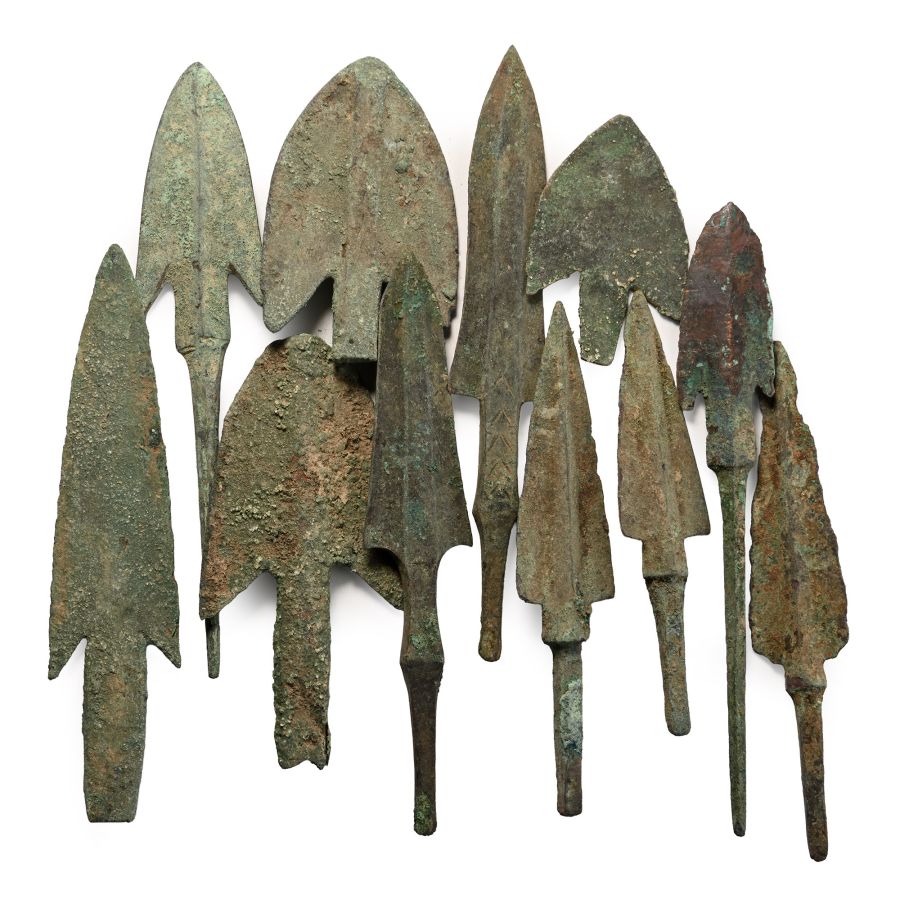
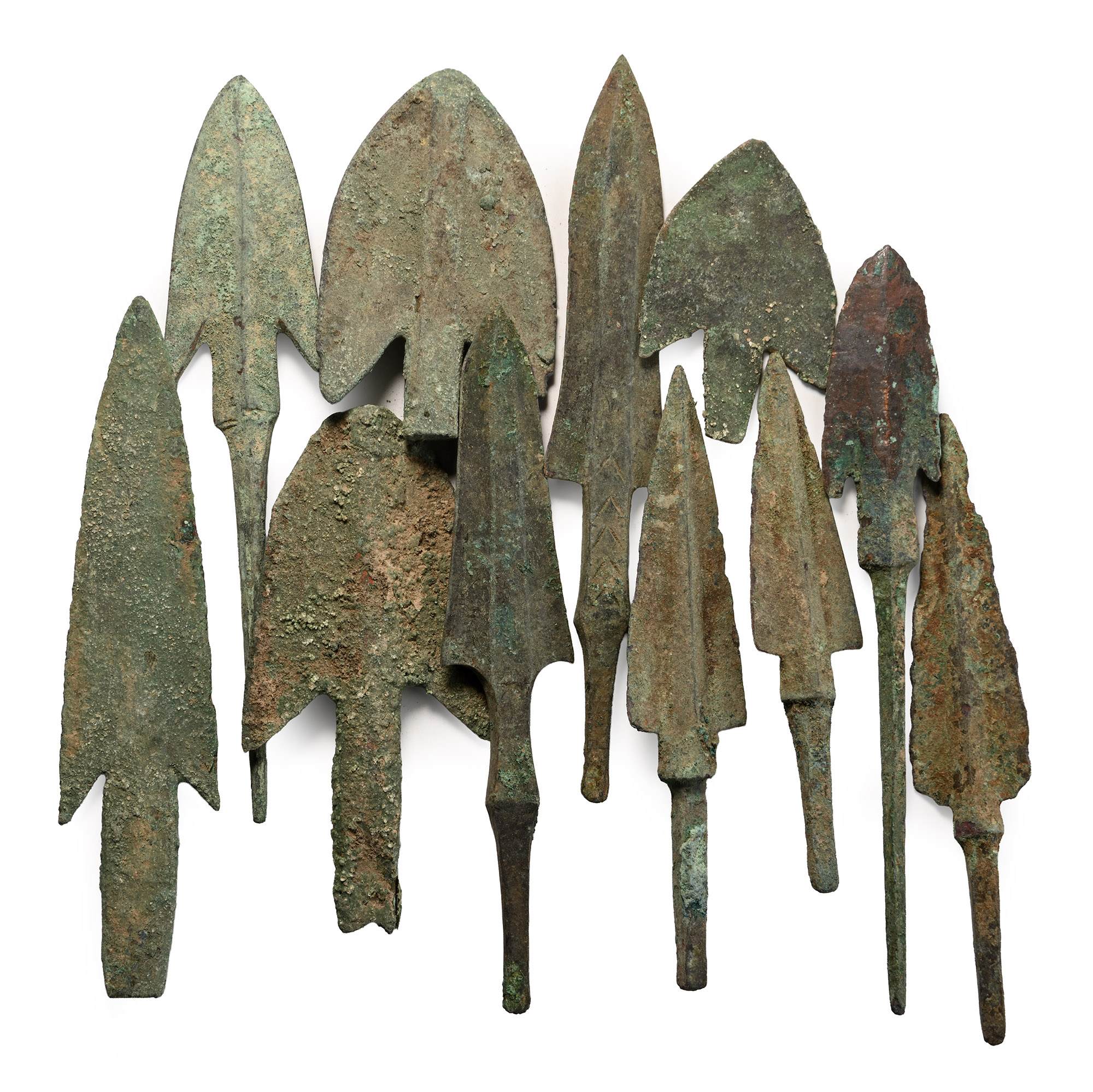
Luristan Bronze Arrowhead Collection
2ND-1ST MILLENNIUM B.C.
1 3/4 - 4 1/2 in. (223 grams total, 4.6-11.6 cm).
Mainly triangular-headed barbed and tanged types. [11]
ProvenanceEx London, UK, collection, 1990s.
CONDITIONTimeLine Auctions follows a vetting process to ensure the authenticity and legality of all items, reinforcing our commitment to integrity and responsible trading. Each antiquity, antique, and coin lot undergoes thorough examination by a vetting committee of at least ten external specialists, professional trade association members, scientists, and archaeologists: Our Vetting Process
AUCTIONS:
TimeLine is a leading auction house specialising in antiquities, ancient art, collectables, natural history, coins, medals, and books. Our auctions offer museums, collectors, historians, and enthusiasts the opportunity to acquire unique and historically significant pieces.
-
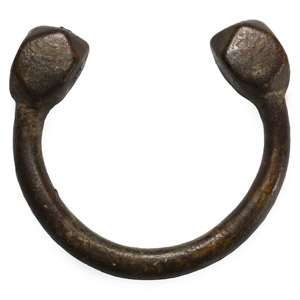
Western Asiatic Bronze Bracelet
10th-14th century A.D.Sold for (Inc. bp): £33
Penannular in form with large polyhedral terminals. 224 grams, 85 mm
Acquired before 1978. Private collection, UK. -
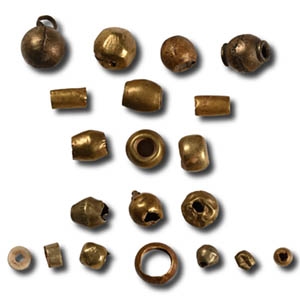
Western Asiatic Mixed Gold Bead Group
1st millennium B.C.Estimate: £300 - 400 (+bp*)
Opening Bid: £150
Including oblate, barrel-shaped and other types. 4.99 grams total, 2-9 mm
Ex property of a late Japanese collector, 1970-2000s. This lot has been cleared against the Art Loss Register database, and is accompanied by an illustrated lot declaration signed by the Head of the Antiquities Department, Dr Raffaele D'Amato. -
.jpg)
Bactrian Style Lapis Lazuli Bead Necklace String
20th century A.D.Sold for (Inc. bp): £59
Group of cornerless cube-shaped and other graduated beads. 60 grams total, 48 cm
Ex London, UK, collection, 1990s.
