
Loading, please wait...
LOT 1239
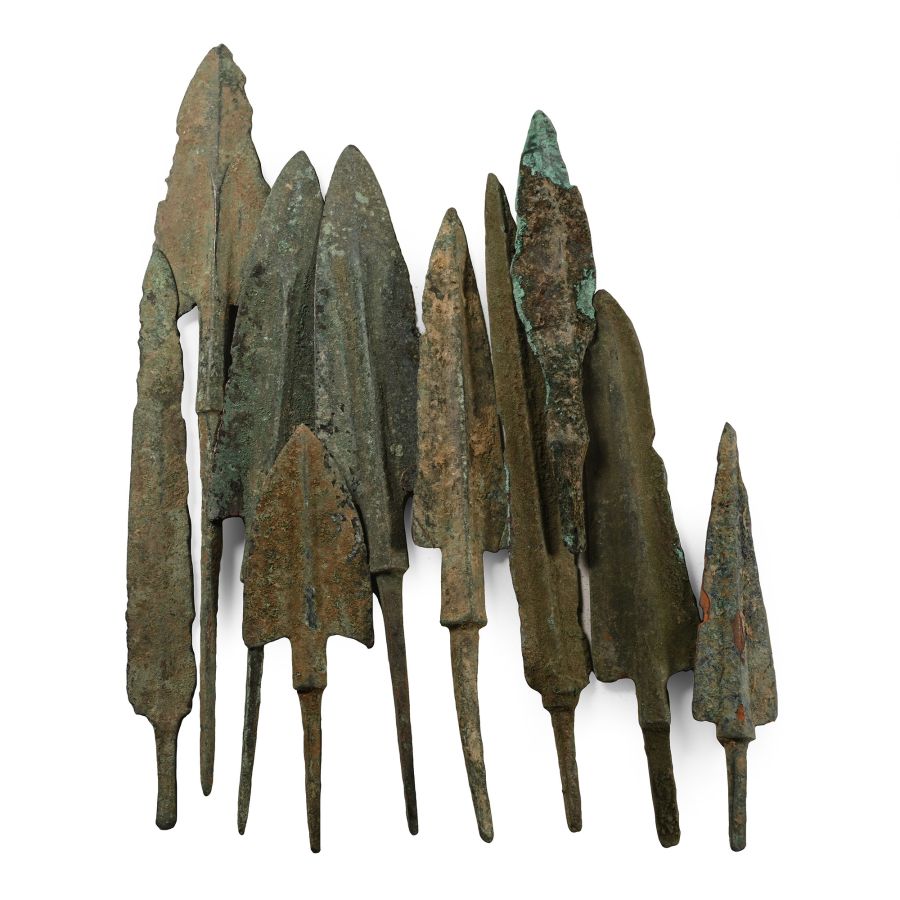
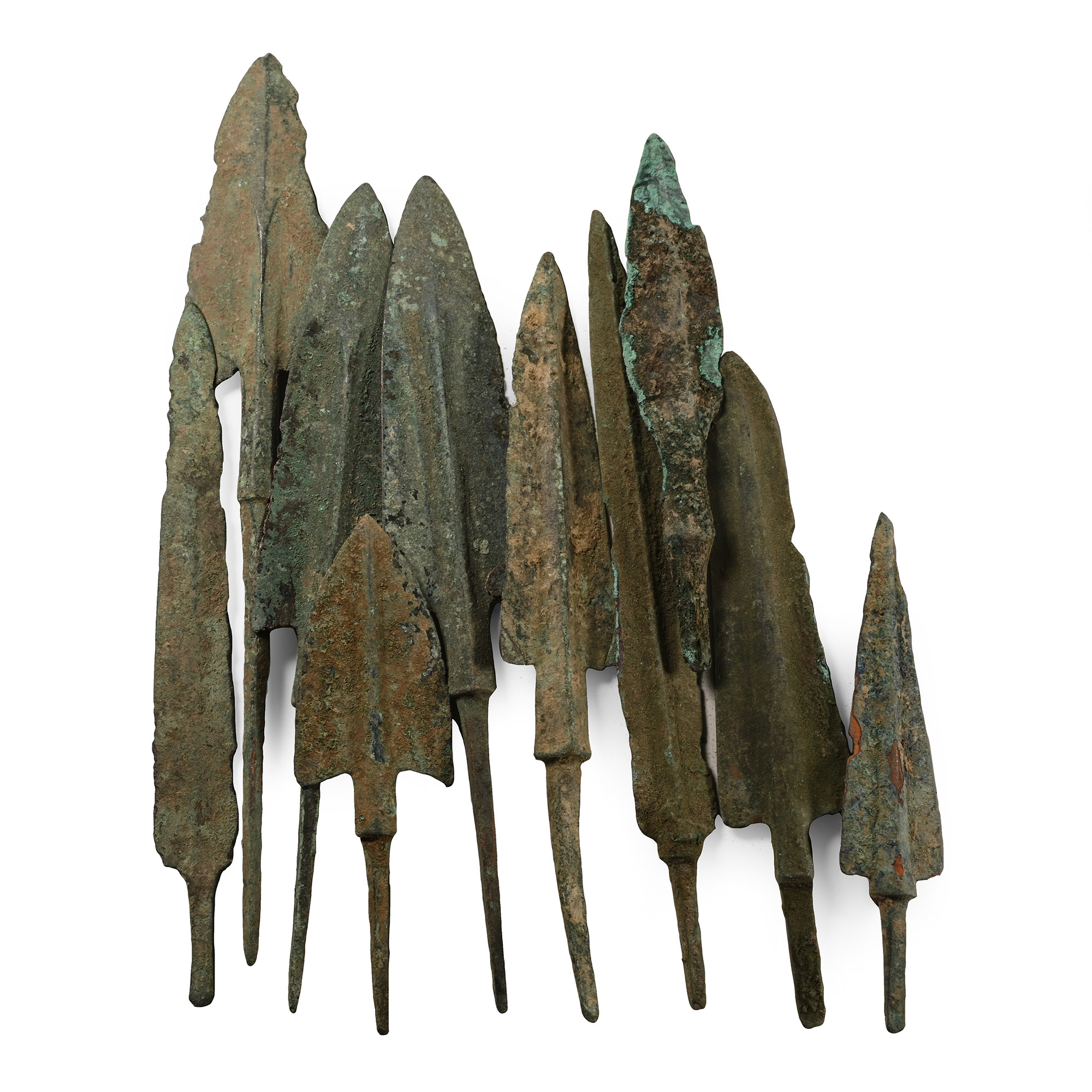
Luristan Bronze Arrowhead Collection
13TH-7TH CENTURY B.C.
4 - 7 in. (263 grams, 10 - 18 cm).
Comprising triangular types with thick midrib, heater-shaped, leaf-shaped, and other types. [10]
ProvenanceEx London art market, 1980-1990s.
This lot has been cleared against the Art Loss Register database, and is accompanied by an illustrated lot declaration signed by the Head of the Antiquities Department, Dr Raffaele D'Amato.
See Muscarella, O.W., Bronze and Iron Ancient Near Eastern Artifacts in the Metropolitan Museum of Art, New York, 1988, pp.289ff, for similar arrowheads.
FootnotesOne category of the represented arrowheads has a sharp, flat blade, the ends of which extend to form wings or barbs, and a prominent midrib extending into a long tang that often has a stop; the blade shape varies from deltoid to more triangular. Another form has no barbs, but it has a prominent midrib extending to the tang, and a narrow leaf-shaped blade.
CONDITIONTimeLine Auctions follows a vetting process to ensure the authenticity and legality of all items, reinforcing our commitment to integrity and responsible trading. Each antiquity, antique, and coin lot undergoes thorough examination by a vetting committee of at least ten external specialists, professional trade association members, scientists, and archaeologists: Our Vetting Process
AUCTIONS:
TimeLine is a leading auction house specialising in antiquities, ancient art, collectables, natural history, coins, medals, and books. Our auctions offer museums, collectors, historians, and enthusiasts the opportunity to acquire unique and historically significant pieces.
-
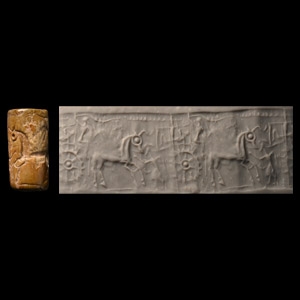
Western Asiatic Bone Cylinder Seal with Chariot
2nd millennium B.C.Sold for (Inc. bp): £143
With incuse frieze of a horse in profile pulling a chariot with driver and large spoked wheel, small standing figure before the horse's chest; accompanied by a museum-quality impression. 2.3 grams, 19 mm
Acquired in the 1980s-2000s. From an important London, UK, collection. -
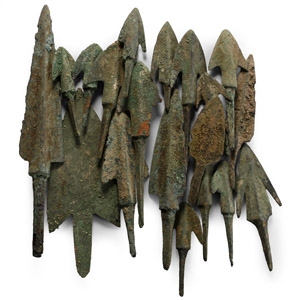
Greek and Luristan Bronze Arrowhead Collection
2nd-1st millennium B.C.Sold for (Inc. bp): £130
Mainly small leaf-shaped and triangular-headed tanged types. 136 grams total, 3.8-11.1 cm
Ex London, UK, collection, 1990s. -
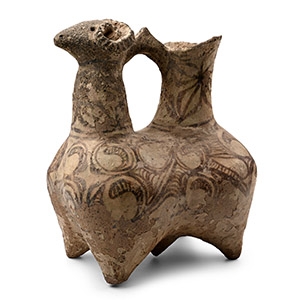
Western Asiatic Ceramic Zoomorphic Vessel
8th-9th century A.D.Estimate: £500 - 700 (+bp*)
Opening Bid: £250
Comprising four conical legs supporting a double globular body with conical neck and ram's head, spout to the rear with strainer connected by a bridging loop; applied painted hatched spiral detailing; old label to the underside: 'YAZDANI 211C LONDON'. 1.06 kg, 19.5 cm
UK collection, 1990s. Acquired on the UK art market, before 2000. Private collection, Mr M.V., a London-based businessman.
