
Loading, please wait...
LOT 1401
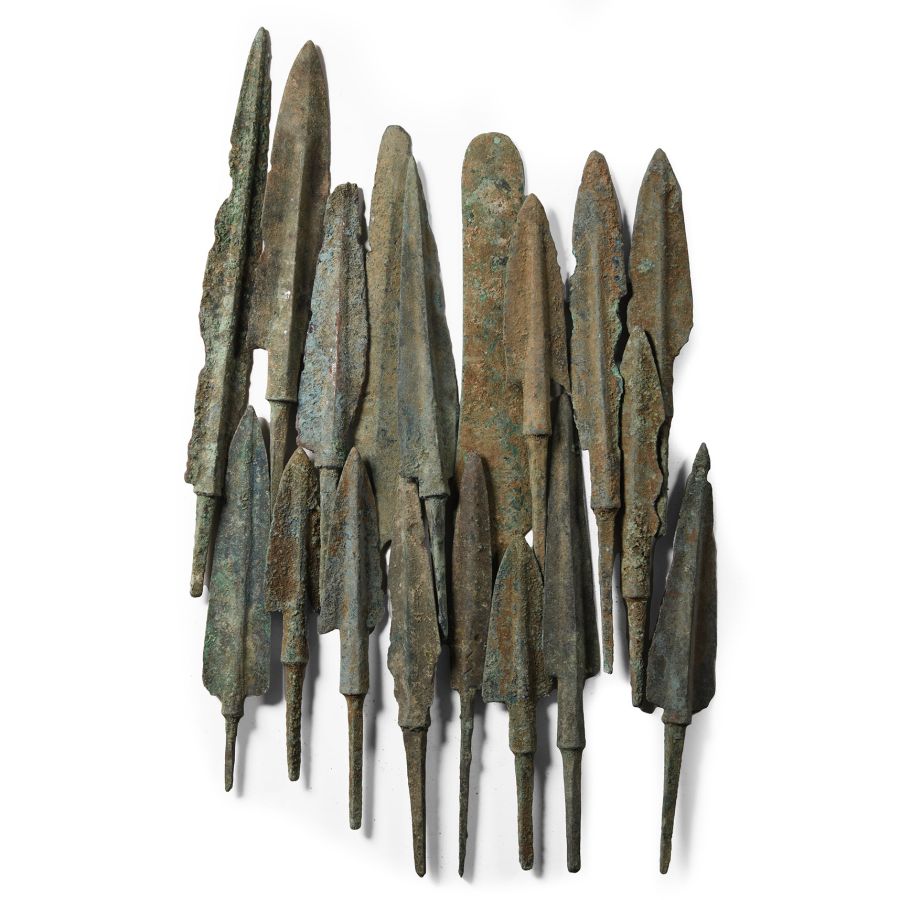
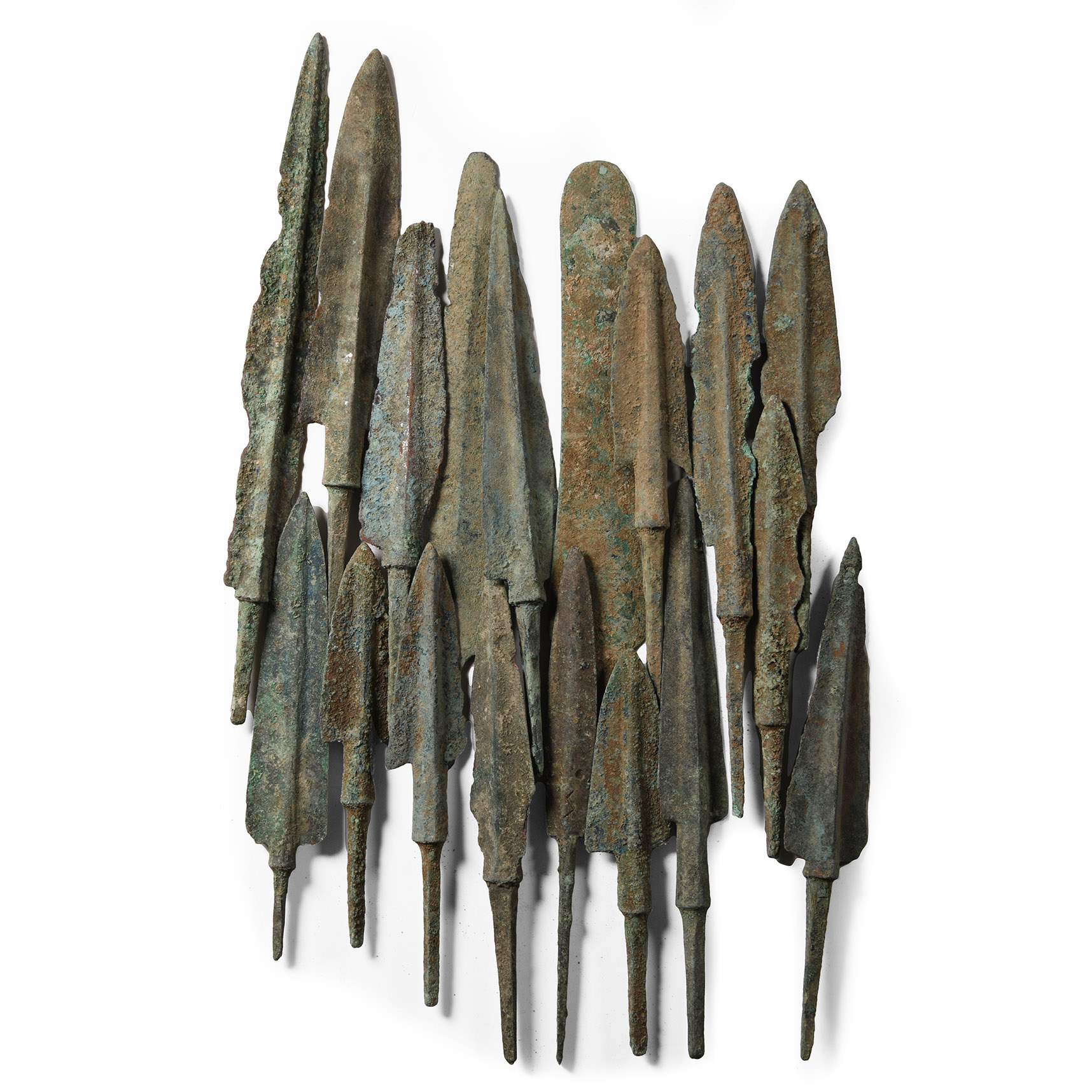
Luristan Bronze Arrowhead Collection
CIRCA 2ND MILLENNIUM B.C.-9TH CENTURY B.C.
4 - 6 7/8 in. (446 grams total, 10-17.5 cm).
Including triangular, leaf-shaped, barbed, square-section, and other types. [18]
ProvenanceEx London, UK, collection, 1990s.
LiteratureSee Muscarella, O.W., Bronze and Iron Ancient Near Eastern Artifacts in the Metropolitan Museum of Art, New York, 1988, pp.289ff, for similar arrowheads.
FootnotesIt is significant to remember that the use of winged and barbed heads in Anatolia was common since the second millennium B.C., but apparently their employment began earlier in this area, where types like these occur alongside the non-barbed, predominantly ribbed and tanged types.
CONDITIONTimeLine Auctions follows a vetting process to ensure the authenticity and legality of all items, reinforcing our commitment to integrity and responsible trading. Each antiquity, antique, and coin lot undergoes thorough examination by a vetting committee of at least ten external specialists, professional trade association members, scientists, and archaeologists: Our Vetting Process
AUCTIONS:
TimeLine is a leading auction house specialising in antiquities, ancient art, collectables, natural history, coins, medals, and books. Our auctions offer museums, collectors, historians, and enthusiasts the opportunity to acquire unique and historically significant pieces.
-
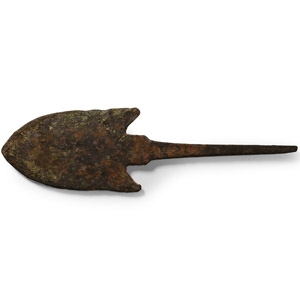
Luristan Bronze Tanged Arrowhead
2nd-1st millennium B.C.Sold for (Inc. bp): £39
With broad heater-shaped head and barbs to the rear, square shoulder and narrow tang. 41.6 grams, 13.5 cm
Property of the vendor's grandfather, thence by family descent, circa 1985. From the private collection of a New York, USA gentleman.
The arrowhead resembles a stylised bird's head, according to classification by Khorasani. This was a type of decorative arrowheads, belonging to the typology of barbed arrowheads. -
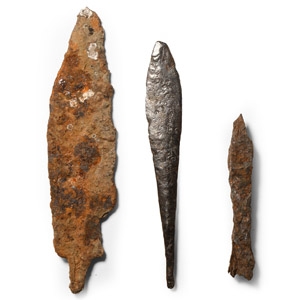
Saxon to Medieval Iron Knife, Bolt, and Arrowhead Group
6th-15th century A.D.Sold for (Inc. bp): £13
Including a leaf-shaped tanged arrowhead, lozenge-shaped arrowhead and other types. 56 grams total, 6.3-11 cm
From a collection acquired on the UK art market from various auction houses and collections mostly before 2000. From an important Cambridgeshire estate; thence by descent. -
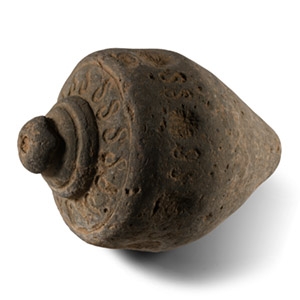
Byzantine 'Greek Fire' Ceramic Fire Bomb or Hand Grenade
9th-11th century A.D.Sold for (Inc. bp): £117
Piriform-conical body with S-shaped ornaments to the shoulder, interstitial panels of impressed alternate foliage and S-shaped horizontal ornaments, domed filler-hole, intended to be filled with explosive liquid and wick, used as a hand grenade. 650 grams, 12.5 cm
From a military inspired collection formed from the 1990s. Accompanied by an academic paper by military specialist Dr Raffaele D'Amato, dated 15 July 2019 and titled 'Eastern Roman Empire - Greek Fire Bomb or Hand Grenade (μεσαίον kακάβιον) 9th-11th century AD'.
This piece was a type of a ceramic fire grenade, similar to the ones used by the Eastern Romans but of Turco-Mongol type. Apart from the use of manual flame-throwers, special corps of soldiers employed terracotta grenades, in the form of small jars, abundantly evidenced in archaeological excavations, even in Far East, like in Burma.
