
Loading, please wait...
LOT 1483
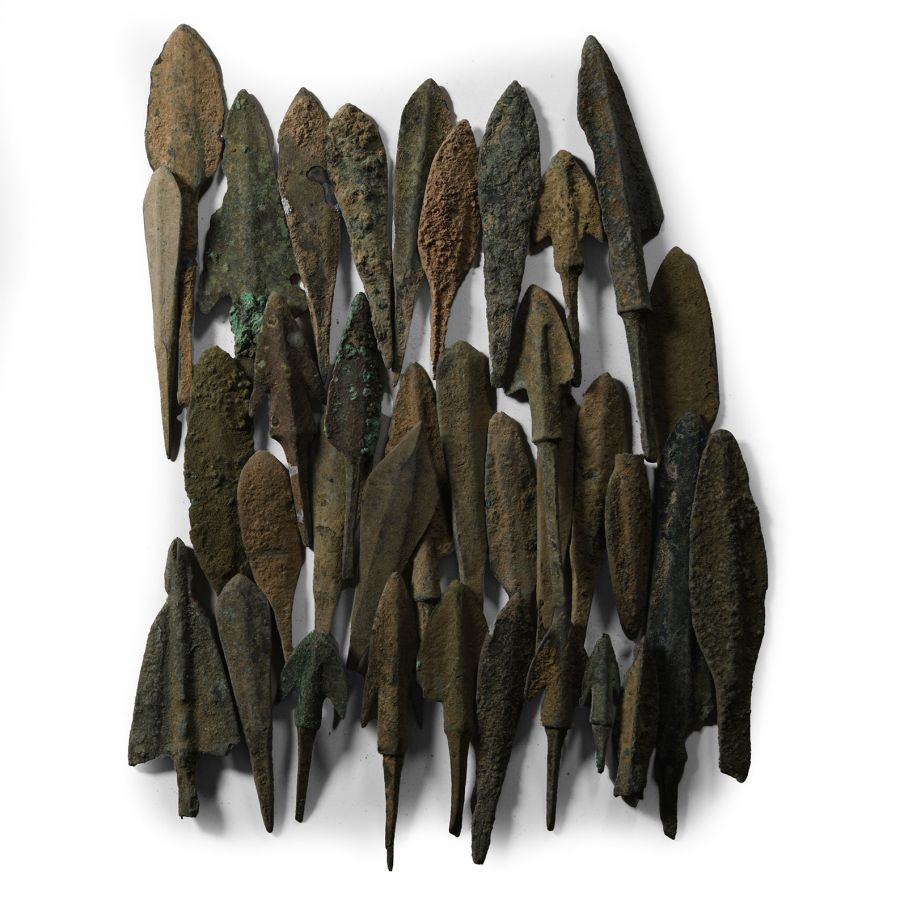
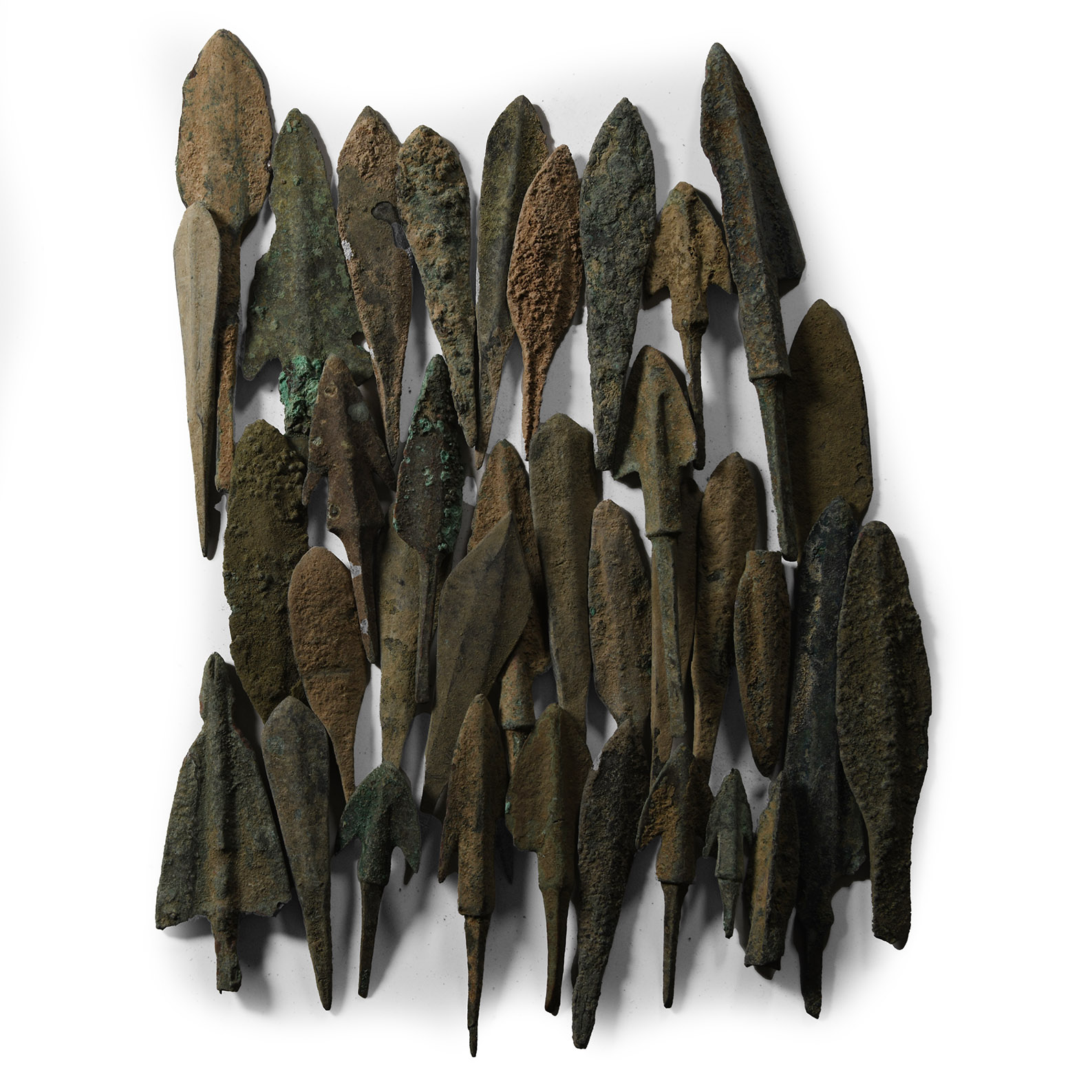
Luristan Bronze Arrowhead Collection
CIRCA LATE 2ND MILLENNIUM-6TH CENTURY B.C.
1 3/8 - 4 1/4 in. (367 grams total, 3.4-10.7 cm).
Including leaf-shaped, barbed and other types. [35]
ProvenanceEx London, UK, collection, 1990s.
LiteratureCf. Muscarella, O.W., Bronze and Iron Ancient Near Eastern Artifacts in the Metropolitan Museum of Art, New York, 1988, pp.289ff, for similar; see also Khorasani, M.M., Arms and Armour from Iran. The Bronze Age to the End of the Qajar Period, Tübingen, 2006, nos.467, 471, 474, for type.
FootnotesA number of arrowheads of this type have been excavated in Luristan and in the South-Caspian region. Many parallels are from a burial context, but a large hoard of them was found in a non-funerary context. This type of arrowhead has been in use from the late 2nd millennium B.C. Other arrowheads are clearly Achaemenid.
CONDITIONTimeLine Auctions follows a vetting process to ensure the authenticity and legality of all items, reinforcing our commitment to integrity and responsible trading. Each antiquity, antique, and coin lot undergoes thorough examination by a vetting committee of at least ten external specialists, professional trade association members, scientists, and archaeologists: Our Vetting Process
AUCTIONS:
TimeLine is a leading auction house specialising in antiquities, ancient art, collectables, natural history, coins, medals, and books. Our auctions offer museums, collectors, historians, and enthusiasts the opportunity to acquire unique and historically significant pieces.
-
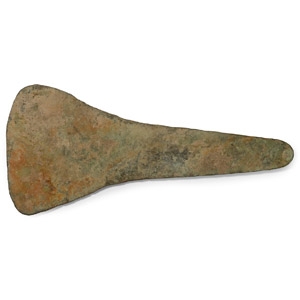
Luristan Copper Flat Axe
13th-6th century B.C.Sold for (Inc. bp): £65
Formed with a rounded butt and flared cutting edge; flat in cross-section. 113 grams, 16.9 cm
Acquired 1980-2015. Ex Abelita family collection. -
.jpg)
Western Asiatic Bronze Dagger
2nd millennium B.C.Sold for (Inc. bp): £286
With a narrow pointed blade and wide raised flange down centre, straight sides, well marked shoulders with narrow tang, one hole for rivet. 128 grams total, 17.6 cm high including stand
From the possessions of a member of a German princely family, gathered in the late 19th century, until the 1930s. with Auction House CUSP, Vienna, Auction Antique Art from Asia and from the Eastern Mediterranean, 16 June 2012, lot 75 [Part].
The type was technically more advanced than previous types of blades in the Near East, owing to the shape of the weapon, with its slightly convex sides widening out near the point, which combined the advantages of the leaf-shaped and straight-sided forms. -
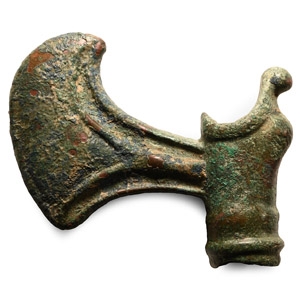
North-Western Persian Elamite Bronze Axehead
2nd millennium B.C.Sold for (Inc. bp): £286
With crescent blade and rounded knot at the butt, ornamental curved edging to the upper shaft hole, a cord edge on the lower shaft hole, incised band around the edge of the blade. 267 grams, 97 mm
UK private collection before 2000. Acquired on the UK art market. Property of a London gentleman.
The type corresponds to the Gernez type H.2.H.a, of axes with collar and short sleeve lined with mouldings, fan-shaped blade and rear knot. It was a variant only known in Elam and Luristan. In Luristan one identical specimen was found at Chigha Sabz (grave M7). In Elam the majority of these axes were found in the Middle-Bronze Age (Age of Isin-Larsa or Early Babylonian Age) tombs of Sarcophagi, at Susa.
