
Loading, please wait...
LOT 1309
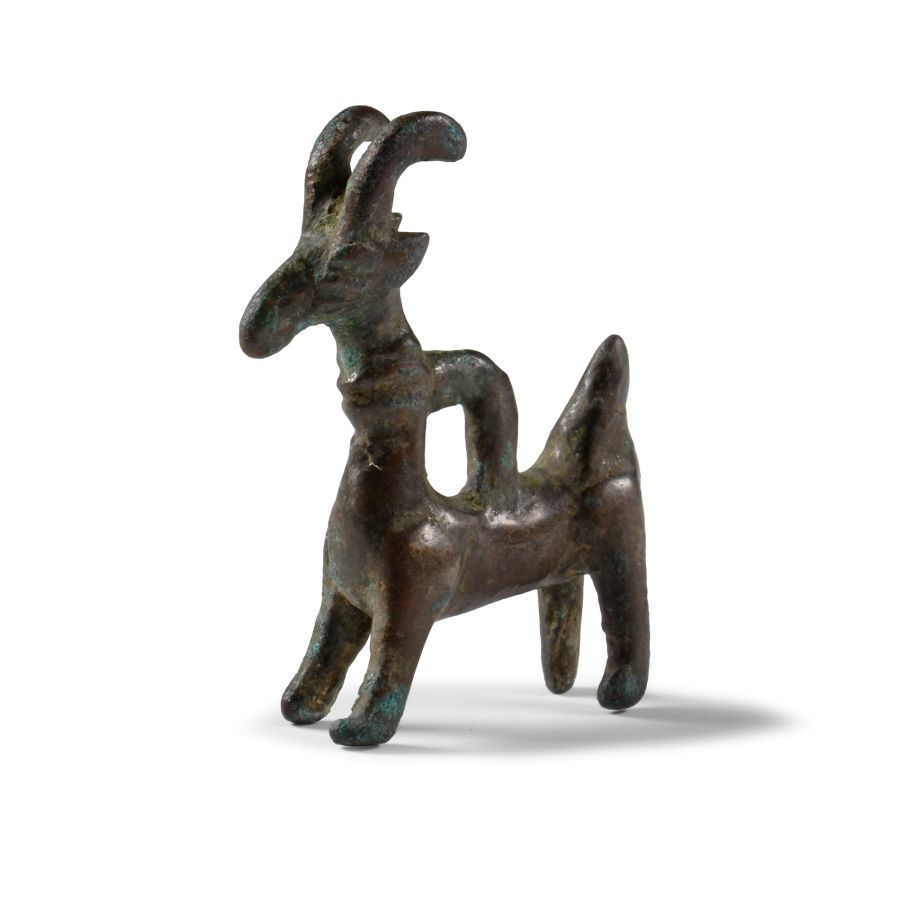
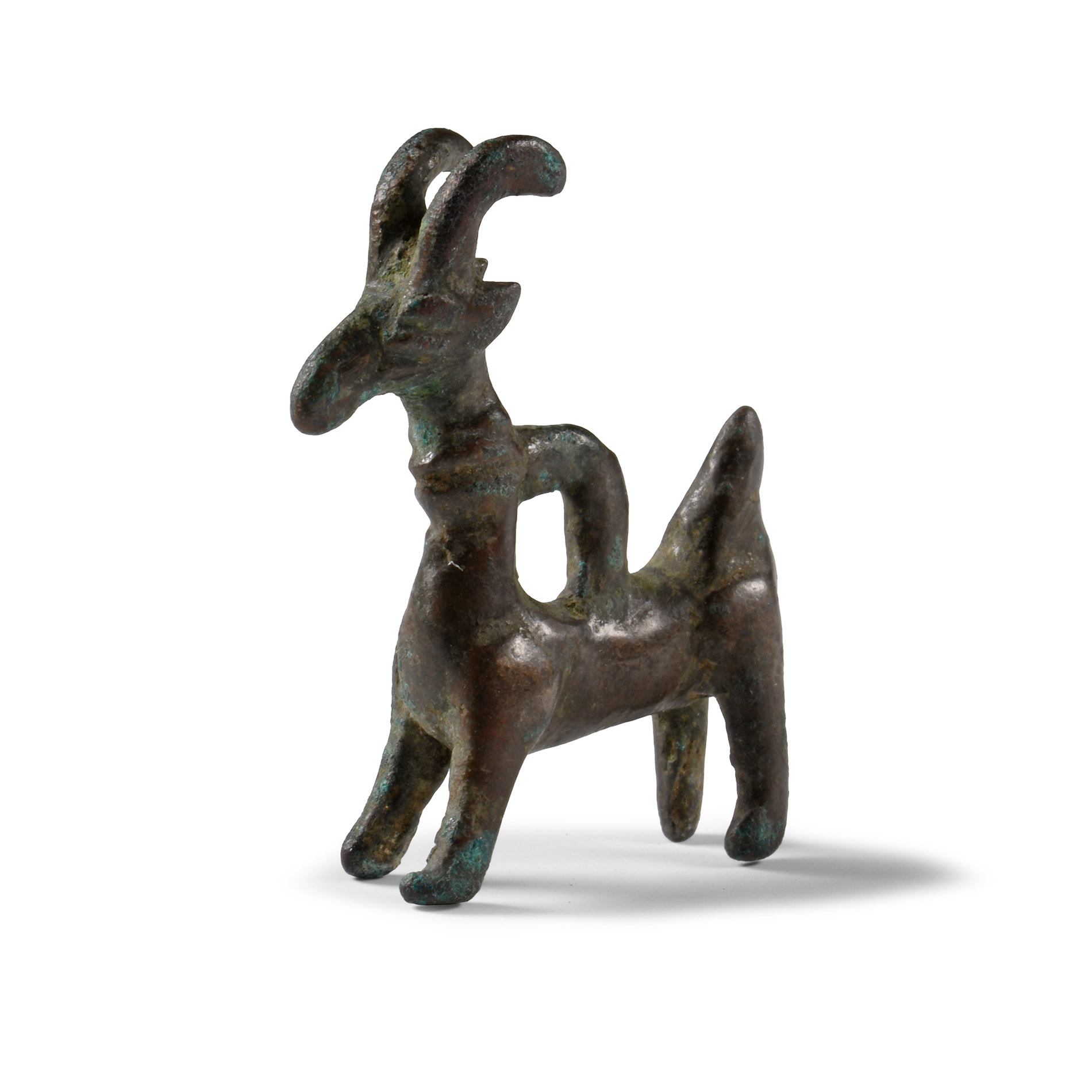
Luristan Bronze Amulet of a Goat
1000-700 B.C.
1 3/8 in. (13.6 grams, 37 mm).
Standing modelled in the round with head erect, curved horns, loop to shoulder.
ProvenancePrivate collection, Mr. A.A., London, acquired in the 1970s.
with Bonhams, London, 8 May 2013, no.229 (Part).
Cf. Engel, N. et al., Bronzes du Luristan: Énigmes de l'Itan Ancien IIIe-Ier millénaire av.J-C., Paris, 2008, item 103, for type.
CONDITIONTimeLine Auctions follows a vetting process to ensure the authenticity and legality of all items, reinforcing our commitment to integrity and responsible trading. Each antiquity, antique, and coin lot undergoes thorough examination by a vetting committee of at least ten external specialists, professional trade association members, scientists, and archaeologists: Our Vetting Process
AUCTIONS:
TimeLine is a leading auction house specialising in antiquities, ancient art, collectables, natural history, coins, medals, and books. Our auctions offer museums, collectors, historians, and enthusiasts the opportunity to acquire unique and historically significant pieces.
-
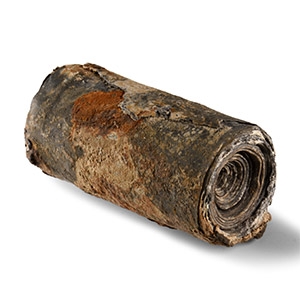
Aramaic Lead Magical Scroll
Circa 1st-3rd century A.D.Sold for (Inc. bp): £2,080
Still sealed and complete and in exceptional condition, a solid example with the entire scroll within available for conservation unrolling. 298 grams, 62 mm
From the property of the late Mr SM, London, UK, 1969-1999. -
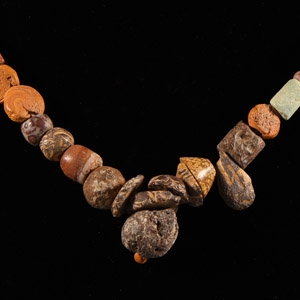
Western Asiatic Mixed Bead Necklace String
1st millennium B.C. and laterSold for (Inc. bp): £26
Graduated group of mainly annular and tubular beads with melon bead centrepiece. 23.9 grams, 42 cm
Acquired 1980-2015. Ex Abelita family collection. -
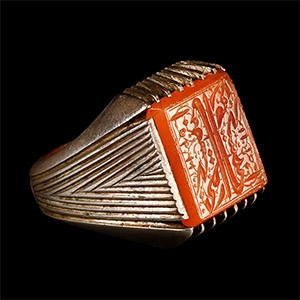
Qajar Inscribed Gemstone in Silver Ring
Dated 1873 A.D.Sold for (Inc. bp): £156
Carnelian cloison dated 1290 AH (1873 AD) with personal stamp seal for Rahim Al-Hosseini. 16.65 grams, 29.85 mm overall, 20.80 mm internal diameter (approximate size British W, USA 11, Europe 25, Japan 24)
Acquired by the vendor's father on the UK art market, before 1990.
