
Loading, please wait...
LOT 0401
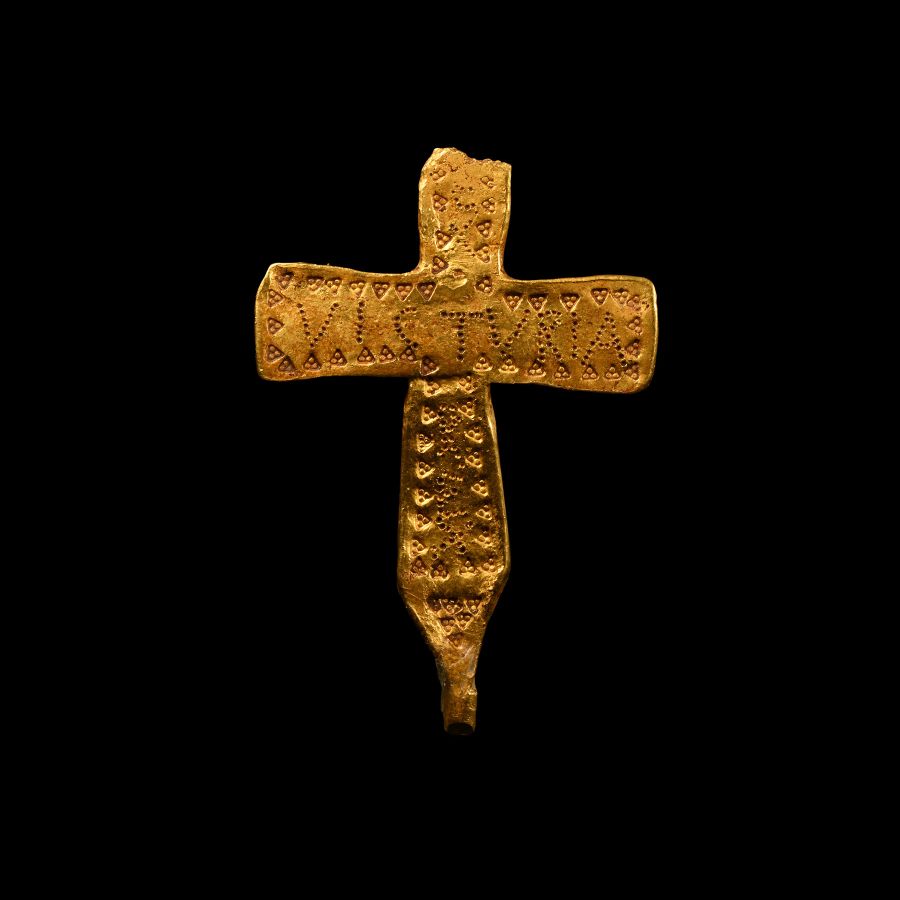
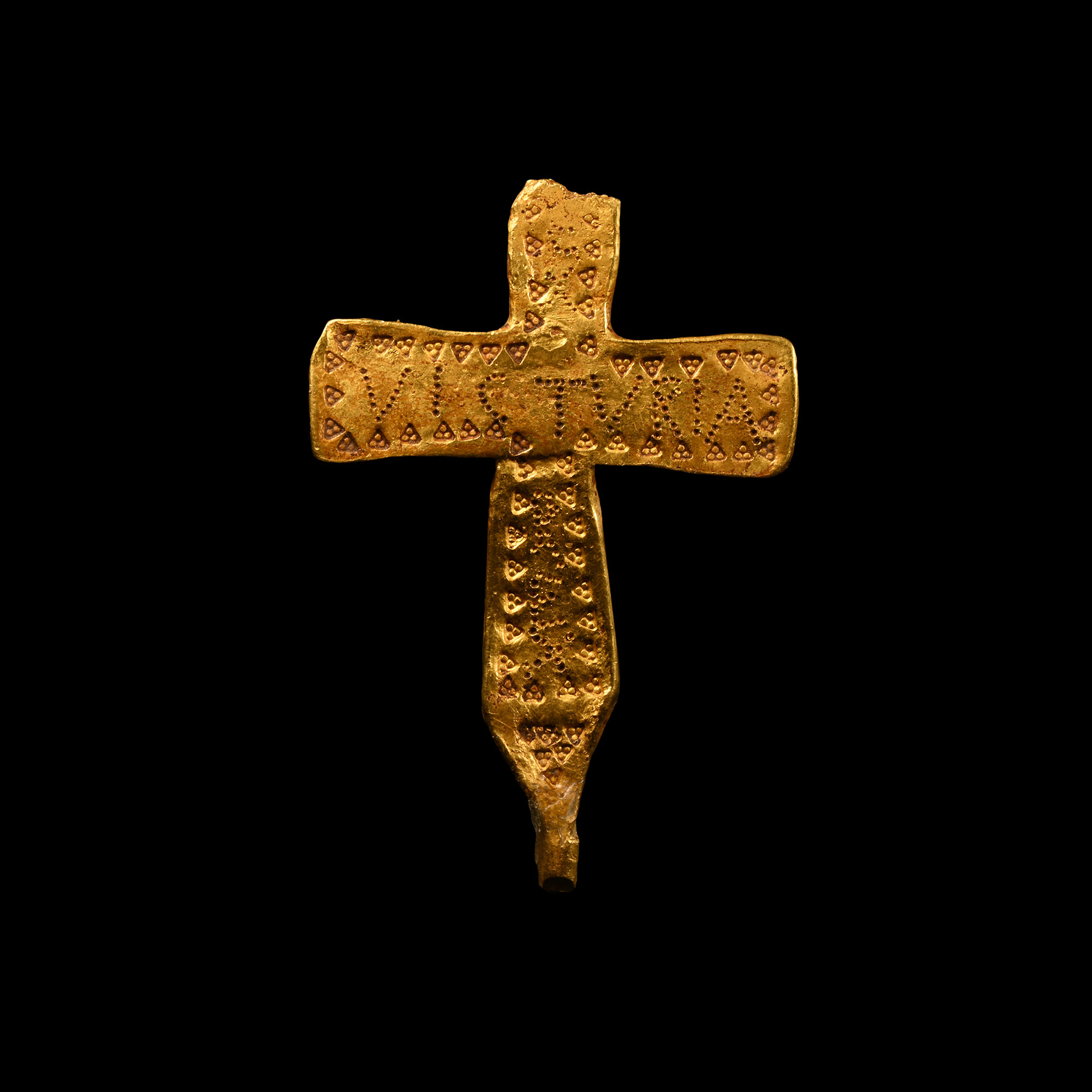
Lombardic Gold Cross for Agilulf
CIRCA 6TH-7TH CENTURY A.D.
2 in. (25.73 grams, 53.47 mm).
Flat-section with stamped triangular decorated border enclosing inscription: 'CX REX VICTVRIA'; attributed to King Agilulf.
ProvenanceAcquired on the London art market before 2000.
Acquired from a major Mayfair, London, UK, gallery.
Ex property of a London gentleman.
Hammond, Aaron, Discovering Jewellery, A Collector's and Investor's Guide, Ipswich, p.262.
LiteratureCf. Sannazzaro, M., Giostra, C., Petala Aurea, Gold-Sheet-work of Byzantine and Lombard Origin from the Rovati Collection, Truccazzano, 2014, nos.1, 18-20, 23, 24, 25, 27-32, for crosses and other gold sheets with similar decorations and inscriptions.
FootnotesThe inscription 'VICTURIA' and 'REX' appears on several items that belonged to Agilulf (ca. 515-616 AD), the king of the Lombards who accepted Christianity to appease his wife, Theodelinda, the widow of his predecessor King Authari. Under Agilulf, the Lombards accepted Arian Christianity; in 603, the king adopted the Roman Catholic faith and baptised his son, Adaloald. A representation of the king appears on a helmet panel from Valdinievole, now in the Bargello, Florence. Stamped decoration in the form of a triangle with three dots inside was popular among Germanic tribes, used during the early and high Middle Ages.
CONDITIONTimeLine Auctions follows a vetting process to ensure the authenticity and legality of all items, reinforcing our commitment to integrity and responsible trading. Each antiquity, antique, and coin lot undergoes thorough examination by a vetting committee of at least ten external specialists, professional trade association members, scientists, and archaeologists: Our Vetting Process
AUCTIONS:
TimeLine is a leading auction house specialising in antiquities, ancient art, collectables, natural history, coins, medals, and books. Our auctions offer museums, collectors, historians, and enthusiasts the opportunity to acquire unique and historically significant pieces.
-
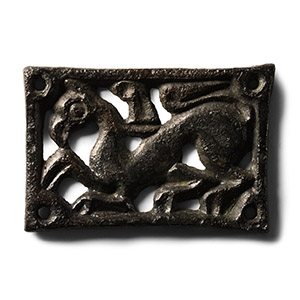
Avar Bronze Openwork Griffin Belt Mount
Circa 8th century A.D.Sold for (Inc. bp): £338
Rectangular with an attachment hole at each corner, displaying an openwork design of an advancing griffin. 6.14 grams, 35.7 mm
Ex property of a Mayfair gentleman. Acquired TimeLine Auctions 10 November, 2012, no.73. Property of a Shropshire collector. -
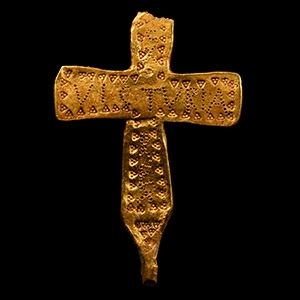
Lombardic Gold Cross for Agilulf
Circa 6th-7th century A.D.Sold for (Inc. bp): £3,120
Flat-section with stamped triangular decorated border enclosing inscription: 'CX REX VICTVRIA'; attributed to King Agilulf. 25.73 grams, 53.47 mm
Acquired on the London art market before 2000. Acquired from a major Mayfair, London, UK, gallery. Ex property of a London gentleman.
The inscription 'VICTURIA' and 'REX' appears on several items that belonged to Agilulf (ca. 515-616 AD), the king of the Lombards who accepted Christianity to appease his wife, Theodelinda, the widow of his predecessor King Authari. Under Agilulf, the Lombards accepted Arian Christianity; in 603, the king adopted the Roman Catholic faith and baptised his son, Adaloald. A representation of the king appears on a helmet panel from Valdinievole, now in the Bargello, Florence. Stamped decoration in the form of a triangle with three dots inside was popular among Germanic tribes, used during the early and high Middle Ages. -
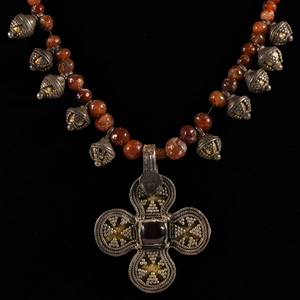
Slavic Silver and Carnelian Bead Necklace with Silver Cross Pendant
Circa 10th century A.D.Sold for (Inc. bp): £1,560
Restrung group of carnelian oblate and spherical beads, parcel-gilt silver dangles with applied granules, silver lobed cross pendant with granules and central cabochon garnet. 82 grams, 58 cm long
From the private collection of a London gentleman, from his grandfather's collection formed before the early 1970s.
