
Loading, please wait...
LOT 0926
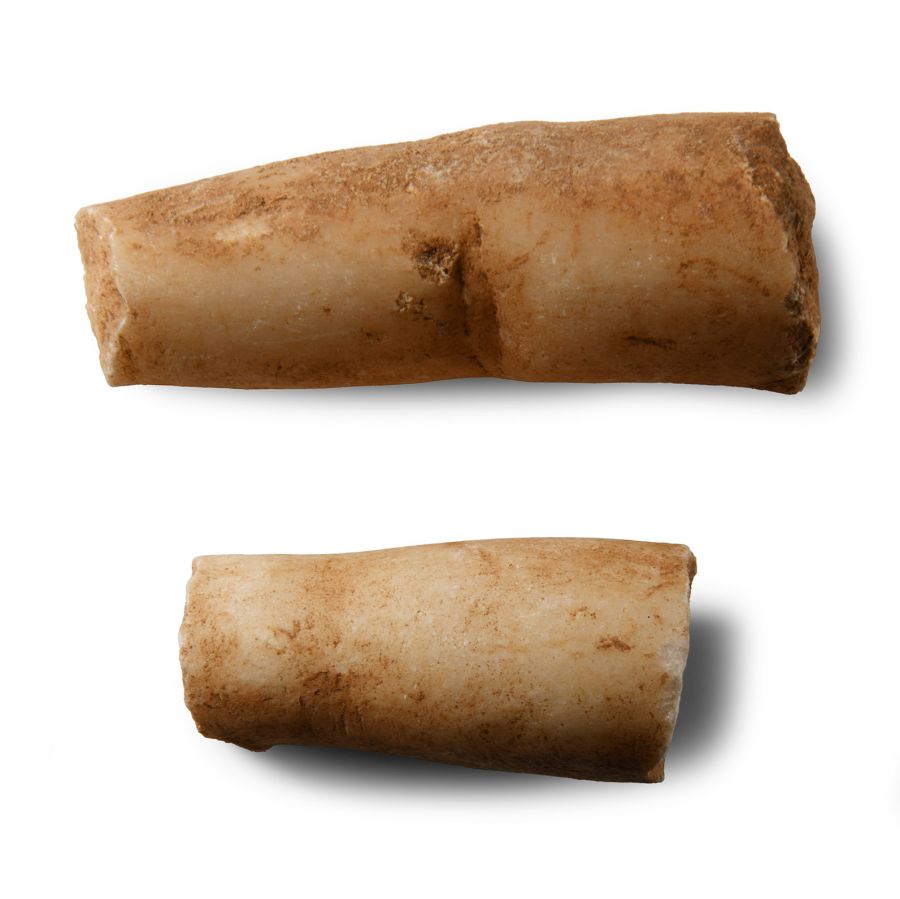
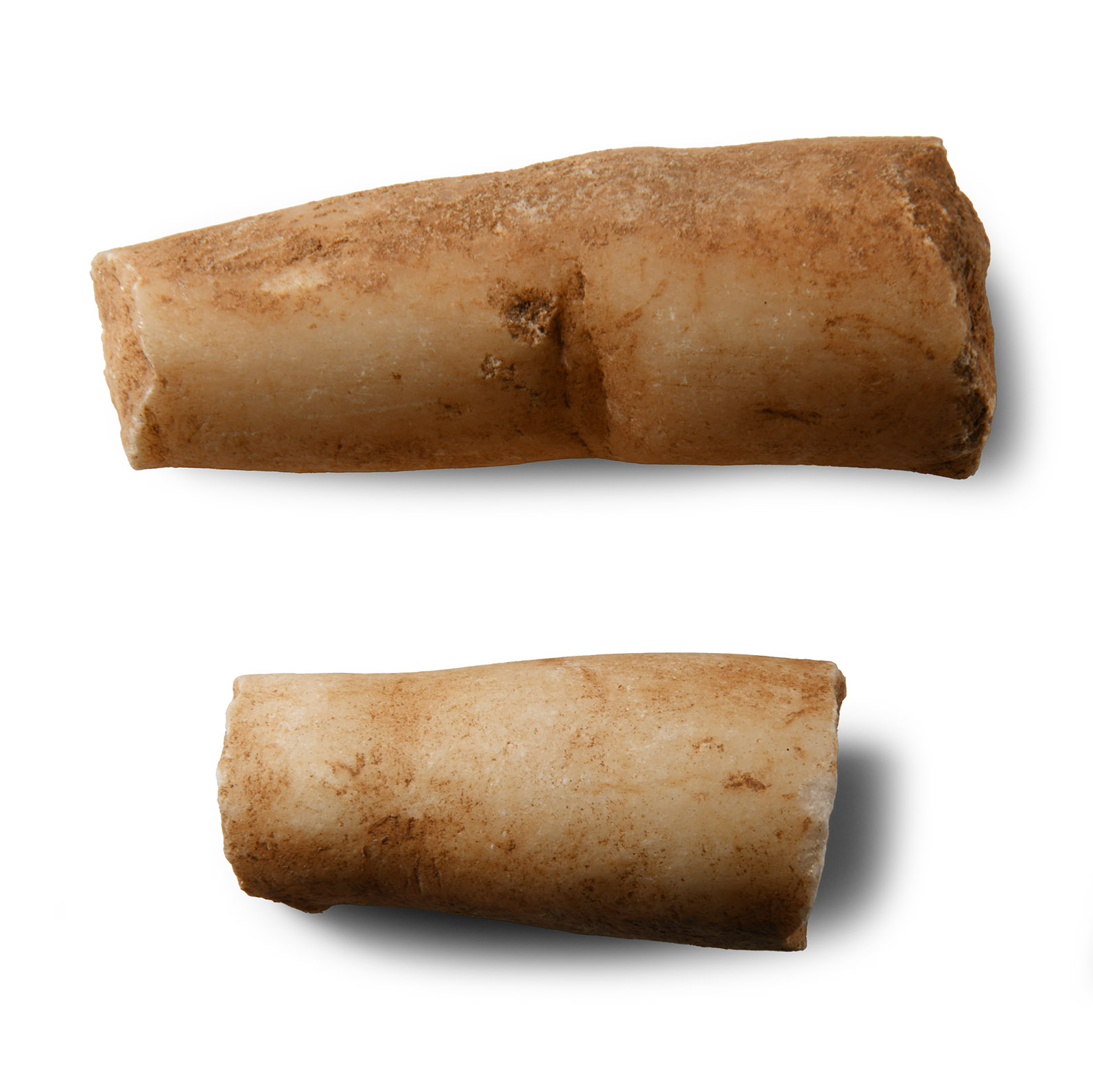
Life-Size Roman Marble Finger Fragments
1ST-4TH CENTURY A.D.
2 - 2 7/8 in. (148 grams total, 52-74 mm).
Two fragments of fingers from a statue, the smaller with attachment points for an object. [2, No Reserve]
ProvenanceEx M. Cummings collection, Lincolnshire, UK, 1990s.
CONDITIONTimeLine Auctions follows a vetting process to ensure the authenticity and legality of all items, reinforcing our commitment to integrity and responsible trading. Each antiquity, antique, and coin lot undergoes thorough examination by a vetting committee of at least ten external specialists, professional trade association members, scientists, and archaeologists: Our Vetting Process
AUCTIONS:
TimeLine is a leading auction house specialising in antiquities, ancient art, collectables, natural history, coins, medals, and books. Our auctions offer museums, collectors, historians, and enthusiasts the opportunity to acquire unique and historically significant pieces.
-
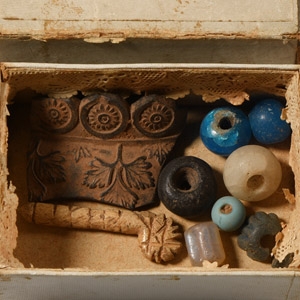
Roman 'Camp Capchoke' Artefact Collection
1st-4th century A.D.Sold for (Inc. bp): £338
Including fragment of greyware pottery rim, glass oblate and other beads, a bone phallus amulet and other items; with late 19th century handwritten label 'Pottery / Roman Camp/ Capchoke' and 'Mr Stirling / St Boswells' inked to verso, along with postage tag attached with Victorian postage stamp stamped 'St Boswells 5th July 1896'. 48 grams total, 79 x 59 x 34 mm
Found at Camp Capchoke in the 19th century. From the collection of Mr Stirling of St Boswells, UK, circa 1896, thence by descent. Ian Wilkinson collection, Nottinghamshire, UK, formed since 1985. Accompanied by a handwritten provenance note.
St Boswells is situated a few miles from Melrose, Scotland. Gadrooned beads like the ones here illustrated are found in 1st and 2nd century contexts and seem to have been introduced into this country at the conquest. Most are made of turquoise frit, which often decays to white. The dark blue glass here illustrated finds a perfect parallel with a specimen found in Colchester. -
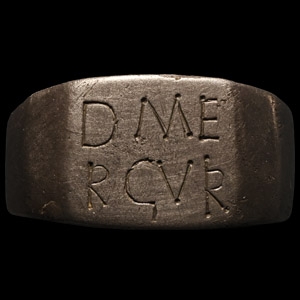
Roman Silver Military Ring with Inscription
Circa 2nd century A.D.Sold for (Inc. bp): £1,950
With facetted hoop and rectangular plaque, legend 'DME / RGVR' (D(eo) ME/RCVRI(o) (RI in ligature): ‘To the god Mercury), in rustic capitals. 10.59 grams, 25.88 mm overall, 21.00 mm internal diameter (approximate size British Q 1/2, USA 8 1/4, Europe 18.12, Japan 17)
Acquired on the UK art market in the 1980s. From an East Anglian private collection.
The inscription is to be segmented 'D MERGVR for D[EO] MERGVR[IO]' meaning '(dedicated) to the god Mercury'. A common formula for Roman inscriptions in Britain. -
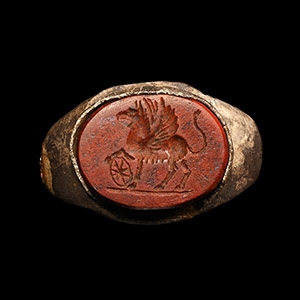
Roman Bronze Ring with Gryphon and Shield Gemstone
Mid 3rd century A.D.Sold for (Inc. bp): £442
With a possibly later inset red jasper plaque with incuse gryphon supporting a shield or spoked wheel. 9.94 grams, 23.87 mm overall, 16.67 mm internal diameter (approximate size British H, USA 3 3/4, Europe 6.18, Japan 6)
Ex German art market, 2000s. Acquired from an EU collector living in London. From the collection of Surrey, UK, gentleman.
