
Loading, please wait...
LOT 2403
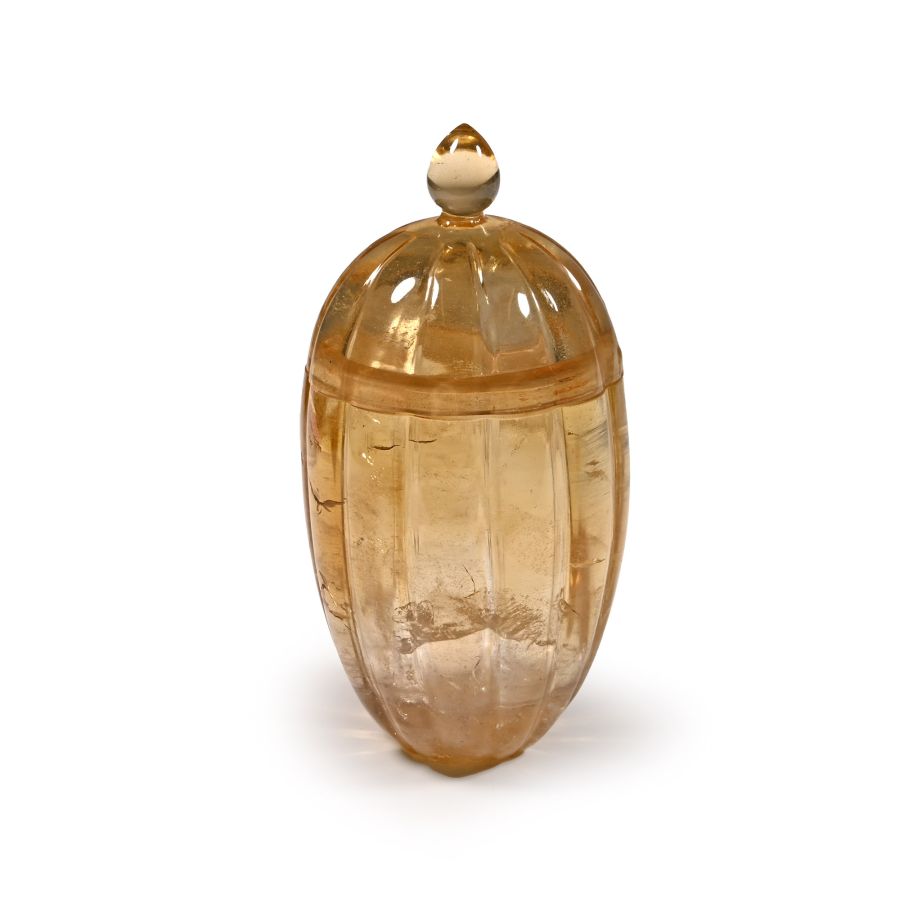
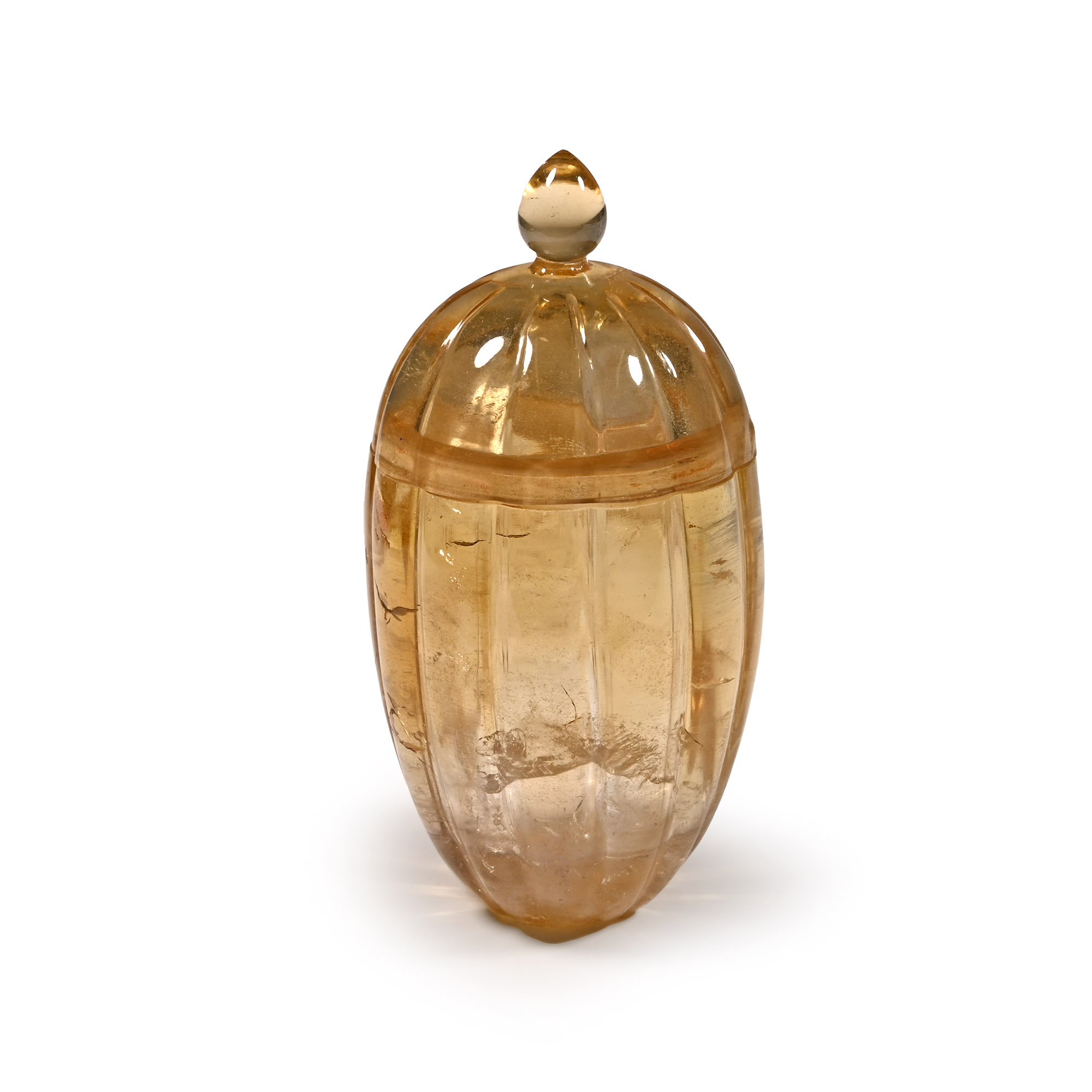
Lidded Yellow Quartz Vessel
5 1/8 in. (404 grams, 13 cm high).
An acorn-shaped vessel with fluted body and lid, narrow flat base and onion-knop finial to the lid. [No Reserve]
ProvenanceFrom the family collection of a Hampstead gentleman; formerly acquired in the 1980s.
CONDITIONTimeLine Auctions follows a vetting process to ensure the authenticity and legality of all items, reinforcing our commitment to integrity and responsible trading. Each antiquity, antique, and coin lot undergoes thorough examination by a vetting committee of at least ten external specialists, professional trade association members, scientists, and archaeologists: Our Vetting Process
AUCTIONS:
TimeLine is a leading auction house specialising in antiquities, ancient art, collectables, natural history, coins, medals, and books. Our auctions offer museums, collectors, historians, and enthusiasts the opportunity to acquire unique and historically significant pieces.
-
![Malachite Cut and Polished Eye Mineral Specimen Group [20]](https://timelineauctions.com/upload/images/items/small/228172-s.jpg)
Malachite Cut and Polished 'Eye' Mineral Specimen Group [20]
Sold for (Inc. bp): £39
Each with a minimum of one polished face to display attractive banding, some with drilled piercing. 334 grams total, 23-35 mm
From Democratic Republic of the Congo, Central Africa. Ex Mineral Imports, London, UK. Gregory, Bottley & Lloyd (Gregory's), Harwich, UK. -
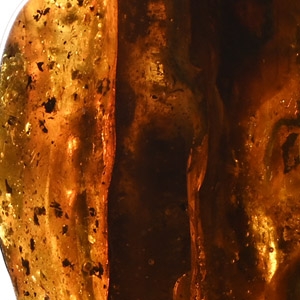
Large Polished Amber Specimen with Insects and Plant Inclusions
Oligocene Period, circa 45 million years B.P.Sold for (Inc. bp): £169
Large polished section with numerous inclusions and small internal areas of iridescence. 138 grams, 14.6 cm
From the private collection of a London gentleman, from his grandfather's collection formed before the early 1970s. -
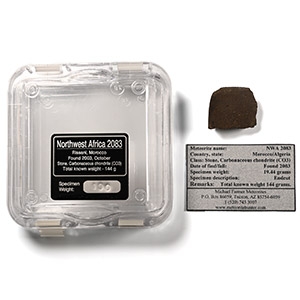
Rissani Carbonaceous Chondrite Meteorite Polished End Cut
Found 2003 A.D.Sold for (Inc. bp): £143
Cut and polished end section of NWA 2083, inked collector's note to one side. specimen weight 19.44 grams, 31mm
From Rissani, Morocco/Algeria, North West Africa. Ex Michael Farmer Meteorites, Tucson, Arizona, USA. Ex USA collection. From a Leicestershire, UK, collection. Accompanied by an original dealer label and Swiss membrane box with aluminium identification label.
