
Loading, please wait...
LOT 0779
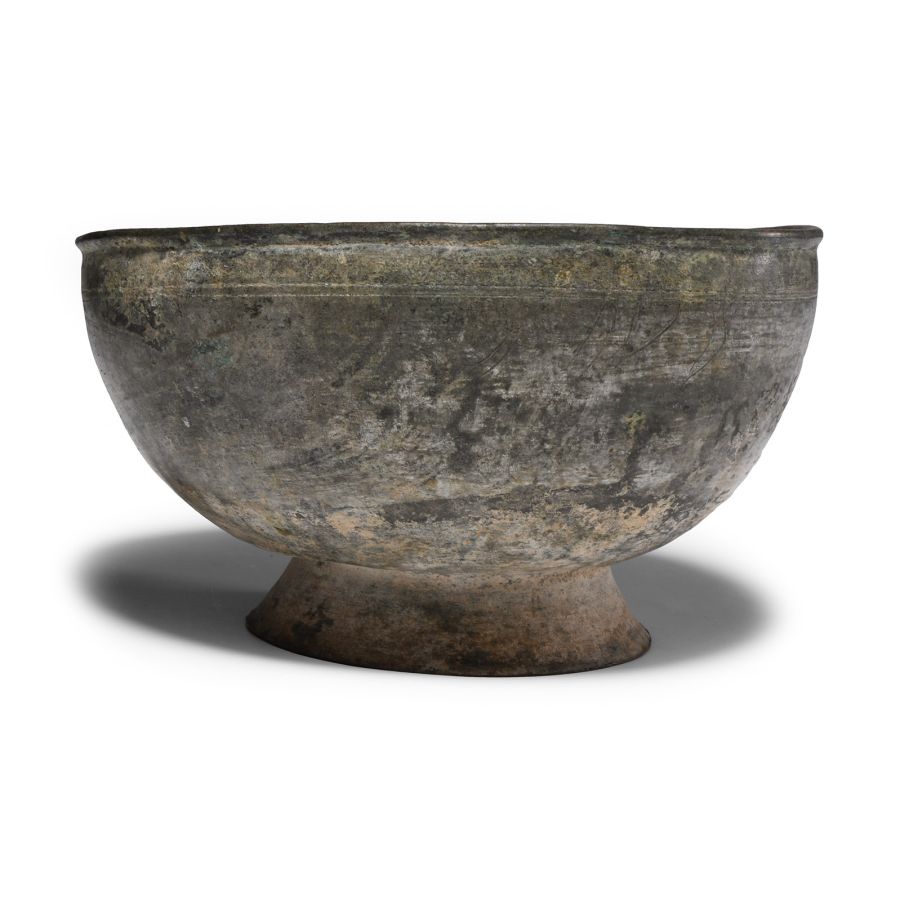
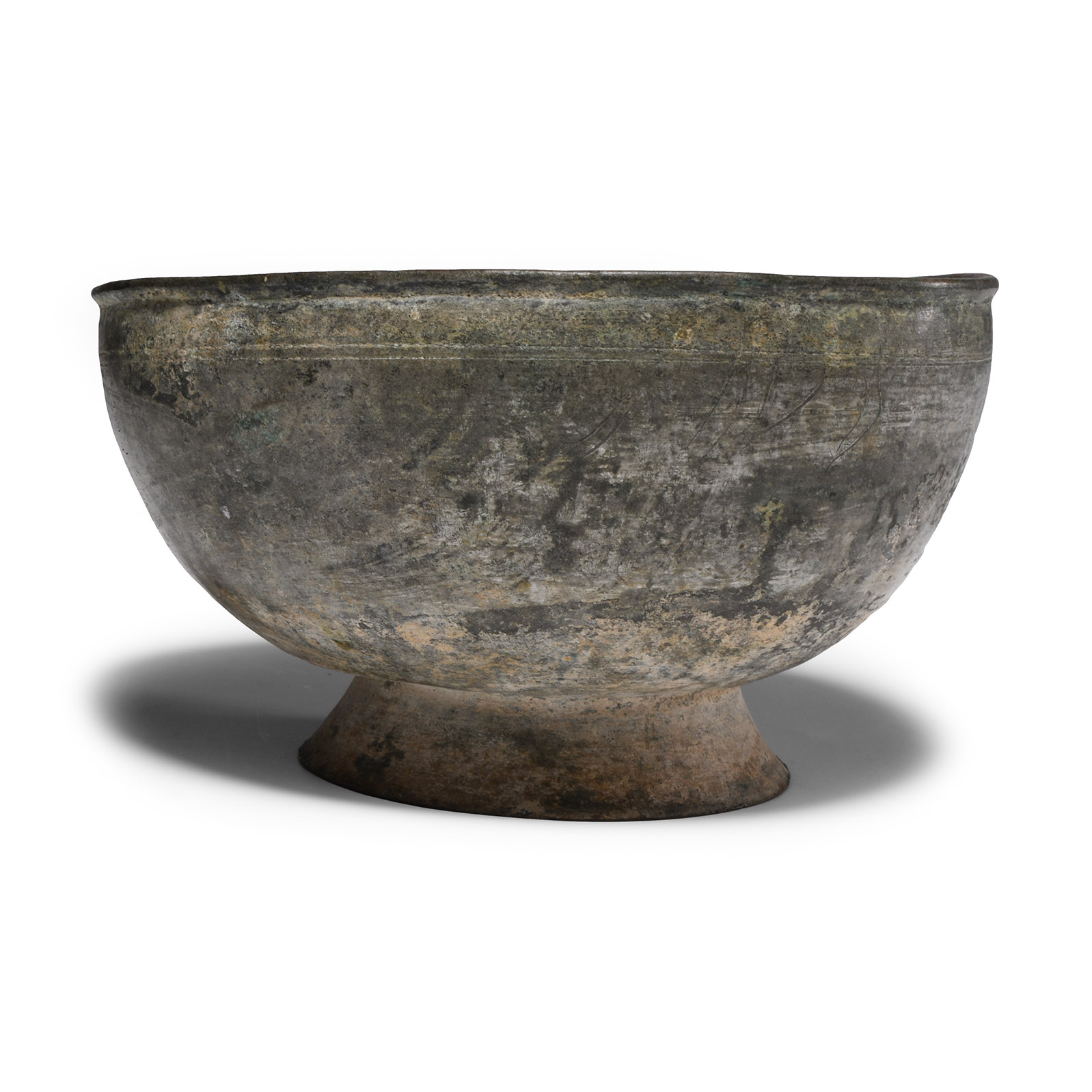
Late Roman Tinned Bronze Bowl
4TH-6TH CENTURY A.D.
6 1/4 in. (313 grams, 16 cm).
Hemispherical in profile with applied flared base, thickened rim and two parallel incised lines below. [No Reserve]
ProvenanceFrom an old UK collection.
Acquired from Red House Antiques, York, 2010.
Ian Wilkinson collection, Nottinghamshire, UK.
Cf. Fremersdorf, F., ‘Spätrömische Bronzegefäße aus Köln’ in Germania: Anzeiger der Römisch-Germanischen Kommission des Deutschen Archäologischen Instituts, Vol. 12, Nº. 4, 1928, pp. 173-177, fig.3, for similar.
FootnotesThese bronze vessels were typical of the Late Roman Empire. They were direct forerunners of the Frankish types. They often had Christian inscriptions and have been found with silver spoons for liturgical use.
CONDITIONTimeLine Auctions follows a vetting process to ensure the authenticity and legality of all items, reinforcing our commitment to integrity and responsible trading. Each antiquity, antique, and coin lot undergoes thorough examination by a vetting committee of at least ten external specialists, professional trade association members, scientists, and archaeologists: Our Vetting Process
AUCTIONS:
TimeLine is a leading auction house specialising in antiquities, ancient art, collectables, natural history, coins, medals, and books. Our auctions offer museums, collectors, historians, and enthusiasts the opportunity to acquire unique and historically significant pieces.
-
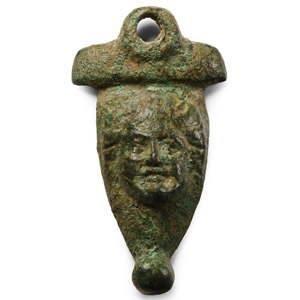
Roman Bronze Figural Escutcheon
1st-2nd century A.D.Sold for (Inc. bp): £85
With elliptical plaque and bulb finial, putto mask with radiating hair. 71.2 grams, 71 mm
Acquired 1950s-1970s. Ex London, UK, private collection. Property of a Kent lady collector. -
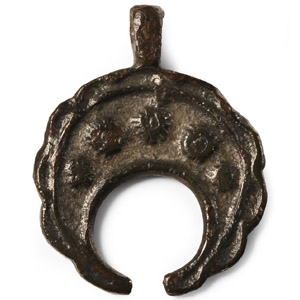
Roman Bronze Lunar Pendant
4th-5th century A.D.Sold for (Inc. bp): £143
A bifacial pendant with raised pellets to both faces. 2.78 grams, 26 mm
Ex German art market, 2000s. Acquired from an EU collector living in London. From the collection of Surrey, UK, gentleman. -
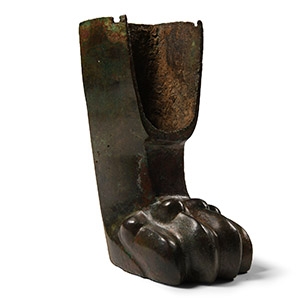
Roman Bronze Gryphon Lectus Foot
1st-2nd century A.D.Sold for (Inc. bp): £364
Hollow-formed foot for a lectus couch, the upper square in plan with tongue-shaped opening to the forward face, and vertical strap to the reverse; the foot with four curved claws, bulb knuckles above; open to the underside 558 grams, 11.2 cm
Acquired from Munich and London, 1990s. From the collection of a London, UK, gentleman.
