
Loading, please wait...
LOT 0846
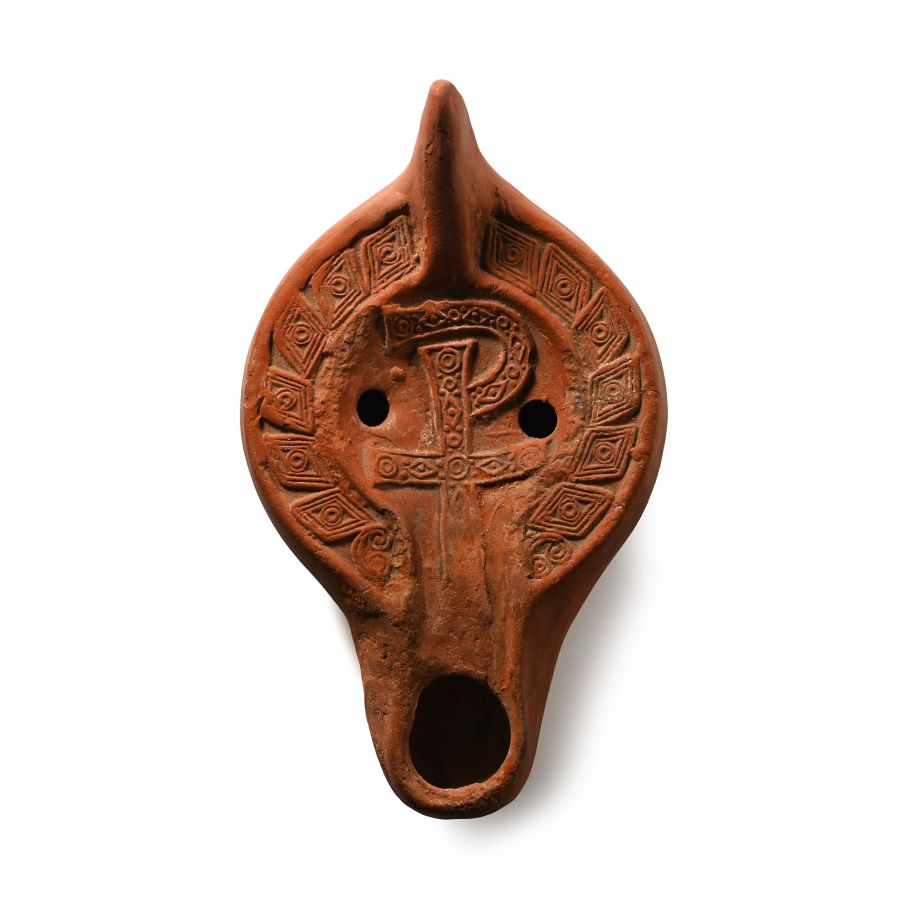
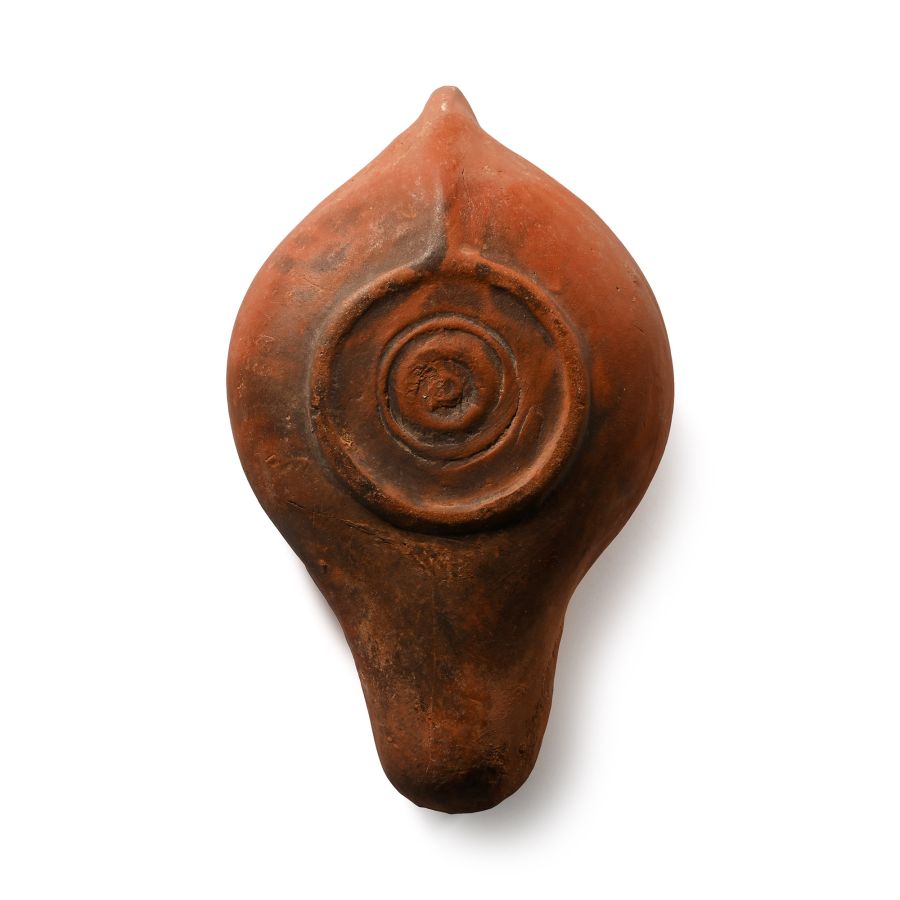
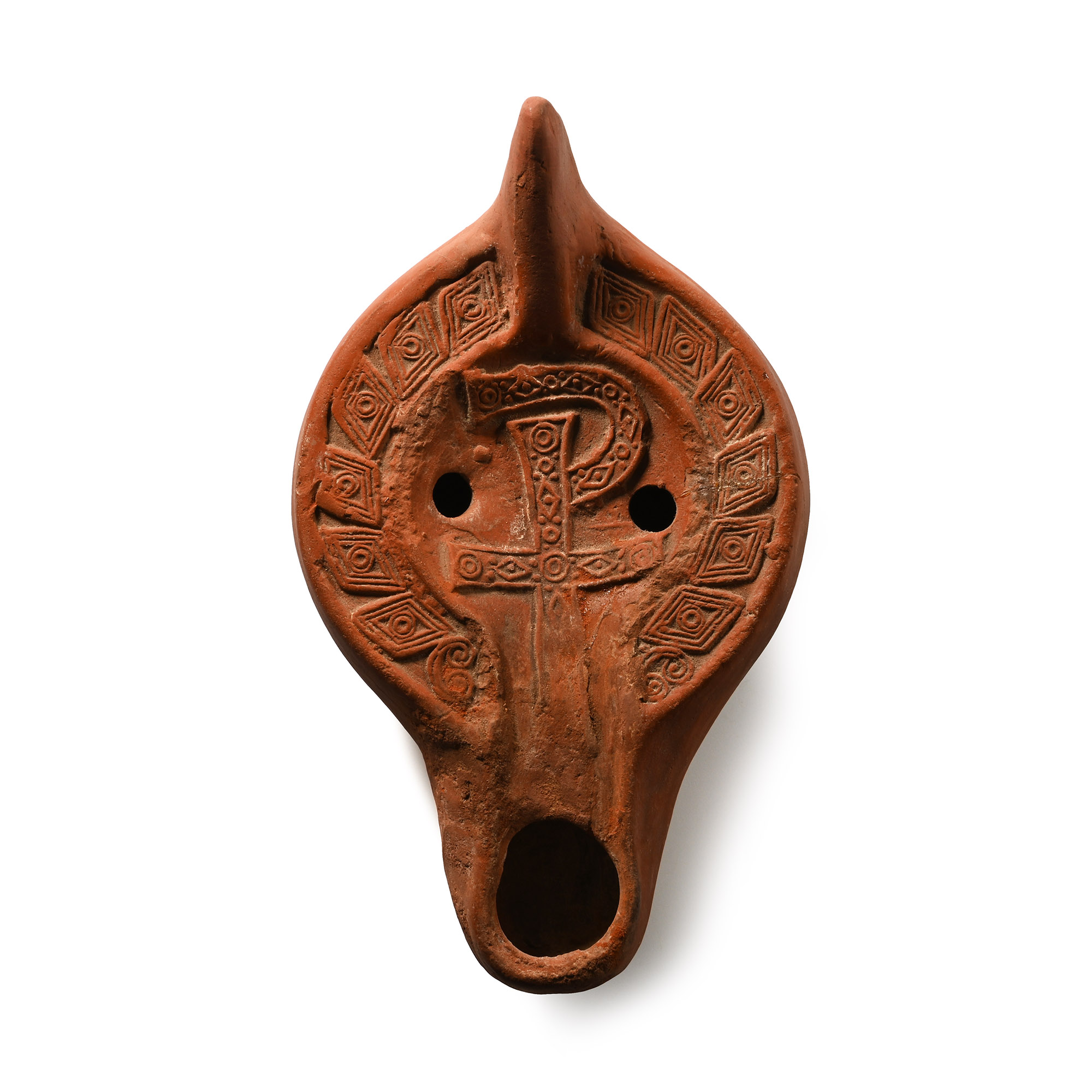
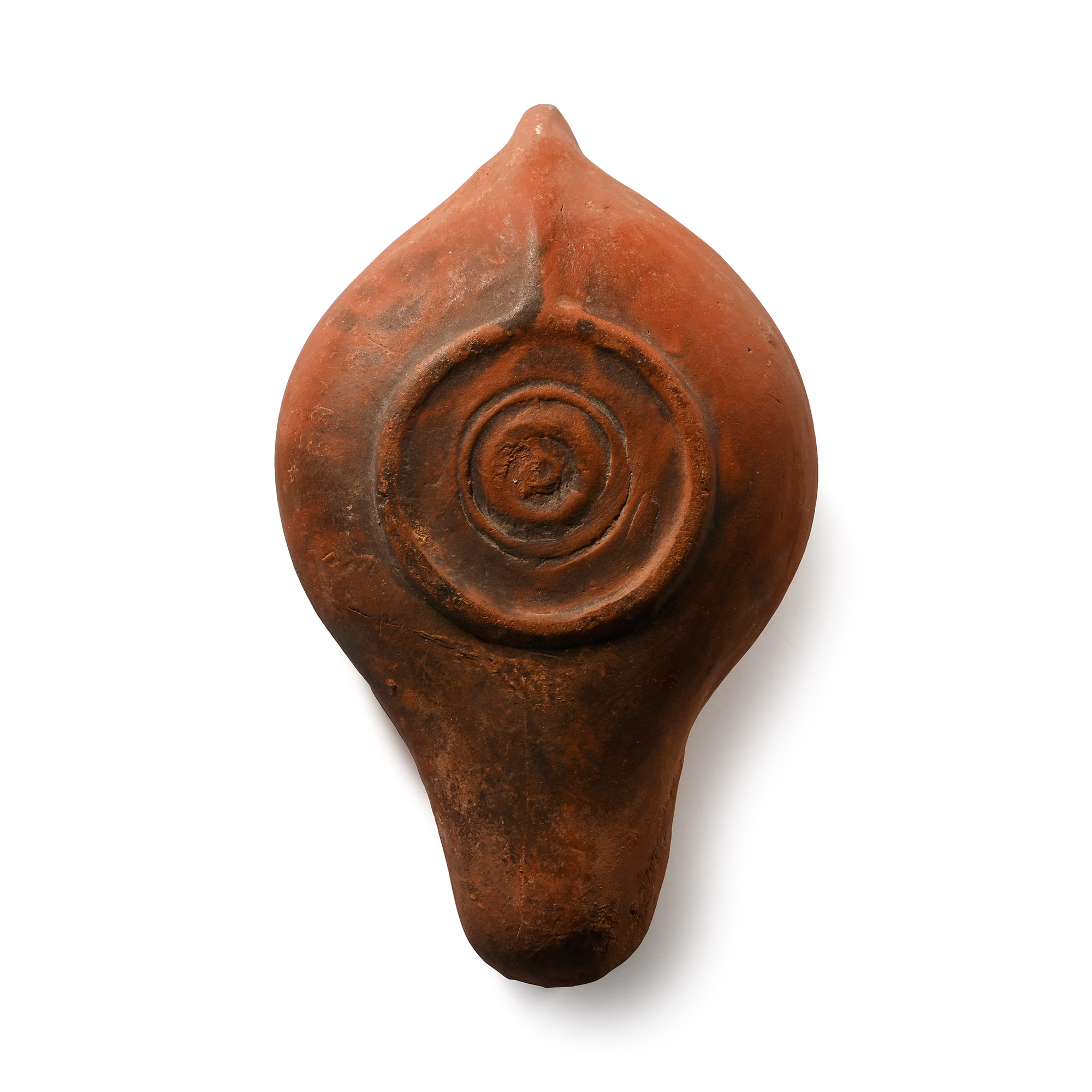
Late Roman Terracotta Oil Lamp with Christogram
5TH-6TH CENTURY A.D.
5 1/2 in. (199 grams, 14 cm).
With a decorated Christogram and filled circles and quatrefoil ornaments on the shoulder.
ProvenanceFrom the private collection of H. L., Rheinland, Germany, before 2000.
This lot is accompanied by an illustrated lot declaration signed by the Head of the Antiquities Department, Dr Raffaele D'Amato.
TimeLine Auctions follows a vetting process to ensure the authenticity and legality of all items, reinforcing our commitment to integrity and responsible trading. Each antiquity, antique, and coin lot undergoes thorough examination by a vetting committee of at least ten external specialists, professional trade association members, scientists, and archaeologists: Our Vetting Process
AUCTIONS:
TimeLine is a leading auction house specialising in antiquities, ancient art, collectables, natural history, coins, medals, and books. Our auctions offer museums, collectors, historians, and enthusiasts the opportunity to acquire unique and historically significant pieces.
LOT 0846
Late Roman Terracotta Oil Lamp with Christogram
Estimate £400 - 600€460 - 700 (for guidance only)$540 - 810 (for guidance only)
-
Roman Iridescent Glass Vase with Chequered Pattern
2nd-4th century A.D.Sold for (Inc. bp): £211
With a rounded body decorated with a lozenge 'net' motif, broad flared neck, kick-up to base; extensive iridescence, repaired. 49 grams, 11 cm high
Acquired early 1990s. Ex private American collection; thence by descent. Private collection since 1998. This lot is accompanied by an illustrated lot declaration signed by the Head of the Antiquities Department, Dr Raffaele D'Amato. -
Roman Carnelian Gemstone with Female Portrait
1st-2nd century A.D.Estimate: £200 - 300 (+bp*)
Opening Bid: £100
Ellipsoid in plan with intaglio profile portrait bust of a female with hair in a chignon. 0.22 grams, 9 mm
Acquired on the German art market, 1989-1995. with The Museum Gallery, 19 Bury Place, London, WC1, UK, 1998-2003. Property of a London based academic, 2003 to present. This lot is accompanied by an illustrated lot declaration signed by the Head of the Antiquities Department, Dr Raffaele D'Amato. -
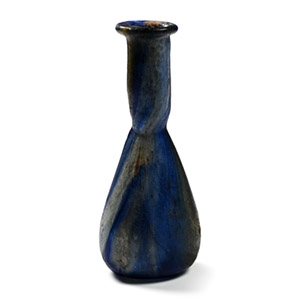
Roman Marbled Glass Blue Bottle
1st century A.D.Estimate: £1,500 - 2,000 (‡+bp*)
Opening Bid: £675
An iridescent glass unguentarium with piriform body, tubular neck with everted rolled rim. 19.7 grams, 83 mm
Acquired on the European art market in 2001. This lot has been cleared against the Art Loss Register database, and is accompanied by an illustrated lot declaration signed by the Head of the Antiquities Department, Dr Raffaele D'Amato.
