
Loading, please wait...
LOT 0877
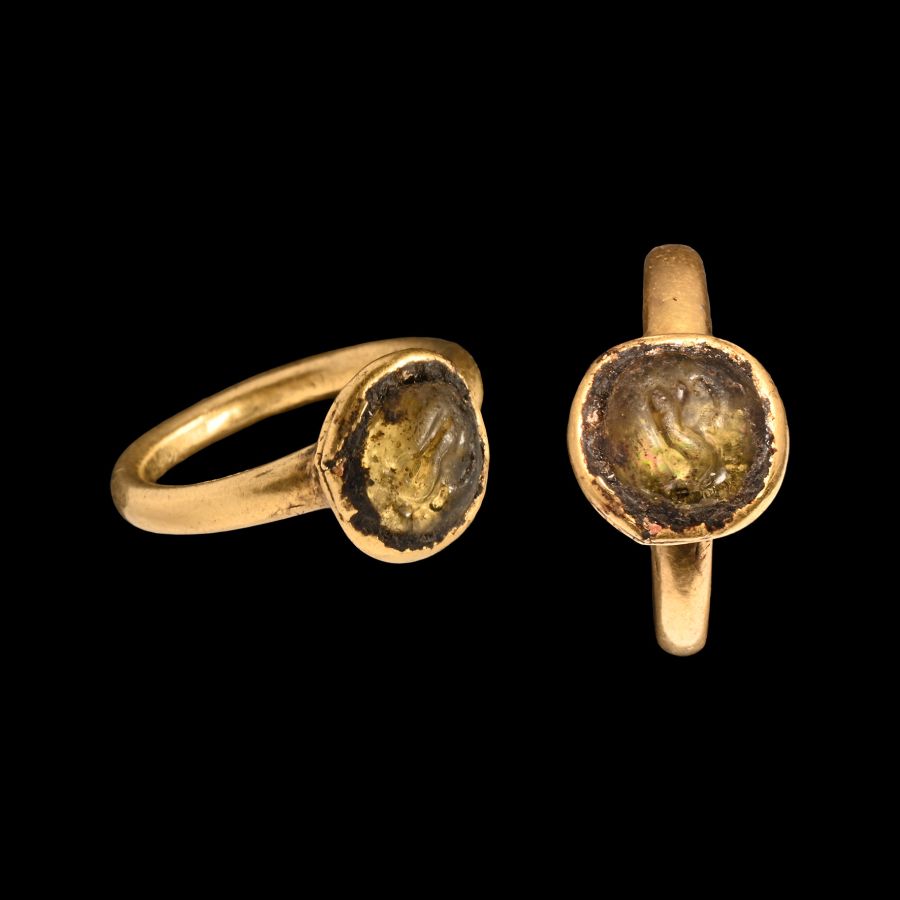
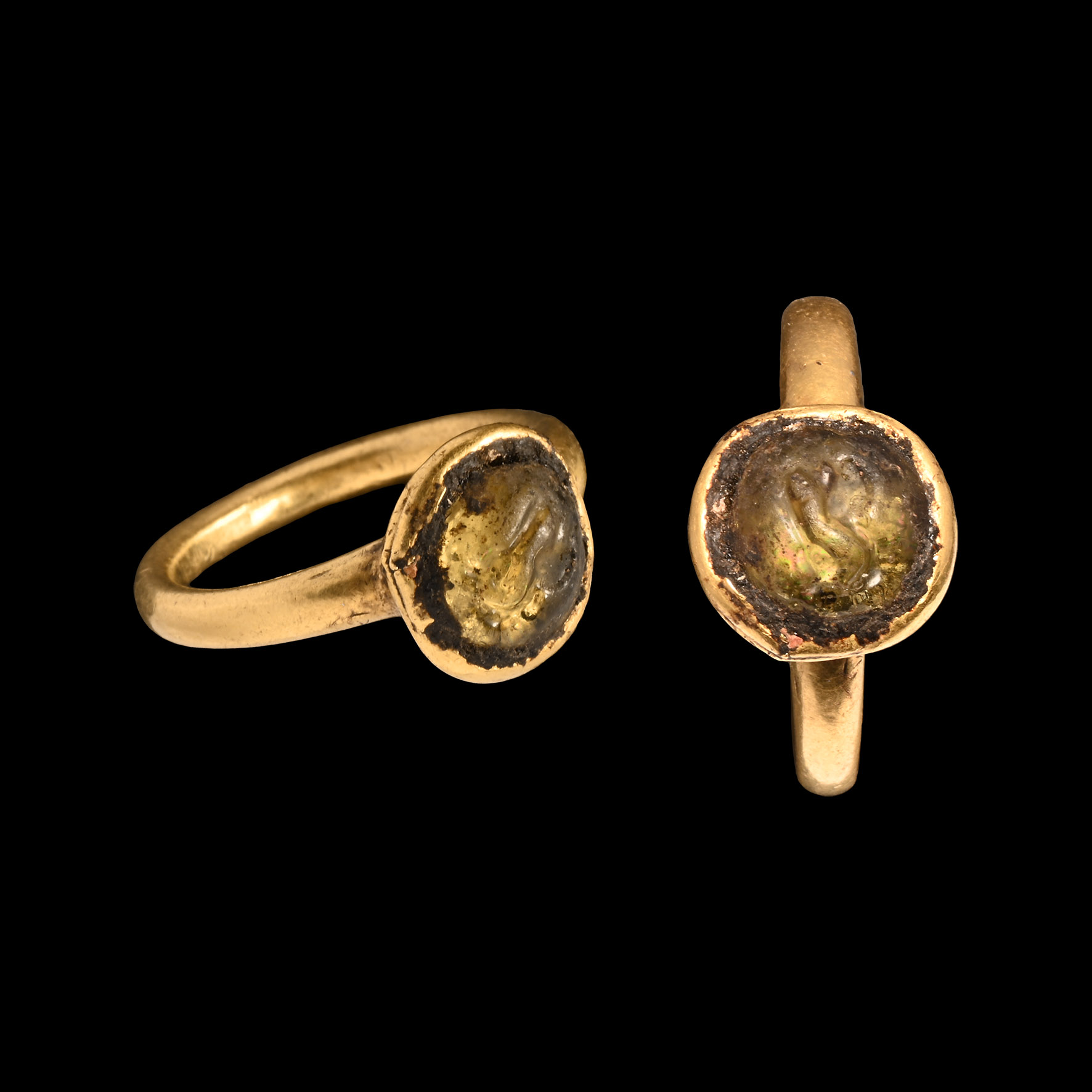
Late Roman Solid Gold Ring with Bird and Flower Gem
CIRCA 3RD-4TH CENTURY A.D.
1 in. (7.53 grams, 24.95 mm overall, 17.50 mm internal diameter (approximate size British J, USA 4 3/4, Europe 8.69, Japan 8)).
With tapering shoulders, cup bezel, inset green glass cabochon with intaglio bird and flower motif.
ProvenanceFrom a late Japanese specialist collector, 1970-2000s.
LiteratureCf. Chadour, A.B., Rings. The Alice and Louis Koch Collection, volume I, Leeds, 1994, item 206, for type.
CONDITIONTimeLine Auctions follows a vetting process to ensure the authenticity and legality of all items, reinforcing our commitment to integrity and responsible trading. Each antiquity, antique, and coin lot undergoes thorough examination by a vetting committee of at least ten external specialists, professional trade association members, scientists, and archaeologists: Our Vetting Process
AUCTIONS:
TimeLine is a leading auction house specialising in antiquities, ancient art, collectables, natural history, coins, medals, and books. Our auctions offer museums, collectors, historians, and enthusiasts the opportunity to acquire unique and historically significant pieces.
-
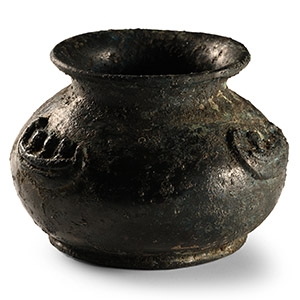
Roman Bronze Vessel with Boats
2nd-3rd century A.D.Estimate: £300 - 400 (+bp*)
Opening Bid: £150
Squat jar with concentric rings to the base, flared rim to the mouth three high-relief galley images to the shoulder. 166 grams, 43 mm high
Ex German art market, 2000s. Acquired from an EU collector living in London. From the collection of Surrey, UK, gentleman.
The vase evokes a scene of maritime or river trade, usually linked to navigation on the Rhine or on the great rivers of Roman Gaul. In particular, the shape of the ship and the three people only half visible on its deck closely resemble the famous relief of the wine merchants of Neumagen-Dhron. The small jar was probably for domestic toilette use. -
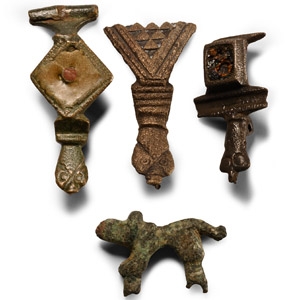
Roman Bronze Brooch Group
Circa 2nd-3rd century A.D.Sold for (Inc. bp): £65
Including equal-arm, bow brooch fragments, and a Romano-British lion bow brooch similar to the one found at Corbridge (lot 891). 21.1 grams total, 28-42 mm
Property of the vendor's grandfather, thence by family descent, circa 1985. From the private collection of a New York, USA gentleman. -
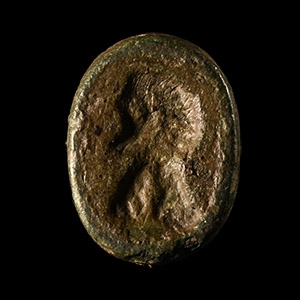
Roman 'British' Ring Gemstone with Portrait
Circa 2nd century A.D.Sold for (Inc. bp): £59
Ellipsoid glass insert with profile portrait bust to one face. 2.11 grams, 14 mm
Found UK. From the collection of C. Sullivan, UK, 1990s.
The same portrait appears on 'horse and rider' plate brooches.
