
Loading, please wait...
LOT 0651
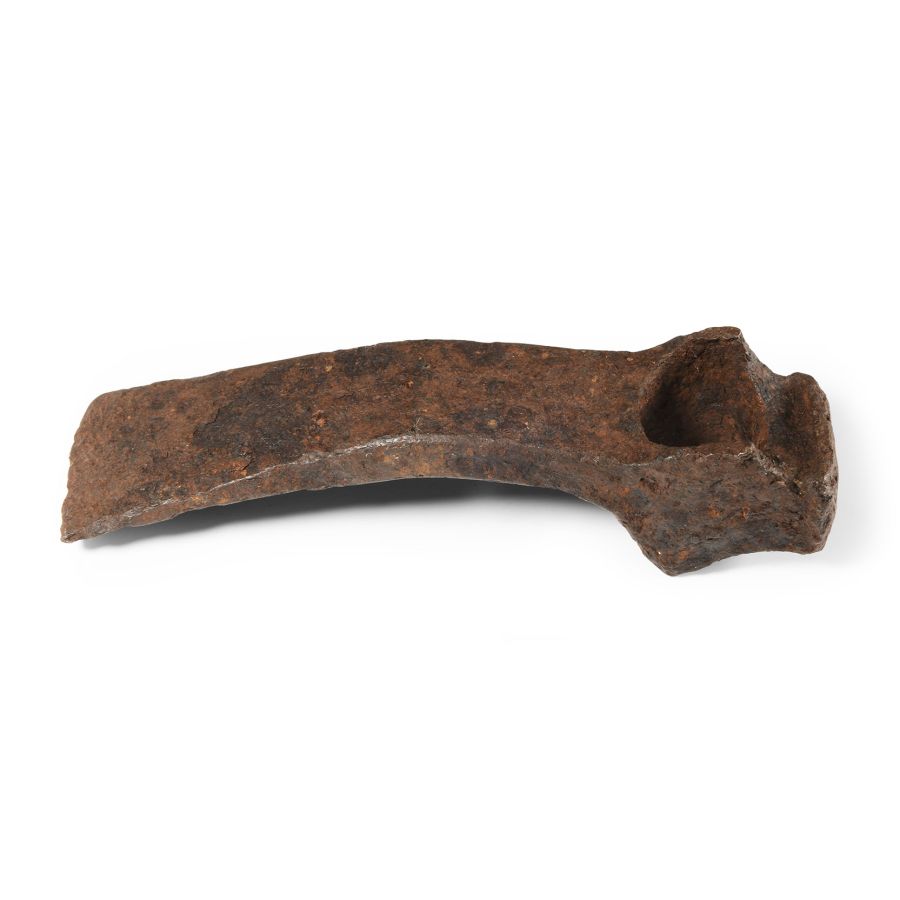
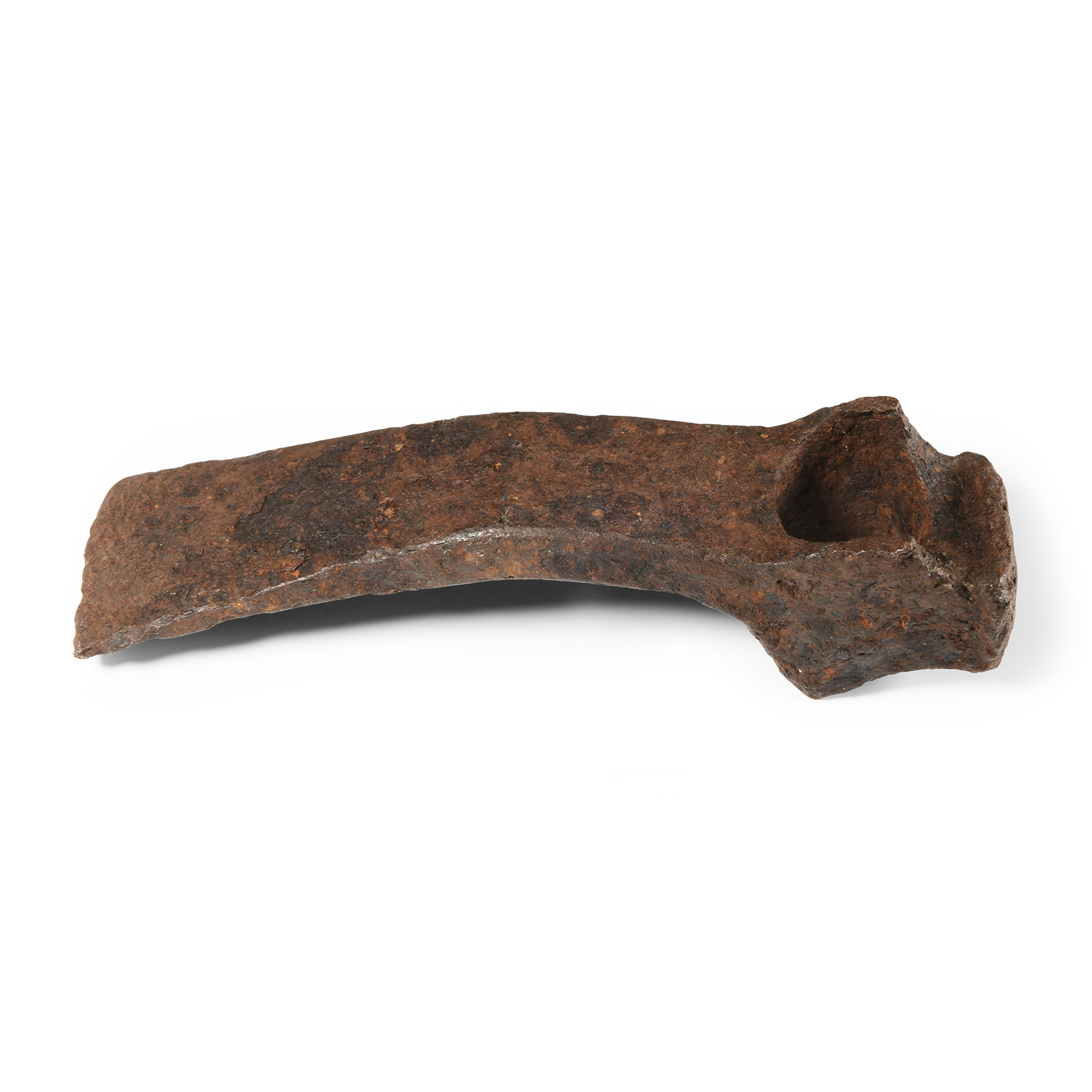
Late Roman Socketted Iron Adze Hammer
CIRCA 6TH CENTURY A.D.
7 3/4 in. (752 grams, 19.5 cm).
Flat-section blade with gently curved cutting edge, round socket with spurs to both edges, clubbed hammerhead to the rear. [No Reserve]
ProvenanceFound near Wetwang, East Yorkshire, UK.
Acquired circa 2005.
Ian Wilkinson collection, Nottinghamshire, UK.
Cf. Bavant, B., Ivanišević, V., Caricin Grad IV, Catalogue des objets des fouilles anciennes et autres etudes, Rome-Belgrade, 2019, figs.1464-1465, for similar.
CONDITIONTimeLine Auctions follows a vetting process to ensure the authenticity and legality of all items, reinforcing our commitment to integrity and responsible trading. Each antiquity, antique, and coin lot undergoes thorough examination by a vetting committee of at least ten external specialists, professional trade association members, scientists, and archaeologists: Our Vetting Process
AUCTIONS:
TimeLine is a leading auction house specialising in antiquities, ancient art, collectables, natural history, coins, medals, and books. Our auctions offer museums, collectors, historians, and enthusiasts the opportunity to acquire unique and historically significant pieces.
-
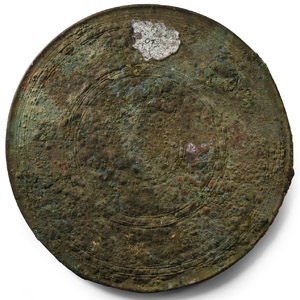
Roman Bronze Mirror with Concentric Detail
2nd century B.C.-2nd century A.D.Sold for (Inc. bp): £91
Discoid with slightly raised rim to obverse, low-relief concentric ring detailing. 482 grams, 16.7 cm
From the private collection of M. Cummings, Lincolnshire, UK, 1990s. -
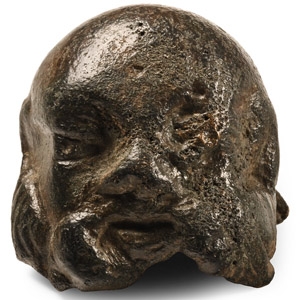
Roman Bronze Silenus Head Mount
1st-3rd century A.D.Sold for (Inc. bp): £13
Hollow-formed head with flaccid features, rim to reverse and mounting bar. 17.14 grams, 23 mm
From a Suffolk, UK, collection, 1990s-2000s. -
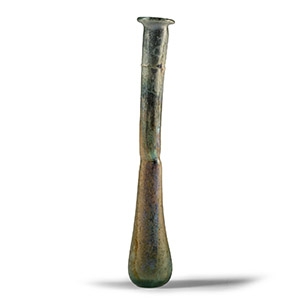
Roman Iridescent Glass Unguentarium
1st-4th century A.D.Sold for (Inc. bp): £65
Tall and slender iridescent vessel with bulb to the base and flared rim. 7.47 grams, 10.5 cm
Acquired 1980-2015. Ex Abelita family collection.
