
Loading, please wait...
LOT 0910
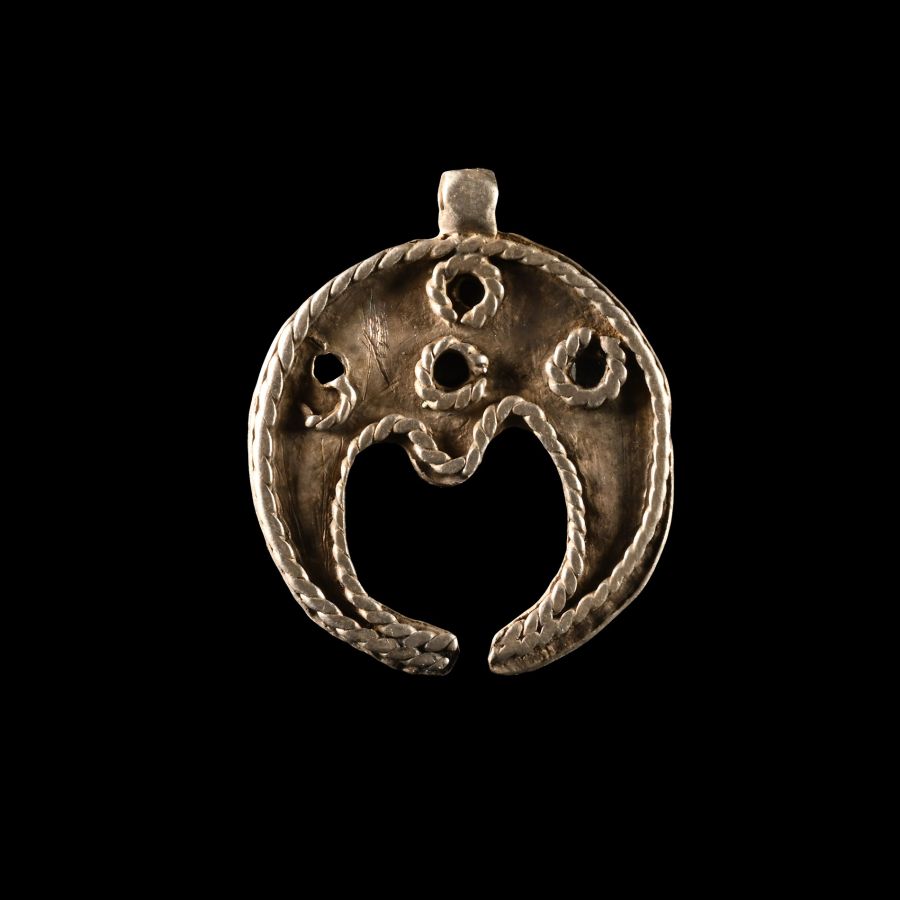
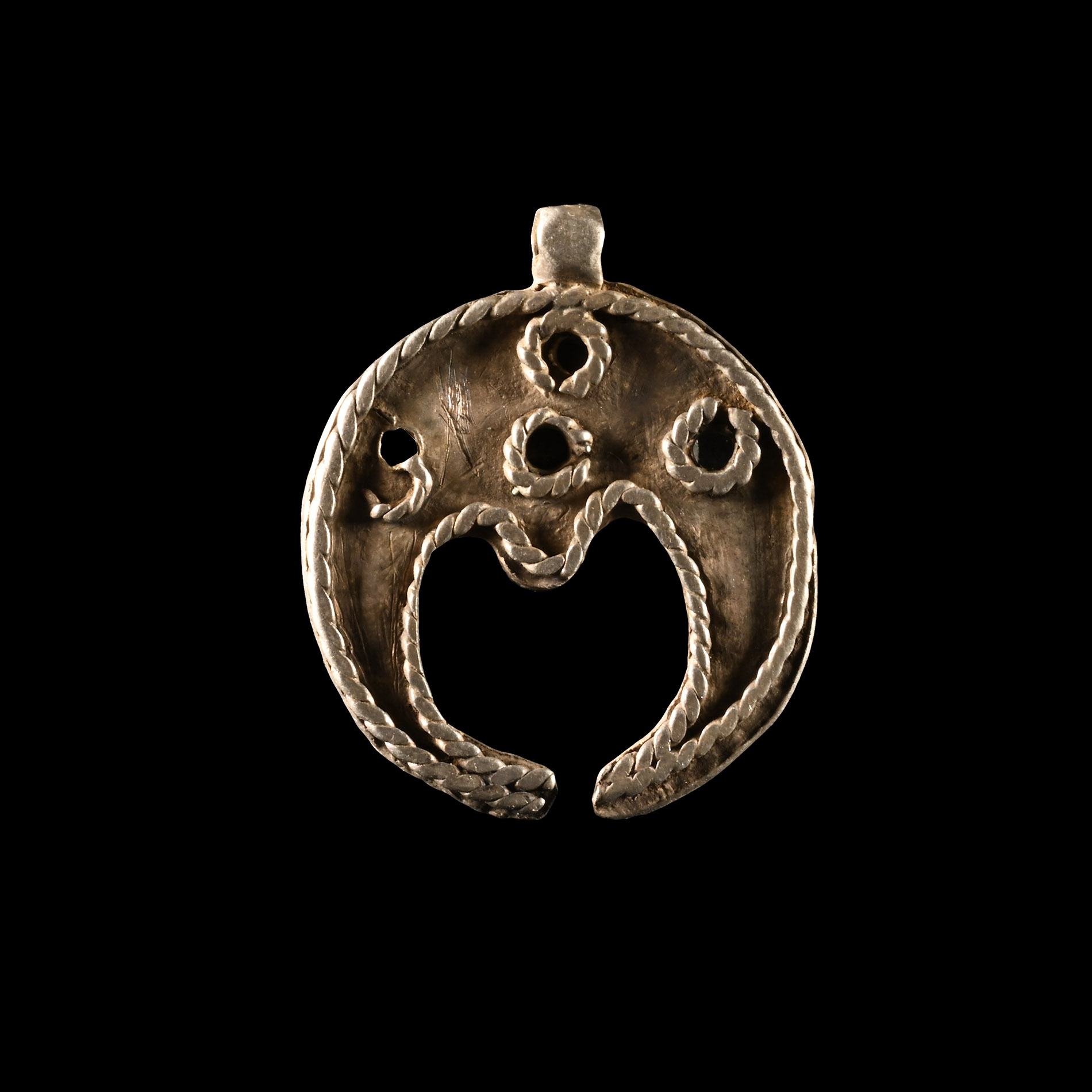
Late Roman Silver Lunar Pendant
5TH-6TH CENTURY A.D.
1 in. (2.99 grams, 28 mm).
Crescent-shaped with applied filigree framing to both faces of the plaque and four holes. [No Reserve]
ProvenanceEx German art market, 2000s.
Acquired from an EU collector living in London.
From the collection of Surrey, UK, gentleman.
TimeLine Auctions follows a vetting process to ensure the authenticity and legality of all items, reinforcing our commitment to integrity and responsible trading. Each antiquity, antique, and coin lot undergoes thorough examination by a vetting committee of at least ten external specialists, professional trade association members, scientists, and archaeologists: Our Vetting Process
AUCTIONS:
TimeLine is a leading auction house specialising in antiquities, ancient art, collectables, natural history, coins, medals, and books. Our auctions offer museums, collectors, historians, and enthusiasts the opportunity to acquire unique and historically significant pieces.
-
.jpg)
Roman Bronze Goddess Applique
2nd-3rd century A.D.Sold for (Inc. bp): £1,300
The goddess Tyche or Cybele with a facing female bust wearing a mural crown, braided hair cascading to the sides, high-relief lenticular eyes, and small slit mouth, two iron fixing rivets; the lower part with detailed necklace of pendants, catena decorative chain, lateral braids, ferrous fixture; old collector's label 'BR.APP.064' to verso; repaired and mounted on a custom-made display stand. 3.66 kg total, 20.5 cm including stand
Private collection of Mr S.A., Switzerland, 1990s, thence by descent.
The crown that characterises the bronze applique (corona muralis = wall crown) was a military decoration using symbolism from the Hellenistic age. Often associated with Tyche (Fortuna), the crown was also an attribute of the goddess Cybele, particularly when made of wood. However, the presence of a necklace similar to a late Roman statuette of Tyche at the Metropolitan Museum of Art seems to point more to the first identification. This bronze applique was probably used as decoration for a chariot used in a procession for the goddess, or as a furniture decoration. -
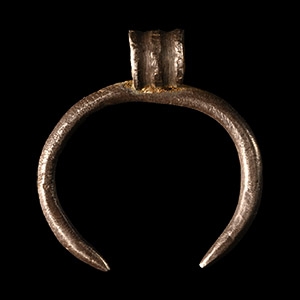
Roman Silver Lunar Pendant
3rd-4th century A.D.Sold for (Inc. bp): £150
With tapering round-section arms and ribbed suspension loop. 1.88 grams, 22 mm
Ex German art market, 2000s. Acquired from an EU collector living in London. From the collection of Surrey, UK, gentleman. -
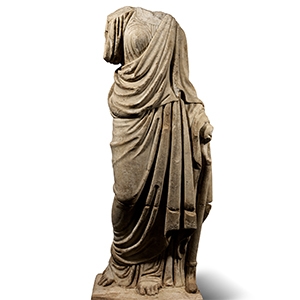
Marble Statue of a Goddess
Roman, 3rd century A.D. or laterSold for (Inc. bp): £5,200
Possibly depicting Laetitia, the goddess of joy, standing in a contrapposto pose with left arm resting on an anchor, right arm aloft; wearing a chiton and himation, feet emerging from underneath the hem; lower part of a chignon visible on the back; repaired. 146 kg, 104 cm
From a private French collection. Acquired in France before 1993. From the personal collection of Gordon Gridley. Gordon Gridley was a founding member of the Camden Passage antique dealers’ association. Trading in antiques from the late 1960s, he opened his first shop in 1971 and remained a well-known and respected figure in the antiques world until his retirement. This lot has been checked against the Interpol Database of stolen works of art and is accompanied by search certificate no.12087-214012.
