
Loading, please wait...
LOT 0960
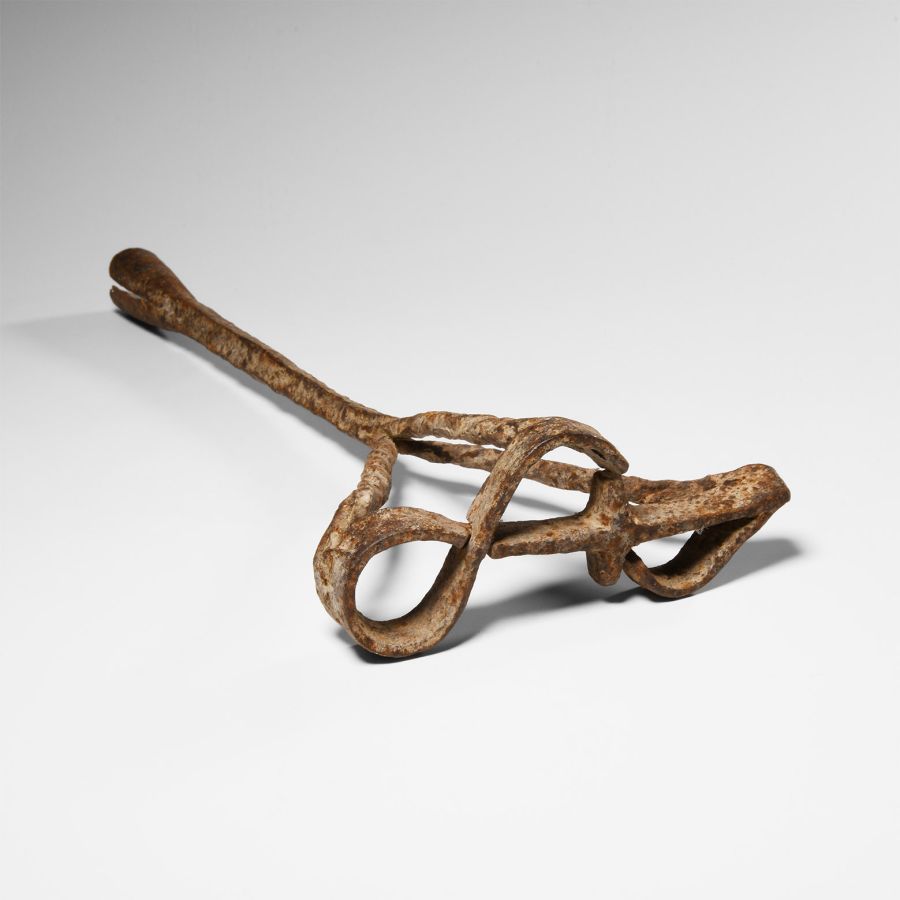
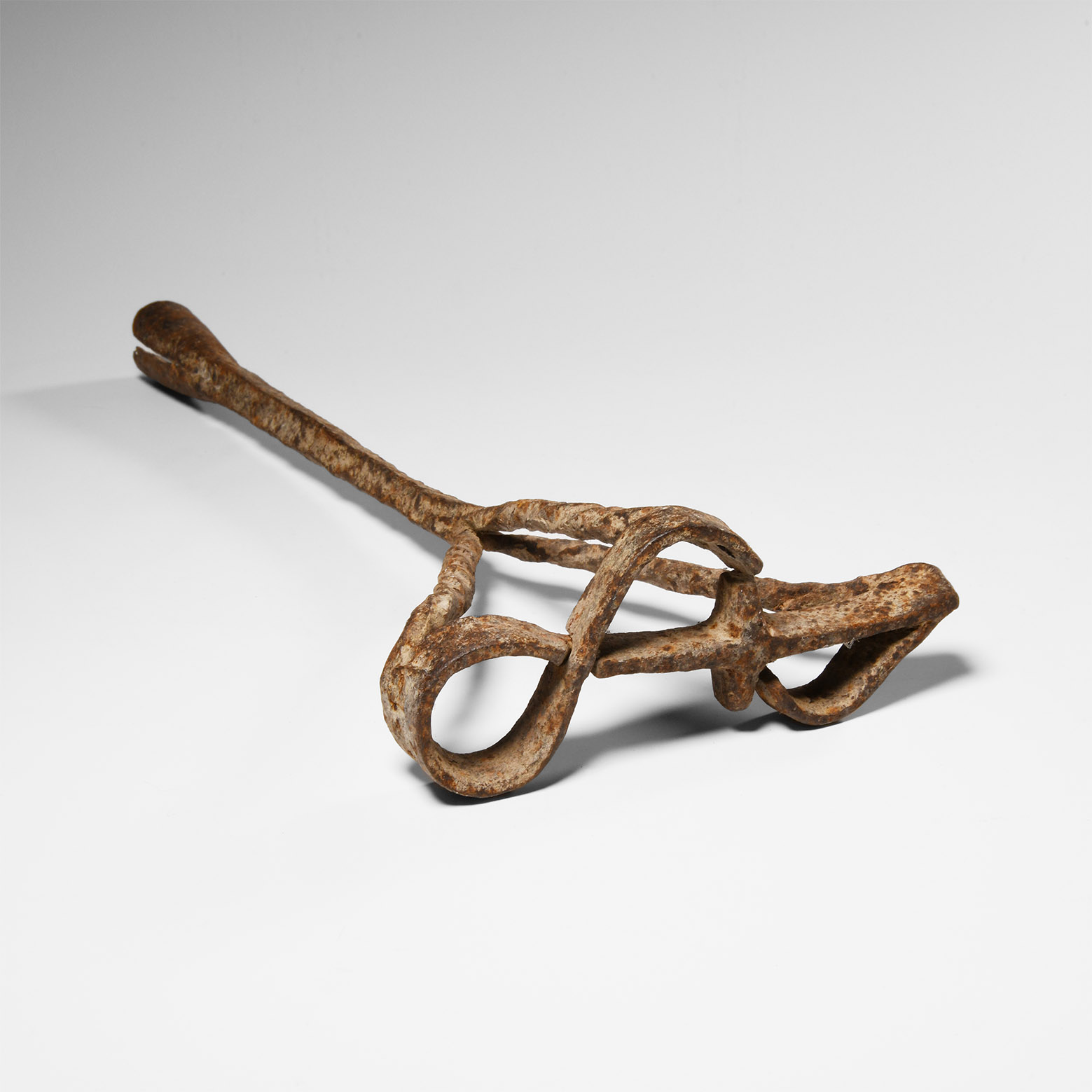
Late Roman Iron Branding Signaculum
5TH-6TH CENTURY A.D.
14 3/4 in. (521 grams, 37.5 cm).
Featuring an elaborate monogram composed of Greek letters M and O, supported by decoratively twisted prongs; tapering cylindrical socket. [No Reserve]
ProvenanceAcquired 1990s-early 2000s.
East Anglian private collection.
See Baratta, G., 'Roman Signacula / Una particolare categoria di signacula: marchi per legno, pellame ed animali', in Mayer M., Olive, G., Baratta, G., Guzman Almagro, A.(ed.), XII Congressus Internationalis Epigraphiae Grecae et Latinae, Barcelona, 2007, pp.99-108, figs.3,7, for similar stamps.
FootnotesBranding stamps or signacula, in particular those with large single letters, were used for marking livestock to identify the ownership, the breed, the quality and other features of the animal. The signacula were usually made in bronze, but iron examples are also preserved.
CONDITIONTimeLine Auctions follows a vetting process to ensure the authenticity and legality of all items, reinforcing our commitment to integrity and responsible trading. Each antiquity, antique, and coin lot undergoes thorough examination by a vetting committee of at least ten external specialists, professional trade association members, scientists, and archaeologists: Our Vetting Process
AUCTIONS:
TimeLine is a leading auction house specialising in antiquities, ancient art, collectables, natural history, coins, medals, and books. Our auctions offer museums, collectors, historians, and enthusiasts the opportunity to acquire unique and historically significant pieces.
-
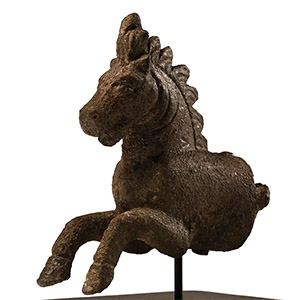
Roman Bronze Horse Protome
3rd century A.D.Sold for (Inc. bp): £494
Modelled in active leaping pose with forelegs extended, mane flying and mouth slightly open; hollow to the reverse with two attachment lugs; mounted on a custom-made stand. 173 grams total, 85 mm including stand
From a collection acquired on the UK art market from various auction houses and collections mostly before 2000. From an important Cambridgeshire estate; thence by descent. -
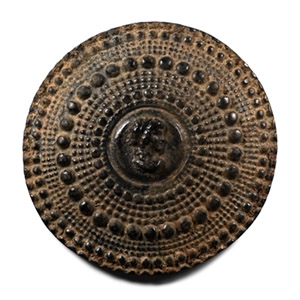
Roman Bronze Military Roundel
1st-3rd century A.D.Sold for (Inc. bp): £1,105
Domed phalera with field of radiating bosses in varying sizes, central tondo with profile female bust; four attachment points to the reverse. 120 grams, 77 mm
Acquired in the mid 1980s-1990s. Private collection, Switzerland, thence by descent. Private collection, since the late 1990s. -
.jpg)
Bronze Roman Coin and Limited Edition Framed Print
3rd century A.D. and laterSold for (Inc. bp): £20
The coin of Constantine the Great (272-337 A.D.) mounted on 22 carat gold foil, framed with an art print signed by the artist David McAllister, depicting scenes of Roman military activity; limited edition number 229/1150. 1.26 kg, 49.5 x 37.5 cm
UK gallery, early 2000s. Accompanied by a previous certificate of authenticity.
David McAllister's exciting design is a 'one of a kind' work that portrays the might and riches of the Roman civilisation. This limited edition print is a celebration of the award winning artist's lifetime dedication to historical paintings of the ancient world. To enhance appreciation of this rare and historic work, each individual print is signed and numbered by the artist.
