
Loading, please wait...
LOT 0705
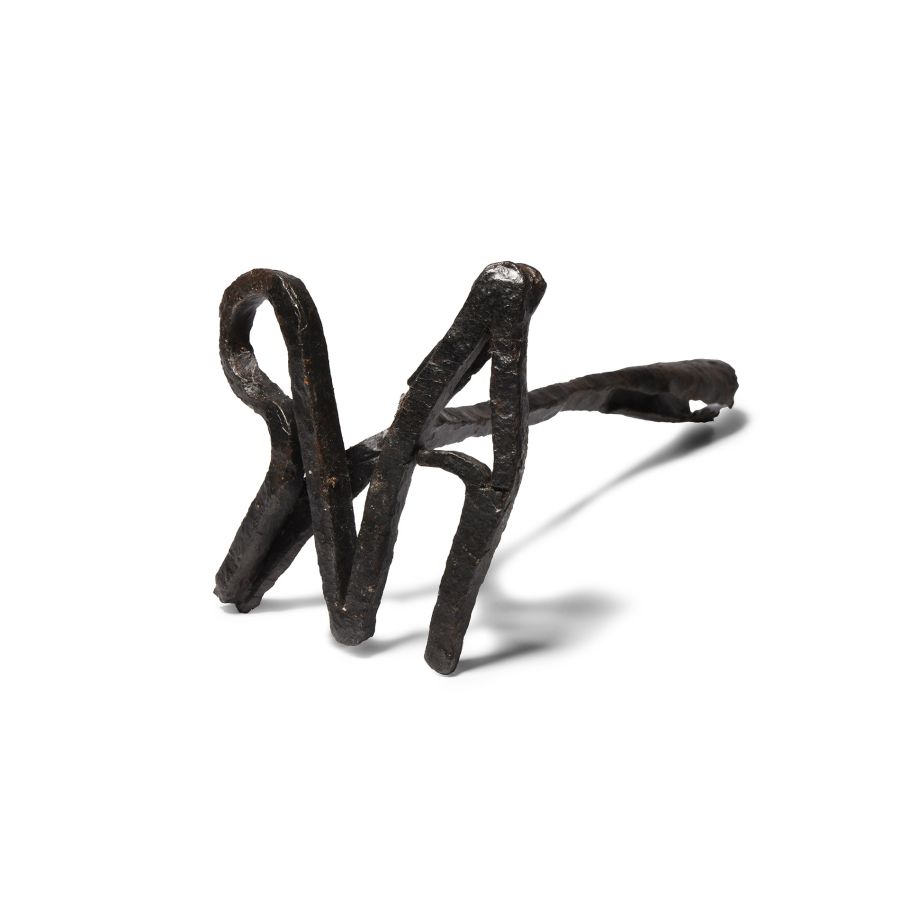
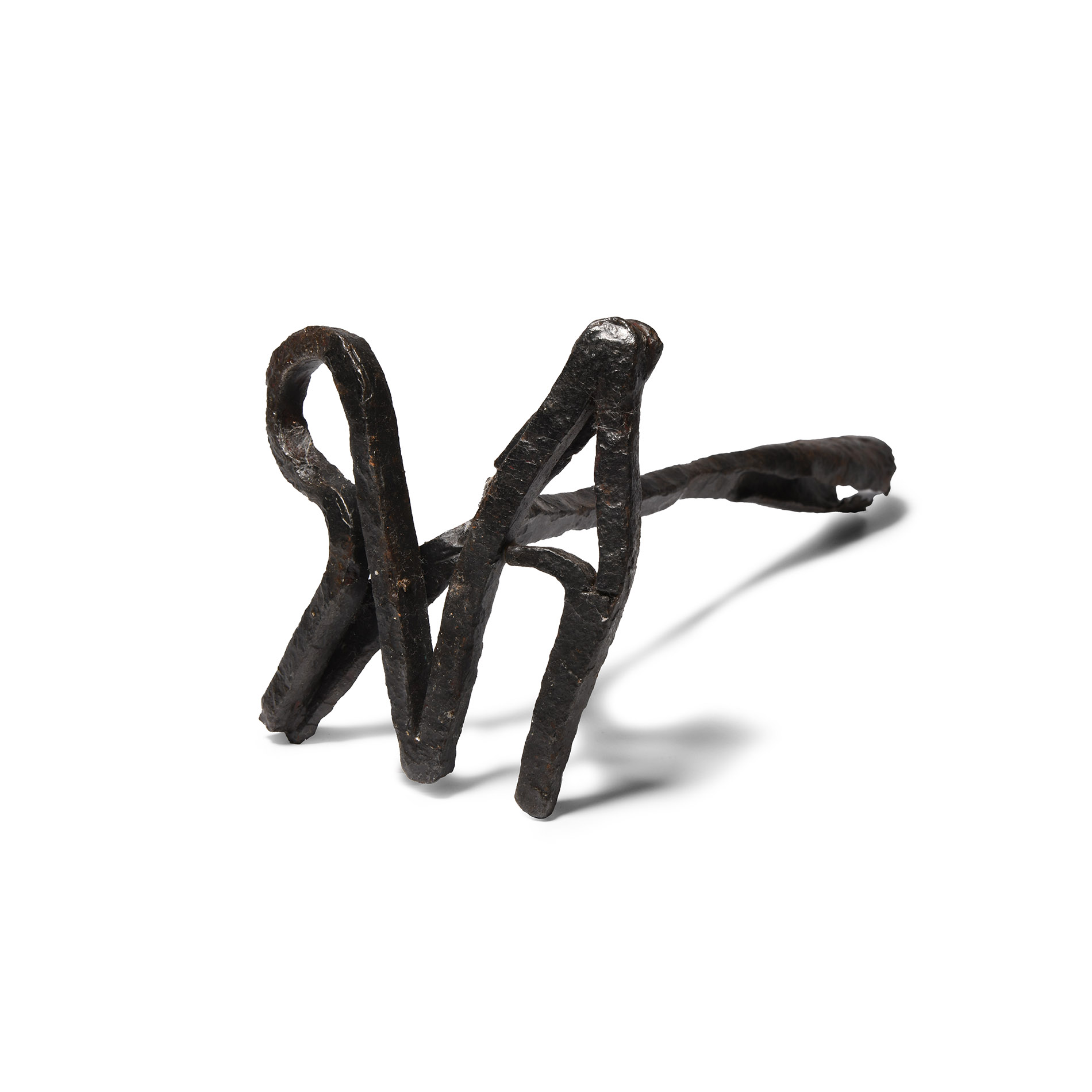
Late Roman Iron Branding Signaculum
CIRCA 3RD-6TH CENTURY A.D.
8 in. (233 grams, 20.2 cm).
Displaying a monogram composed of Latin letters A and R; tapering round-section socket. [No Reserve]
ProvenanceAcquired 1990s-early 2000s.
East Anglian private collection.
See Baratta, G., 'Roman Signacula / Una particolare categoria di signacula: marchi per legno, pellame ed animali', in Mayer, M., Olive, G., Baratta, G., Guzman Almagro, A. (ed.), XII Congressus Internationalis Epigraphiae Grecae et Latinae, Barcelona, 2007, pp.99-108, figs.3, 7, for similar stamps.
FootnotesThe signacula used for branding were distinguished primarily by the presence of a relatively long metal arm, which could reach a length of 50 cm. This arm could sometimes be hollow to allow the insertion of a wooden handle. The presence of the long arm constitutes the main indication for the use of these signacula in the context of branding. Its length allowed the user to keep a safe distance from the source of heat.
CONDITIONTimeLine Auctions follows a vetting process to ensure the authenticity and legality of all items, reinforcing our commitment to integrity and responsible trading. Each antiquity, antique, and coin lot undergoes thorough examination by a vetting committee of at least ten external specialists, professional trade association members, scientists, and archaeologists: Our Vetting Process
AUCTIONS:
TimeLine is a leading auction house specialising in antiquities, ancient art, collectables, natural history, coins, medals, and books. Our auctions offer museums, collectors, historians, and enthusiasts the opportunity to acquire unique and historically significant pieces.
-
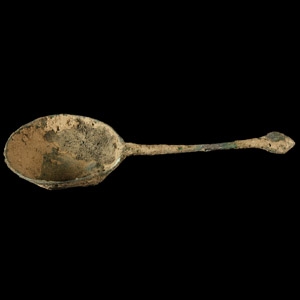
Roman Bronze Spoon
1st-4th century A.D.Sold for (Inc. bp): £46
Deep circular bowl and narrow handle with lobe finial. 31.6 grams, 15 cm
English collection, early 2000s. Ex central London gallery. -
.jpg)
Large Roman Sheet-Silver Brooch Pair
4th-5th century A.D.Sold for (Inc. bp): £374
Each formed as a figure-of-eight-shaped plaque with beaded edge and central bridge, bronze reinforcement to the reverse and ferrous attachment pin. 71.3 grams total, 15-15.2 cm
Fine condition, edge chipped.
Acquired on the European art market in the 1990s. Ex property of a Suffolk collector. -
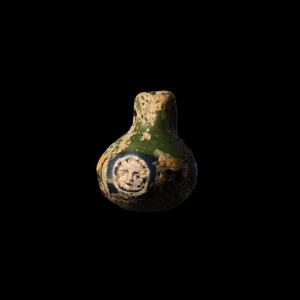
Roman Glass Face Bead
Eastern Mediterranean, 1st century B.C.-1st century A.D.Sold for (Inc. bp): £390
With integral suspension lug, decorated with millefiori face cane slices and geometric motifs. 2.29 grams, 16 mm
Fine condition.
Acquired 1970-2010. Collection of a late Japanese gentleman.
